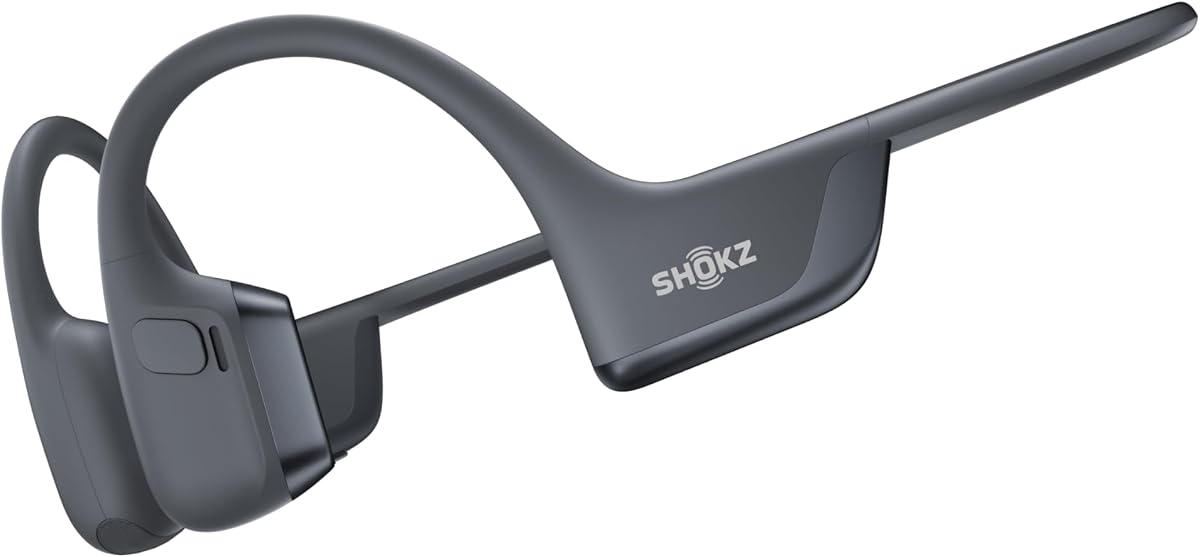
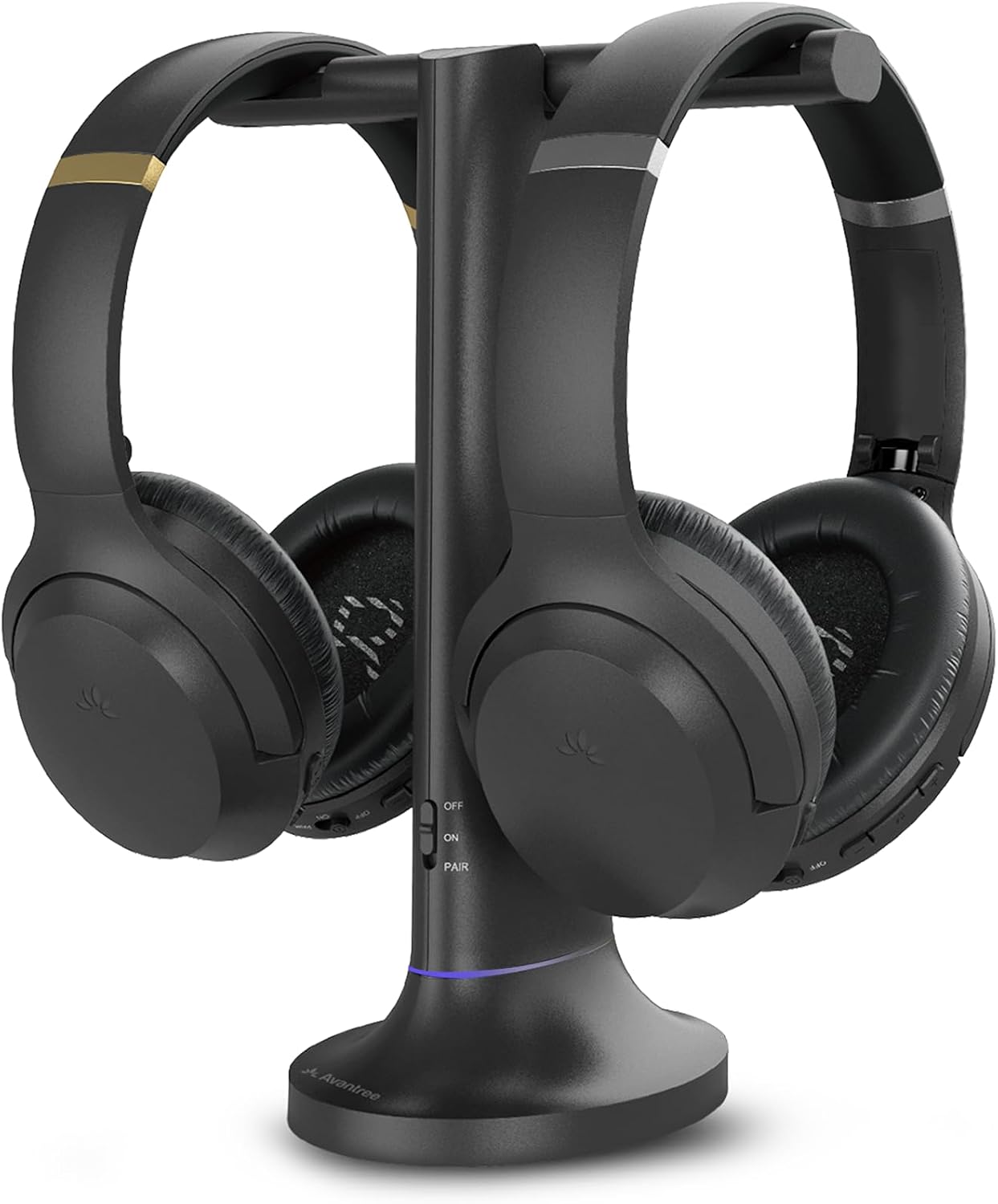
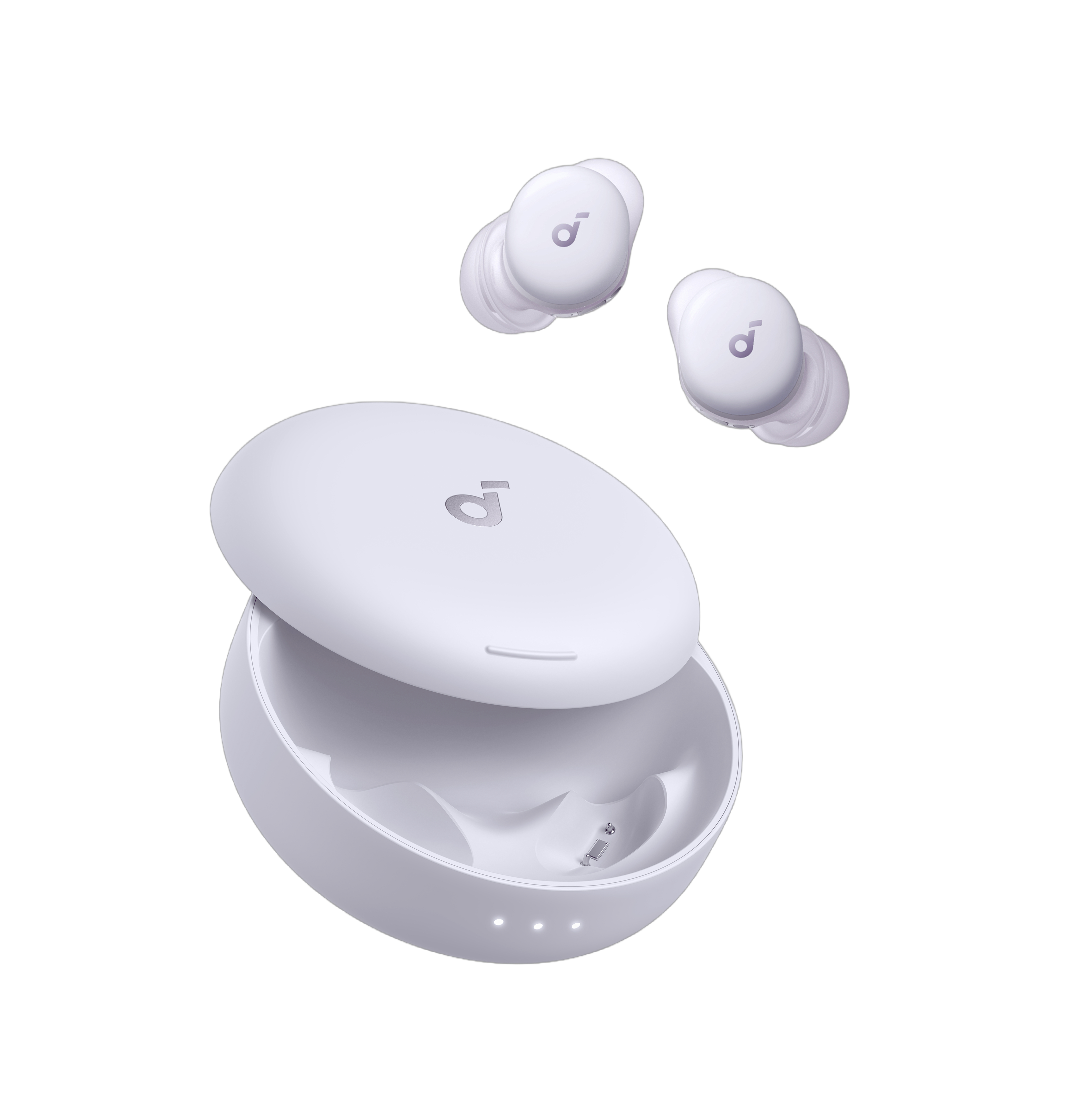
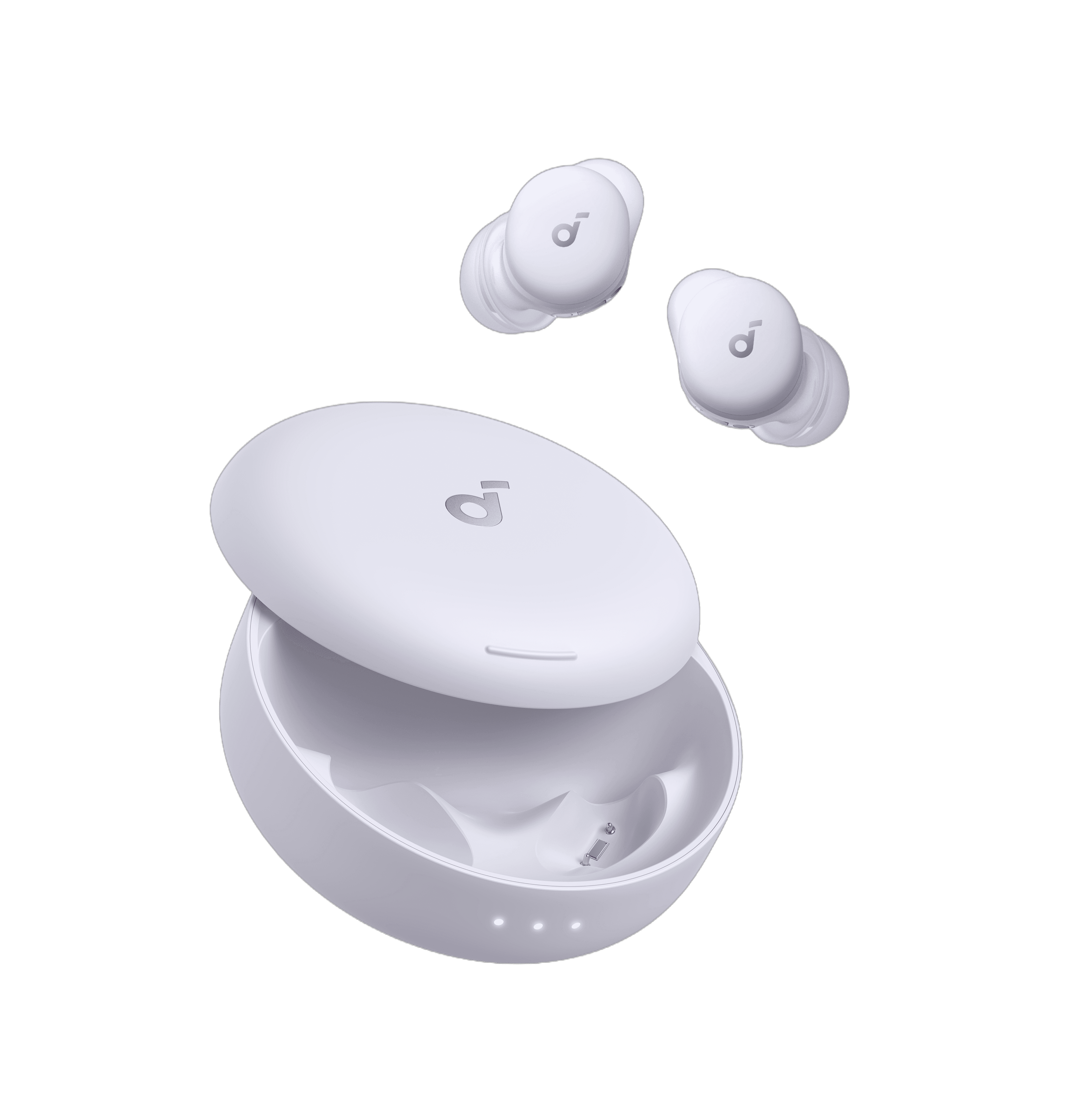
These are small, open headphones that have neither sealing pads nor any means of firing sound directly into the ear canal. Transmission happens either through the bones of the skull — bone conduction proper — or simply through the air, and both routes deliver to the inner ear while leaving your hearing fully open to the world around you.
That openness is the whole appeal. You hear everything going on around you immediately and without any technical intermediary — no transparency or ambient mode of the kind on-ear and in-ear headphones need.
The short version
Bone conduction or air conduction?
This is the distinction that matters most, and the two are frequently confused.
Bone conduction sends vibrations through the skull to the inner ear. Air conduction sits just outside the ear and fires sound towards it without sealing anything. Both leave your ears completely open.
The practical difference is bass. An air-conduction design positioned in front of the ear can manage considerably more low-end foundation than most of the bone-conduction fraction — which is precisely why two of the recommendations here are air-conduction rather than bone-conduction designs.
The winner: Shokz OpenRun Pro 2
The OpenRun Pro is now in its second generation, and this is more than a minor update. It charges over USB-C, and there has been real work on the driver, which mostly benefits the sound.
The result is very good sound in a robustly built package rated IP55 against jets of water — the specification that matters if you run in British weather rather than on a treadmill.
There is also a version with a slightly shorter neckband, sold as the OpenRun Pro 2 Mini, which is worth knowing about if the standard band has never sat quite right.
Best open-ear value: JBL Soundgear Sense
An important distinction: the Soundgear Sense works on the air-conduction principle rather than bone conduction. Positioned in front of the ear, it produces more bass foundation than many of its bone-conduction colleagues.
It can be worn either true-wireless or with a neckband, it recharges several times from its case, and it has extensive app control. It is rated IP54 against splashing water.
Best clip design: Huawei FreeClip 2
The FreeClip 2 simply clips onto the ear. It barely intrudes, and it leaves the ear canals entirely free for outside sound.
Despite that, it produces surprising sound quality provided it is optimally placed — which is not difficult to achieve. The design is handsome enough that the things look almost like jewellery, and they are the current recommendation for clip-style headphones.
The catch is the price: this is the expensive option here.
Best for swimming: Shokz OpenSwim Pro
As the name suggests, these suit swimming particularly well, and they carry an IP68 rating for continuous immersion rather than mere splash resistance.
Their real advantage extends well beyond the pool, though. Thanks to 32 GB of internal storage and the ability to play MP3 files from it, they do not need a smartphone at all — which is as useful on a run as it is in the water.
The recorded drawback is interference during phone calls.
Best budget: Earfun OpenJump
Also an air-conduction design, and conceived as true wireless with a charging case that can itself be charged wirelessly by Qi.
They deliver good sound both for music and on calls, wear very comfortably and offer comprehensive app control. Battery life is enormous, and despite all those capabilities they are very inexpensive compared with several other models in the test — which is what makes them the value pick.
They are rated IPX7 against temporary immersion.
Also tested
The wider field shows how much battery life varies in this category: the JBL Soundgear Clips manage 26 hours, the Shokz OpenFit 2 24 hours, the Earfun Clip 18 hours with 72 hours including its case, and the Soundcore AeroFit 2 as much as 60 hours all in. The Suunto Wing 2, Shokz OpenDots One, Shokz OpenFit Pro and 1More S70 were also assessed without earning a recommendation. The original Huawei FreeClip now sits here too, displaced by the second-generation model.
How to choose
Decide which principle you want. Bone conduction keeps everything off and away from the ear entirely; air conduction sits in front of it and generally gives you more bass. Both leave your hearing open.
Match the ingress rating to the activity. IP55 on the OpenRun Pro 2 handles jets of water and therefore rain. IP54 on the JBL covers splashing. IPX7 on the Earfun covers temporary immersion. Only the OpenSwim Pro's IP68 covers actual swimming.
Consider whether you want the phone with you. The OpenSwim Pro's 32 GB of onboard storage means you can leave it behind entirely — a genuine advantage in water, and a quiet one on a run.
Think about how they attach. A neckband, a clip or true wireless are three quite different propositions for how the things stay on your head, and comfort is what you will notice on hour three, not sound.
Frequently asked questions
Which open-ear headphones should I buy? The Shokz OpenRun Pro 2 for most people — very good sound from a redesigned driver, rugged construction, IP55 water resistance and USB-C charging, with a Mini version for smaller heads.
What is the difference between bone and air conduction? Bone conduction transmits vibration through the skull to the inner ear; air conduction sits outside the ear and fires sound at it. Both leave your ears open to the world, but air-conduction designs generally manage more bass.
Which can I swim with? The Shokz OpenSwim Pro, rated IP68 for continuous immersion, with 32 GB of storage and an MP3 player so no phone is needed.
Are any of them good for calls? The Earfun OpenJump is noted for good sound on calls as well as music. The OpenSwim Pro is the one to avoid for telephony, where interference was recorded.
Which is the most comfortable? The Huawei FreeClip 2's clip design barely intrudes and leaves the ear canals free, which is why it is the recommendation for that style — though it is the expensive choice.
Why choose open-ear at all? Because your hearing stays fully open to your surroundings, immediately and without relying on a transparency mode. For running, cycling and anything where situational awareness matters, that is the entire point.
Research sources
Sources recorded for this page are linked below. Reported third-party testing belongs to the original publisher; it is not testing performed by Truthful Reviews.