A camera bag is not really about the camera. It is about how you want to carry it — slung across your chest, over one shoulder, or on your back — and that decision governs everything else. Get the type right and the rest is detail.
The three carry types
A shoulder bag (sacoche) is the simplest thing that works: a padded box with a strap, for a body and a lens.
A sling is worn cross-body and swings round to the front when you need the camera. It is the compromise between quick access and small size.
A backpack carries the most and carries it most comfortably — at the cost of access, because what is on your back is not in your hands.
Everything below is grouped that way.
Shoulder bags
The simple, effective one — Forclaz by Decathlon. As so often, Decathlon offers a simple, effective model at an unbeatable price. To start out, or as a spare, it does the job perfectly well. The strap is removable and the bag can also hang from a belt; the whole thing is padded, with a removable divider inside.
The one with a bit of style — Tarion Messenger. If you want a messenger bag with a relaxed look, closer to an ordinary bag than a camera bag, the Tarion is the one. It has the advantage of going anywhere while still holding a decent amount. One caution on comfort, though: the shoulder strap is padded in only one place, and we have doubts about it over a long day.
It is worth knowing that some well-known leather-goods makers do camera-specific bags too — if looks are the priority, something like the Paul Marius Petit Reporter is a handsome option for leather lovers.
Slings
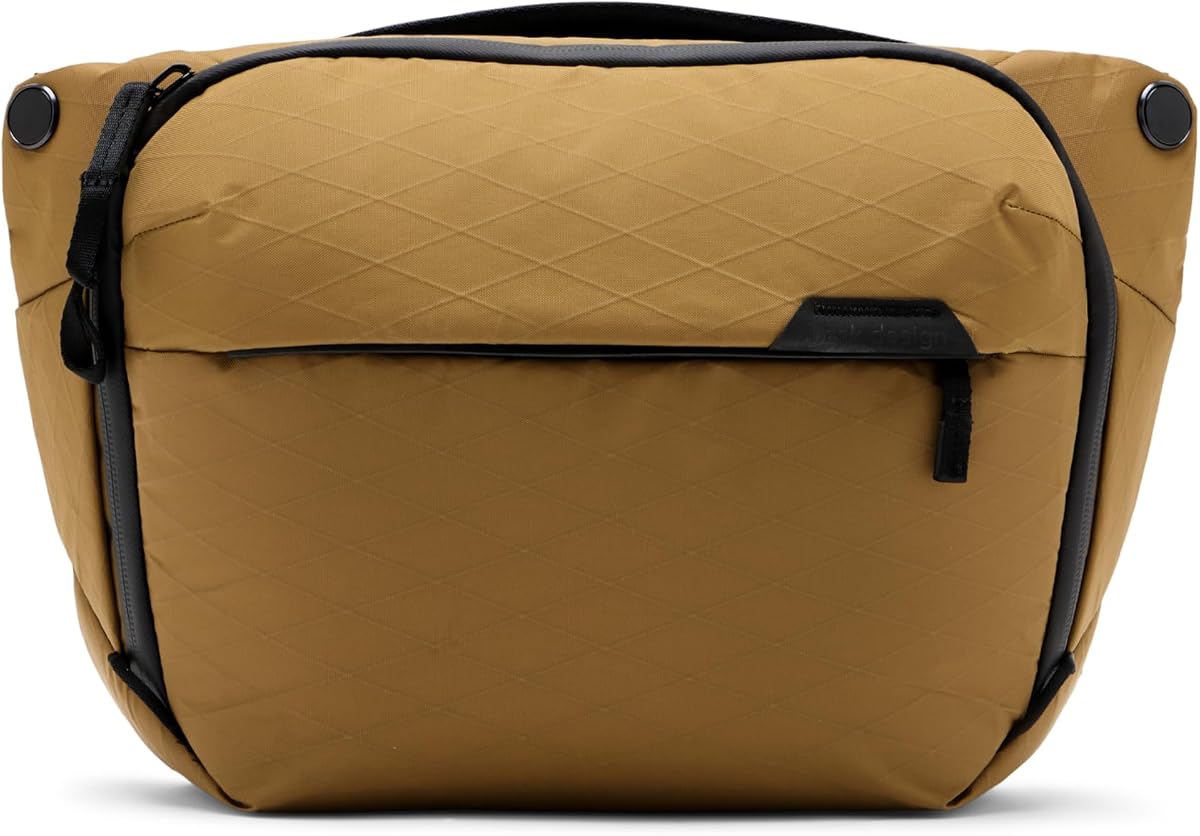
The pick — Peak Design Everyday Sling V2. Available in three colours and three capacities: 3, 6 and 10 litres. Being a sling, it is worn cross-body, and it is impressively unobtrusive — especially in the 3-litre size.
Choose by what you carry. The 3-litre takes a small body and a modest lens, but not a telephoto. If you want to carry several lenses, go for the 6-litre as a minimum. The shell is 400D nylon, which makes it thoroughly weather-resistant, and it is the bag to buy if you want your camera to hand without a bag on your back.
Backpacks
The value pick — Decathlon NH Explorer 900 Focus. Again Decathlon delivers something reliable at a sensible price: a 30-litre rucksack that carries your personal kit alongside your camera gear in a dedicated compartment, with the body reachable through a side opening. There is room for at least three lenses on top of the one on the camera. Better still, the photo compartment — which is 10 litres of the total — and its dividers lift out, leaving you an ordinary rucksack.
The professional's pick — Manfrotto Advanced Fast III. If you want a genuine pro bag, Manfrotto is the brand, and the Advanced range is the broad, sensible place to look. These rucksacks carry a body and several lenses plus your own things, a laptop included. The Fast III earns the recommendation for versatility, particularly in how many ways you can reach the gear — which is precisely the weakness of any backpack, since what it holds is less accessible than what hangs at your side.
If the budget stretches — Peak Design Everyday Backpack. Peak Design's iconic rucksack is handsome, solid and practical; the only real objection is the price. The finish is simply excellent and it will last. It comes in 20 or 30 litres, and its biggest strength is toughness: particularly sturdy and well padded, with a water-repellent, rain-resistant fabric that needs no separate cover.
What to look at before you buy
Protection first. Padding and dividers are what separate a camera bag from a normal one — they stop bodies and lenses knocking together, and they let you shape the interior around your kit rather than the other way round.
Weather. A water-repellent shell, or a rain cover, is the difference between an inconvenience and an expensive afternoon. The Peak Design backpack sheds rain without an extra cover; cheaper bags generally expect you to carry one.
Access. Ask honestly how often you will want the camera out. Slings and shoulder bags win here; rucksacks trade it for capacity and comfort. Side openings, like the Decathlon's, claw some of it back.
Capacity, in litres. It is the only figure worth comparing across bag types, and it maps closely to what you can carry: 3 litres for a body and one lens, 6 and up for several lenses, 20 to 30 for gear plus laptop plus a day's personal kit.
Comfort. Straps are where cheap bags save money. A strap padded in only one place, as on the Tarion, is fine for an hour and less fine for a day.
Which should you buy?
If you carry one body and one lens and want the simplest thing that works, take the Forclaz shoulder bag. If you want that but with more style, the Tarion Messenger. If you want the camera to hand without a bag on your back, the Peak Design Everyday Sling V2 in 3 litres for a light kit or 6 litres for several lenses.
For a full kit, the Decathlon NH Explorer 900 Focus is the value backpack and doubles as an ordinary rucksack when the photo insert comes out; the Manfrotto Advanced Fast III is the versatile professional's choice for a body, lenses and a laptop; and the Peak Design Everyday Backpack is what to buy if you want the best made and will pay for it.
Frequently asked questions
Sling, shoulder bag or backpack? Shoulder bags are simplest and suit one body and one lens. Slings sit across the body and swing round for fast access without much bulk. Backpacks carry the most, most comfortably, but put your gear behind you.
What capacity do I need? Three litres holds a small body and a modest lens — not a telephoto. Six litres is the sensible minimum for several lenses. Twenty to thirty litres covers a full kit with a laptop and personal things.
Is a camera bag waterproof? Not automatically. The Peak Design Everyday Backpack uses a water-repellent, rain-resistant fabric that needs no extra cover, and the Everyday Sling V2's 400D nylon resists weather well; many other bags rely on a separate rain cover.
Can I use a normal rucksack? You can, but you lose the padding and the movable dividers that stop your gear knocking together. The Decathlon NH Explorer 900 Focus is a useful middle path — a proper photo compartment that lifts out, leaving a normal 30-litre rucksack.
Research sources
Sources recorded for this page are linked below. Reported third-party testing belongs to the original publisher; it is not testing performed by Truthful Reviews.