Point a phone at a walk down the street and the footage jerks with every step; mount that same phone on a gimbal and it glides as though it were floating. A gimbal uses little motors to cancel out the wobble of your hand in real time, turning shaky clips into smooth, cinematic movement. An extensive test of gimbals sorted the best, and these are the top picks, checked against current UK prices.
What to Look For
Smartphone or camera gimbal? This is the first decision, and it comes down to what you are stabilising. A smartphone gimbal is light, cheap and folds away in a bag — perfect for phone video, travel and social clips. A camera gimbal is a bigger, stronger tool built to balance the weight of a mirrorless or DSLR body and lens, for filmmakers who shoot on a proper camera. Buy for the device you actually film with.
Stabilisation and modes. All good gimbals smooth your movement, but the useful extras are in the modes: pan-follow for gentle sweeps, POV and sport for fast action, timelapse for moving time-lapses, and — increasingly — AI subject tracking that keeps you or your subject centred in the frame automatically as you move around.
Battery life. This is the specification that varies most, so it is worth checking. The smallest, most compact gimbals carry modest cells of around 875 mAh, 1030 mAh or 1100 mAh that still manage several hours of filming. Mid-range models step up to roughly 1400 mAh, 2450 mAh or 3200 mAh, while the units built for all-day shoots pack the biggest batteries, from about 3350 mAh up to 4120 mAh. Most now charge over USB-C, and many can even use that battery to top up your phone.
Ergonomics and extras. Small touches make a gimbal nicer to use: a magnetic quick-release clamp that lets you mount and remove your phone in a second, a built-in fill light for dim scenes, a bright status screen, and built-in tripod feet so it can stand on a table. Foldability matters for travel, too — the best collapse down small enough to drop in a bag.
Ease of use and balancing. A camera gimbal must be balanced each time you change lens, so quick, lockable balancing arms are a real help; a smartphone gimbal should simply power up and work. Companion apps add gesture control, tracking and editing, but the best gimbals are intuitive enough that you rarely need to reach for the manual.
The Winner: DJI Osmo Mobile 8
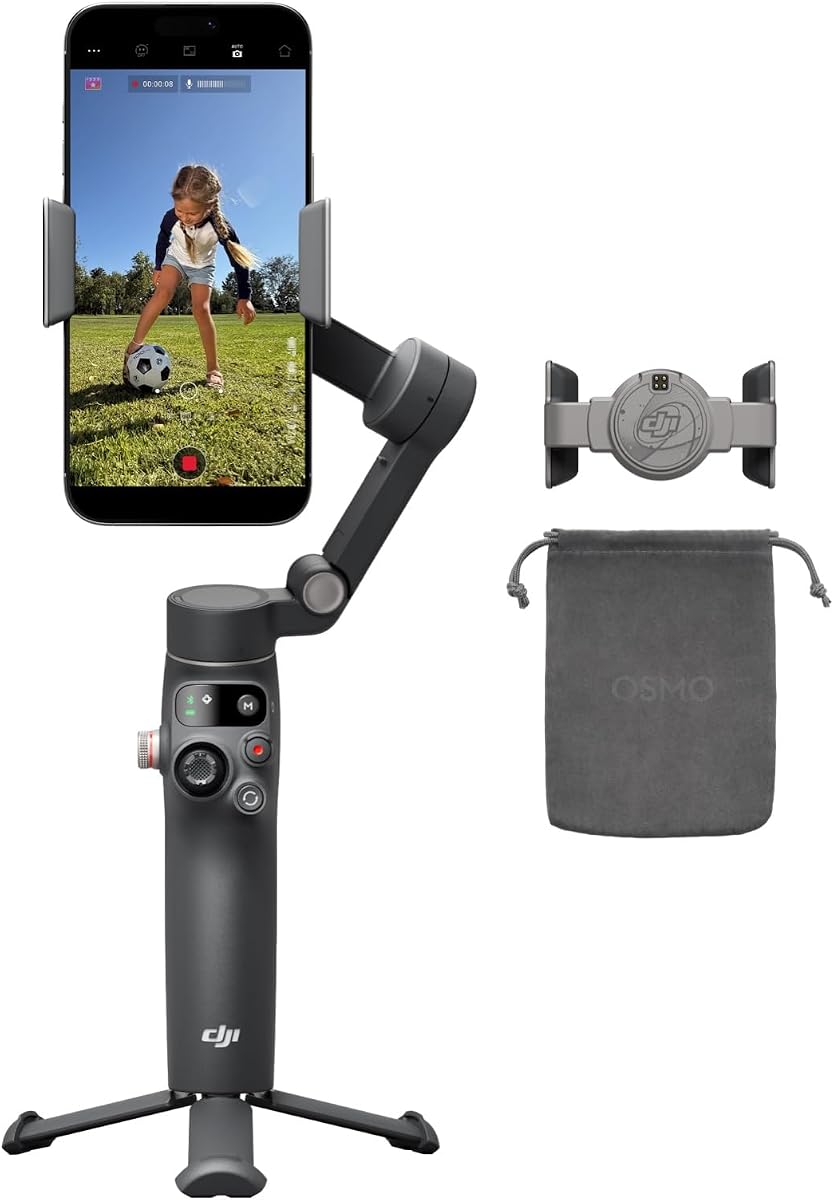
The DJI Osmo Mobile 8 is the best gimbal for most people. This smartphone gimbal adds a genuinely practical multifunction module that handles automatic subject tracking and carries its own light, so it keeps you framed and lit even as you move. Its magnetic phone clamp holds your handset securely and lets you mount and remove it in a moment, ease of use is very high, and the stabilisation is beautifully smooth. Add a keen price and it is the standout all-rounder for phone video. Check the price on Amazon UK · Search Amazon US