A juicer earns its worktop space if it is quick to use and quick to clean, and that is where these machines separate. A recent group test ran five of them through the same routine — 500 grams each of apples, carrots and oranges, then a fibrous "vitamin kick" mix of firm, stringy and watery ingredients — measuring the juice each one produced in millilitres, the noise while grinding carrots, and how much mess was left behind. These are the results, and which machines you can actually buy here.
The short version
Centrifugal or Cold Press? The Difference That Matters
"Juicer" covers two quite different machines. Centrifugal juicers spin a grating disc at high speed and fling the juice out of the pulp by centrifugal force. Juicing takes seconds, which is what makes them practical on a weekday morning, but the high speeds whip in more foam and more oxygen, which shortens how long the juice keeps without immediately harming the taste. Motors are correspondingly strong, usually 600 to 1,500 watts. Every machine in this test is one of these.
Slow juicers, also called cold-press juicers, work the opposite way: a slowly turning press screw squeezes the fruit and vegetables, often at just 40 to 80 revolutions per minute. The juice comes more slowly but holds less air, stays fresh longer and often tastes more intense, and fibrous ingredients such as leafy greens suit the method well. Because the pressing is gentle, motor power is far lower — typically 150 to 400 watts. In short: centrifugal for speed, cold press for gentler handling and longer-lasting juice.
The Winner on Test: NutriBullet NBJ100G
After repeated runs with apples, oranges, carrots and celery, the NutriBullet NBJ100G took the test on design, everyday usability and sheer performance. The built-in pulp container saves worktop space and keeps the pulp where it belongs, and the juice jug has a lid and seal so a fresh batch goes straight into the fridge. Assembly is quick and operation obvious — the instructions are almost entirely pictograms. On yield it produced 303 millilitres of carrot juice and 336 of apple, among the best figures recorded, and it handled fibrous celery and baby spinach almost without residue. Most parts are dishwasher safe and the supplied brush is genuinely useful on the narrow pulp container. It is not flawless: orange pulp comes out fairly wet, apple juice carries visible sediment, there is no cable storage despite room underneath, and no recipes are included. At 800 watts with two speeds, it is a compact, strong performer.
One caveat for British buyers. We could not confirm an Amazon UK listing that states the model code NBJ100G. NutriBullet juicers are sold here and the specifications look close, but "close" is not the same machine, so we are not claiming the UK listing is the one tested. See the NutriBullet juicer listings · Search Amazon US
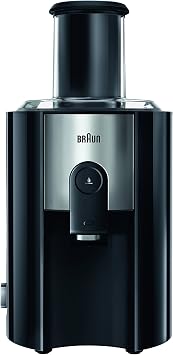
Biggest Juice Jug: Braun J500
Narrowly beaten to the win, and the pick we can point you at with confidence. The J500 brings 900 watts and a feed chute wide enough to swallow larger pieces of fruit and vegetable without constant pre-cutting. Operation is intuitive, and the juice jug's built-in foam separator holds back most of the froth as you pour. It is also the cleanest worker here: juicing carrots left the worktop noticeably tidier than several rivals. Cleaning is straightforward too, with every removable part dishwasher safe and a brush included that has a dedicated attachment for the drip stop. The criticisms are modest — some pulp gathers around the filter and lid instead of dropping into the container, the drip stop catches only small amounts, and at 64.5 decibels on carrots it is clearly audible, though that is normal for the type. Check the price on Amazon UK · Search Amazon US
Best Value: Severin ES 3570
The Severin makes the case that solid engineering need not be expensive. It offers 800 watts, two speeds and the largest feed chute in the test, so a lot of produce goes in without pre-cutting, and its generous 2.5-litre pulp container suits bigger batches. Yields are consistently good and hold their own against far pricier machines: 344 millilitres of apple juice, 301 of carrot and 334 of orange. The weaknesses are real, though. Juicing carrots occasionally spat pulp out of the machine even with everything correctly assembled, pulp tends to cling to the lid and drip when you open it, and cleaning takes time because not one part is dishwasher safe — a brush is supplied, but the filter still demands patience. If you want power and yield for less and can live with washing up by hand, this is the buy. Check the price on Amazon UK · Search Amazon US
For Small Kitchens: Philips HR1856
Compact, with an integrated pulp container, the HR1856 is built for kitchens short on space. It goes together quickly and needs no explanation — again, pictograms rather than a manual. The Quick Clean function makes cleaning reasonable, though some water can escape and no brush is included. A useful safety detail: it will not start unless the locking clamps are properly engaged. The wide feed chute takes most ingredients without much pre-cutting and the juice jug's foam separator keeps pouring tidy. Yields on apples, oranges and carrots are solid; the fibrous vitamin-kick mix was the one disappointment, coming out noticeably lumpy. Unspectacular, but dependable and space-saving.
Same caveat as the winner: no Amazon UK listing we found states the model code HR1856, so we are not claiming the UK Philips juicers are the tested machine. See the Philips juicer listings · Search Amazon US
Power With Pitfalls: Gastroback Vital Juicer Pro
With 700 watts and a wide feed chute that swallows smaller whole apples and oranges, the Gastroback has genuine muscle, and it posted the best orange yield of the test at 364 millilitres. It works efficiently on carrots too, leaving pleasingly dry pulp, and its parts are dishwasher safe to 60 degrees. It also has by far the best documentation — a proper manual with recipes and suggestions for using the leftover pulp, carrot cake included. Then come the compromises. A pronounced groove for the pusher meant apples that should have fitted kept jamming, so pre-cutting is often needed despite the chute's diameter, and the pusher itself sticks if it is not lined up exactly. Pulp escaped during carrot juicing even with the container and lid correctly seated. There is no drip stop, so a few drops follow every batch. Most irritating of all, the sticker on the feed chute leaves residue that survives several washes. Strong performance and useful recipes, then, at the cost of everyday tidiness. Check the price on Amazon UK · Search Amazon US
How the Testing Works
Every juicer goes through the same practical routine, focused on yield, handling, noise and cleaning. Each processes 500 grams of apples, carrots and oranges, with the juice measured in millilitres so that different consistencies can be compared; individual millilitres matter less than the overall tendency, since these are natural ingredients. A vitamin-kick juice made from firm, fibrous and watery ingredients is added on top, and foam content and leftover pulp are assessed to judge how thoroughly each machine extracts. Noise is measured in decibels while juicing carrots, because that is the hardest work, and the juice is checked for any noticeable warming. Handling covers assembly, the size of the opening, and whether parts survive the dishwasher or need hand washing, with splashes and residue on the worktop counting against a machine. On safety, none of the tested juicers offers a true child lock, though all of them will only start when correctly assembled, and most are not designed for continuous running — manufacturers recommend between 1 and 15 minutes before a pause to protect the motor.
How to Choose
Decide first whether you want speed or gentleness. Everything here is a centrifugal machine, so it is built for fast juice from apples, oranges, carrots and beetroot rather than for leafy greens; if you mainly juice spinach or kale and want juice that keeps, a cold-press machine is the better tool. After that it comes down to cleaning, which is what quietly decides whether a juicer gets used. The Braun J500 is the easiest to live with — dishwasher-safe parts, a foam separator and the tidiest carrot run of the group. The Severin ES 3570 matches it on yield for less, provided you accept washing every part by hand. The Gastroback has the most power and the best orange yield but asks for patience. And whichever you buy, clean the filter and pulp container straight after juicing: dried-on residue turns a two-minute job into a chore.
Frequently asked questions
What is a cold press juicer? It is the slow-juicer design: instead of grating and spinning, a press screw turns slowly — often only 40 to 80 revolutions per minute — and squeezes the juice out. The juice comes more slowly but contains less air, stays fresh longer and often tastes more intense, and the method copes well with fibrous ingredients such as leafy greens. Because the pressing is gentle, motors are much smaller, typically 150 to 400 watts against the 600 to 1,500 watts of a centrifugal machine.
What is a masticating juicer? It is the same thing under another name — a slow or cold-press juicer that crushes and presses produce with a screw rather than spinning it at speed.
Which juicer gives the most juice? It depends on the fruit. From 500 grams of ingredients, the Severin ES 3570 produced the most apple juice at 344 millilitres, the Gastroback Vital Juicer Pro the most orange juice at 364 millilitres, and the NutriBullet NBJ100G led on carrot at 303 millilitres, with the Severin just behind at 301.
How long does fresh juice keep? Juice from a centrifugal machine should be drunk promptly, because the high spin speeds work a lot of oxygen into it and it oxidises faster. A cold-press machine introduces less air, which is why its juice stays fresh longer.
Are juicers noisy? Yes, and carrots are the worst of it. The Braun J500 measured 64.5 decibels while juicing carrots — clearly audible, though normal for this type of machine.
Research sources
Sources recorded for this page are linked below. Reported third-party testing belongs to the original publisher; it is not testing performed by Truthful Reviews.