The first decision in buying a sewing machine is not the brand, it is the mechanism. Mechanical machines set stitch type and length with dials, are simpler to learn and have less to go wrong. Computerised machines add a display, stitch memory, automatic buttonholes and often hundreds of decorative stitches, at a higher price and with more to understand. A recent group test worked through both kinds and produced five recommendations, and the useful thing about its results is that the winner is not the most expensive machine in the field.
The short version
- Best overall: W6 Wertarbeit N 1235/61 — proof a good machine need not be expensive, with a 10-year warranty.
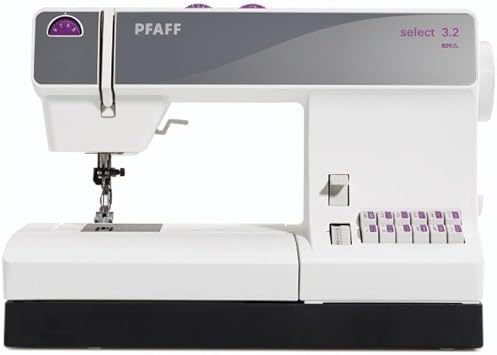
- Best premium mechanical: Pfaff Select 3.2 — integrated dual feed and genuinely accurate seams.
- Best do-it-all: W6 Wertarbeit N 8000 Exklusive — 466 stitch programmes, expandable to embroidery.
- Quietest: Brother Innov-is F400 — mid-price computerised that copes with almost any fabric.
- Best budget computerised: Carina R-evolution 2020 — extension table and a 64-piece kit in the box.
Best Overall: W6 Wertarbeit N 1235/61
The N 1235/61 is the best evidence in this test that a good sewing machine need not be expensive. It offers 23 stitch types — everything most people actually need, including an overlock stitch that chain-stitches and sews in one pass, and a stretch stitch — plus a needle threader.
What lifts it above comparable rivals is control. Set against a machine such as the Singer Tradition 2250, the W6 is easier to regulate while you work and feels more stable. Whether you are taking up hems or tackling something larger, this mechanical machine is unbeaten in its price class, and it carries a 10-year warranty.
The compromises are modest but worth knowing: relatively few presser feet are supplied, accessories can fall out of the extension table, and there is no thread cutter. Search Amazon UK · Amazon US
Best Premium Mechanical: Pfaff Select 3.2
The Select 3.2 looks and feels expensive, and costs considerably more than the W6. What you get for it is integrated dual feed — the fabric is driven from above as well as below — which produces notably accurate results, especially on layers and slippery materials that otherwise shift as you sew.
It is also a pleasure to operate. Changing presser feet is quick, thread can be wound directly through the needle, there are two speed settings, and a broad handle plus a sturdy hard case make it genuinely portable. It comes with no extension table, and it is the expensive option here — but if you sew regularly and want a machine built to last, this is the one. Search Amazon UK · Amazon US
Best Do-It-All: W6 Wertarbeit N 8000 Exklusive
The N 8000 Exklusive is the everything machine: 466 stitch programmes including alphabets and numerals, and it can optionally be expanded into an embroidery machine. You can sew automatically or classically with the foot pedal.
Sewing performance, build quality, the extensive accessories and the straightforward operation all convince. The two costs are physical and financial — it is heavy, and it is among the most expensive machines in the test. Search Amazon UK · Amazon US
Quietest: Brother Innov-is F400
A computerised machine in the middle of the price range that offers plenty of extras, sews very quietly and handles just about any fabric. It is very easy to operate and comes with a generous accessory set. It asks for more money than the entry-level options, and on this test's evidence it is worth it.
Note the model number when shopping: the closely named F420 and F560 are different machines. Search Amazon UK · Amazon US
Best Budget Computerised: Carina R-evolution 2020
If you want computerised convenience without the premium, this is the pick. It handles even very thick fabrics, sews and stores patterns and letters, and arrives with an extension table and a 64-piece sewing kit — the table alone is usually a paid extra elsewhere. Documentation is unusually thorough, with a detailed manual plus a DVD, and it carries a 10-year warranty.
Its shortcomings are specific rather than serious: no automatic thread cutter, no walking foot, only a soft dust cover rather than a hard carrying case, and a throat space that feels small. Search Amazon UK · Amazon US
Also Tested, and How Loud They Are
Noise is the specification nobody quotes and everybody notices, and the wider test field shows how much it varies at full sewing speed. The Brother CX70PES measured close to 67 dB, which is acceptable, though it tends to hammer audibly through thick sections of fabric. The Veritas Claire reached about 70 dB, and offers stepless speed adjustment plus a choice between automatic sewing and the foot pedal. The Veritas Bessie was the loudest of those noted at 72.2 dB, and its seams were not as neat as the recommended machines managed.
Mechanical or Computerised?
Mechanical machines work through dials and levers: you choose the stitch, its length and its width by hand. There is less to go wrong, they are usually cheaper, and they suit anyone who mainly does repairs, alterations and straightforward making. The W6 N 1235/61 and the Pfaff Select 3.2 are both of this type, which is worth noting — the test's overall winner and its premium pick are both mechanical.
Computerised machines add a display and a processor, which brings stitch memory, automatic buttonholes, letters and numerals, and stitch counts that run into the hundreds. They cost more and there is more to learn, but they take over the fiddly settings. The W6 N 8000 Exklusive, Brother Innov-is F400 and Carina R-evolution 2020 are the computerised options here.
What to Look For
Start with what you will actually sew. Thick fabrics such as denim and canvas need a machine with the power and throat space to cope, which is where the Carina and the heavier W6 earn their keep. Check what comes in the box, because accessories are where prices quietly diverge: presser feet, an extension table and a hard case are included on some machines and cost extra on others. A needle threader and an automatic thread cutter are small conveniences that matter more the more you sew — two machines here lack the cutter. Finally, look at the warranty: both W6 machines and the Carina carry ten years, which is unusually long and says something about expected service life.
Research sources
Sources recorded for this page are linked below. Reported third-party testing belongs to the original publisher; it is not testing performed by Truthful Reviews.