Bike grips have an unusually large influence on how a bicycle feels. Shape, surface, damping and the amount of the grip that can be wrapped by the fingers all matter, and the right balance changes with riding style. The recorded comparison covered 30 grips, ranging from simple round foam designs to broad ergonomic wings and models with integrated bar ends.
What follows is recorded testing, translated. Nobody at Truthful Reviews has used these grips.
How to choose bike grips
For long rides on touring, city and electric bikes, an ergonomic platform spreads the palm over a larger area. A very large wing can feel comfortable but leaves less of the grip available for the fingers to wrap around, so mountain bikers and bikepackers generally suit round or lightly ergonomic designs better. The overall winner succeeds because it sits between those extremes.
Lock-on grips slide onto the bar and use one or two clamp collars to hold their angle, whereas simple rubber or foam grips are pushed straight on. Ergonomic lock-ons take longer to fine-tune because the platform angle changes the feel. Most conventional flat handlebars measure 22.2 mm at the ends; drop bars and a small number of other designs are exceptions.
Material changes the character too. Rubber usually retains useful grip with damp hands but ages relatively quickly. Silicone offers strong damping and dry-weather grip, though wet grip can decline. Foam is light, damped and absorbent but often less durable. Cork is normally blended with plastic so it can be formed into complex shapes; leather absorbs moisture, while wood is hard, smooth and offers little damping.
The picks
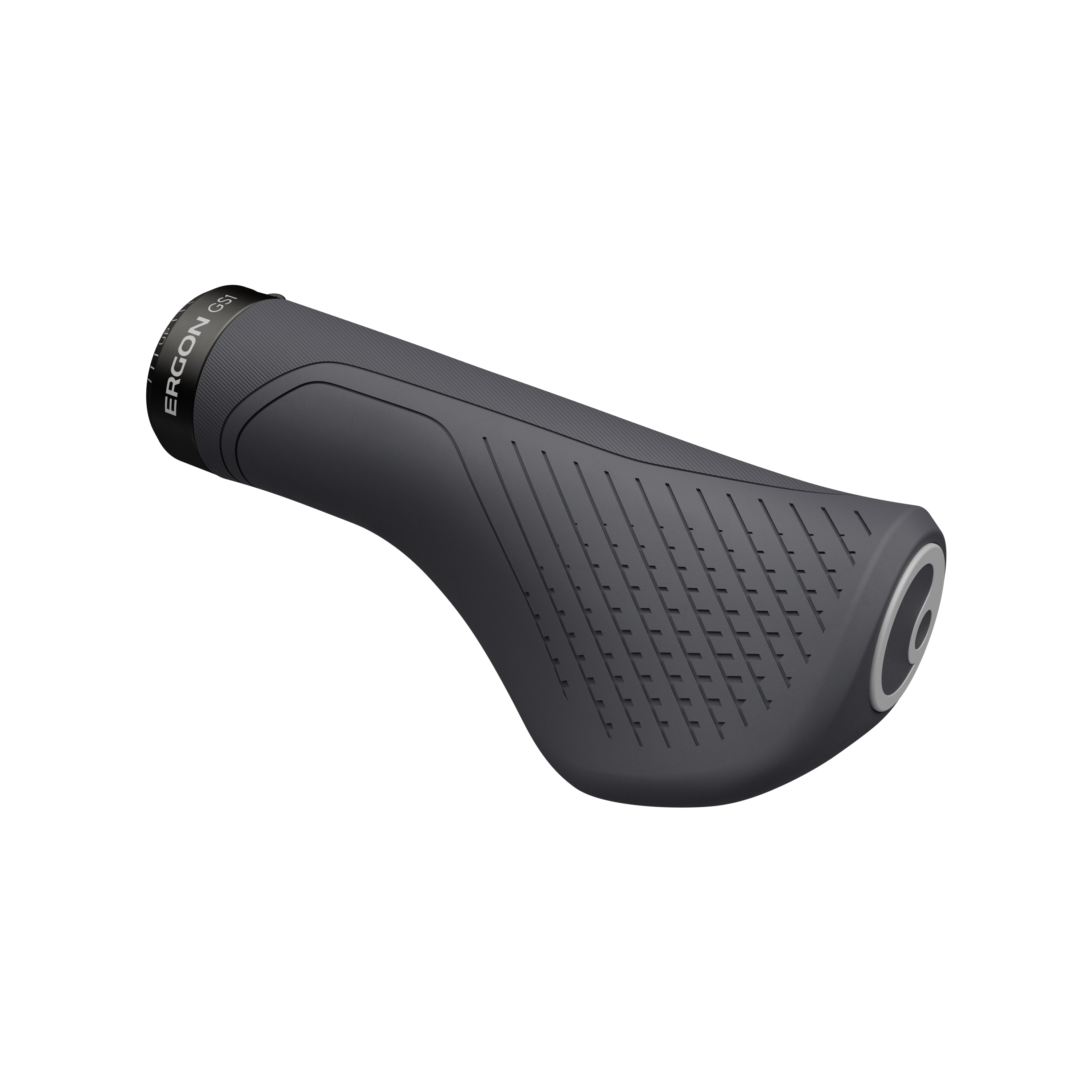
Top pick — Ergon GS1 Evo
The Ergon GS1 Evo is the best all-round choice in the recorded test. It combines a broad palm platform with a profile slim enough for touring mountain bikes as well as long-distance and electric-bike trips. Workmanship was excellent: the pair had clean edges, no unpleasant rubber smell, and arrived with two end caps and instructions.
Fitting is straightforward for an ergonomic lock-on. The clamp screw is accessible from above and specified at 3 Nm, making later angle adjustments less fiddly. Sizes S and L are offered; size L was used in the recorded rides. The platform supports the outer palm and around half of the thumb side, while the outer edges use softer rubber than the centre.
On rides lasting several hours, the compound absorbed impacts without feeling vague. Grip remained dependable when hands became damp, and the shape retained more direct control than the larger touring-only wings. That breadth of use, rather than being the single most cushioned model, is why it leads the field.
Search Amazon UK · Search Amazon US
Comfort-first touring pick — SQlab 702
The SQlab 702 came within a narrow margin of the winner and was judged even more comfortable in pure touring use. Its pronounced platform runs across the outer palm, with slightly raised side edges, and is softer than the rest of the grip. It suits trekking, city and electric bikes better than technical mountain-bike riding.
The pair has closed outer ends, so separate end caps are unnecessary, and the clamp is specified at 5 Nm. Sizes run from S to L; the tested L pair weighed 255 g, making it notably heavy. Feedback was a little more direct than from the Ergon GT1, but the smooth platform became slightly slippery with damp hands. Those limits in use, plus the weight, kept it just behind the GS1 Evo.
Search Amazon UK · Search Amazon US
Most hand positions — Ergon GT1
The unusual Ergon GT1 is the dedicated long-ride option. Its palm platform is the largest of the three picks, and a roughly 1.5 cm rise under each thumb creates several distinct positions without separate bar ends. The surface stayed grippy with damp hands and the damping was rated among the best in the comparison.
Left and right are marked, end caps are included, and the outer clamp is specified at 4 Nm. The large shape takes a little familiarisation and leaves only the index finger able to wrap fully around the grip. That reduces precise feedback on demanding terrain, and the thumb rise felt farther from the fingers than ideal, but the GT1 was the most comfortable recorded option for extended touring and travel.
Search Amazon UK · Search Amazon US
Also tested
Ritchey WCS Ergo — a lightly ergonomic neoprene design with two clamps per side, low weight and direct feedback for fast rides, but its thin cover felt hard, twisted on the core and quickly collected dirt. Search Amazon UK · Search Amazon US
Aaron Ergonomic — the well-made double-clamp pair uses 2 Nm screws and weighs 225 g; modest padding, hard platform edges and a slippery damp surface confine it mainly to shorter city or touring rides. Search Amazon UK · Search Amazon US
Matrix G44 Kork — these rubber-and-cork lock-ons have good workmanship and a 3 Nm clamp, but the hard platform supplied almost no damping and became slippery with damp hands, making longer rides unconvincing. Search Amazon UK · Search Amazon US
Prunus Fahrradgriffe Ergonomisch — a simple push-on pair with end caps and easy angle adjustment, yet the small, hard platform offered little support and the surface became slippery when damp, leaving only a very narrow use case. Search Amazon UK · Search Amazon US
Ergon GP1 Evo — this strong near-pick has a slightly larger platform than the GS1 Evo and a 3 Nm clamp, delivering excellent long-tour comfort but less control on technical trails and a surface that becomes slightly greasy over time. Search Amazon UK · Search Amazon US
Ergon GP4 — essentially a GP1 with independently adjustable bar ends and a 7 Nm clamp, it is a well-made, well-damped long-distance option whose extra weight and larger shape narrow its sporting use. Search Amazon UK · Search Amazon US
Brooks England Ergonomic Rubber Grips — the broad, rough-surfaced grips retained strong traction when damp, but a thin rubber layer provided little cushioning away from smooth tarmac and they were the least comfortable models in their test update. Search Amazon UK · Search Amazon US
SQlab 711 Stuby — integrated inward-angled bar ends allow another position but cannot be adjusted separately, while the long body, sparse damping, slippery damp surface and easily marked finish left better alternatives in the field. Search Amazon UK · Search Amazon US
Fischer Relax — this push-on design comes only in a 123 mm size with a small platform, moderate damping and poor wet grip, so its recorded use case is smaller hands and occasional rides. Search Amazon UK · Search Amazon US
Prophete 5577 — designed for twist shifters and visually well finished, this one-size lock-on has a concave platform, almost no damping and a slippery damp surface; other grips were more convincing. Search Amazon UK · Search Amazon US
Rockbros Lock-on Lenkergriffe — thin round foam gives direct feedback and stays grippy with damp hands on quick cross-country rides, but offers little platform support and tears easily if rubbed against a wall. Search Amazon UK · Search Amazon US
Nextcover GripOne Sport — its clamp carries a 3 Nm marking and the surface uses 1.8 mm fins, producing sound damp-hand grip but a vague feel, limited damping and little appeal on long or technical rides. Search Amazon UK · Search Amazon US
Velospring Art Comfort — the 370 g sprung grips fit a stated 16.5 to 19 mm bar bore and absorbed large, slow impacts, yet assembly took about an hour and the hard, slippery grip plus sluggish response to small impacts counted against them. Search Amazon UK · Search Amazon US
Velospring Sen Comfort — walnut replaces the other Velospring model's plastic grip and a five-year guarantee is included, but the same spring favours large, slow impacts while the hard, smooth surface has little damping or damp-hand grip. Search Amazon UK · Search Amazon US
Aaron Fahrradgriffe mit Hörnchen — a gel insert and roughly 55 mm fixed bar ends provide useful positions, with separate 2 Nm and 5 Nm fasteners, although a hard platform rim and slippery damp surface limit the comfort. Search Amazon UK · Search Amazon US
Ergotec Oslo — almost identical to the Aaron bar-end grips, it repeats the 55 mm fixed inward angle, gel centre and 2 Nm plus 5 Nm fasteners, along with the same hard rim and weak damp-hand grip. Search Amazon UK · Search Amazon US
Wittkop Comfort — cleanly made and clamped at 3 Nm, its deep platform fins provide some spring in an upright position but collapse under more top-down load, while the surface becomes slippery with damp hands. Search Amazon UK · Search Amazon US
Ergon GP1 BioKork — a high-quality near-pick with a 5 Nm clamp, a larger platform than the GS1 Evo and a firmer cork blend that remained grippy around the thumb and forefinger, best suited to relaxed touring. Search Amazon UK · Search Amazon US
Ergon GS2 Evo — this strongly recommended variation is essentially the GS1 Evo with short bar ends, the same broad platform and assured damping, excellent workmanship, good damp-hand grip and a 5 Nm fastener. Search Amazon UK · Search Amazon US
SQlab 702 2.0 — built for upright trekking and everyday riding with multiple sizes and a 3 Nm clamp, it has less wing, damping, texture and wet grip than the original 702, which remained the preferred version. Search Amazon UK · Search Amazon US
Contec Merge Trekking Ergo Kork — the classic wing shape arrived without instructions and with one ill-fitting end cap; its hard, undamped body gripped well when dry but became very slippery with damp hands. Search Amazon UK · Search Amazon US
Aaron Ergonomische Fahrradgriffe aus Kork — this symmetrical 3 Nm lock-on felt thick and hard, particularly for smaller hands, supplied little damping or damp-hand traction and even slipped slightly around the handlebar during the recorded ride. Search Amazon UK · Search Amazon US
How they were assessed
All 30 grips were first checked for workmanship, material quality and fitting. Round and ergonomic shapes were treated separately because a winged grip needs an angle setting while a round one does not.
Every model then went up a long, steep climb and directly down a gravel track so grip could be judged with both dry and damp hands. Comfort and damping were assessed on rides lasting several hours across asphalt, gravel, woodland tracks and rooted sections, uphill and downhill. A sportier mountain bike and a bicycle with a more upright position were both used, allowing each model's intended riding style to be separated from its absolute performance.
Verdict
The Ergon GS1 Evo earns the broadest recommendation: excellent workmanship, simple 3 Nm fitting, two sizes, useful damping and enough of the grip left for direct control across touring and mountain-bike use. The SQlab 702 goes further towards pure trekking comfort but is heavy and less grippy when damp. The Ergon GT1 offers the widest choice of positions and the most comfort for long, steady travel, at the expense of feedback on technical ground.
For another handlebar upgrade, see the bike phone mount guide.