Choosing a coffee machine is not really about brands. It is about which of four machine types matches how you actually live — and most disappointing purchases are a type mismatch, not a bad machine.
The four types, honestly compared
Capsule machines are built for immediacy and convenience: fast coffee with consistent, correct results. The trade is nuance — you give up much of the flavour subtlety other machines can find, and you control almost nothing beyond, on some models, the fill level. Some of the cheapest machines live here, and for a daily no-fuss cup they are exactly right, provided you are not chasing a demanding, nuanced flavour.
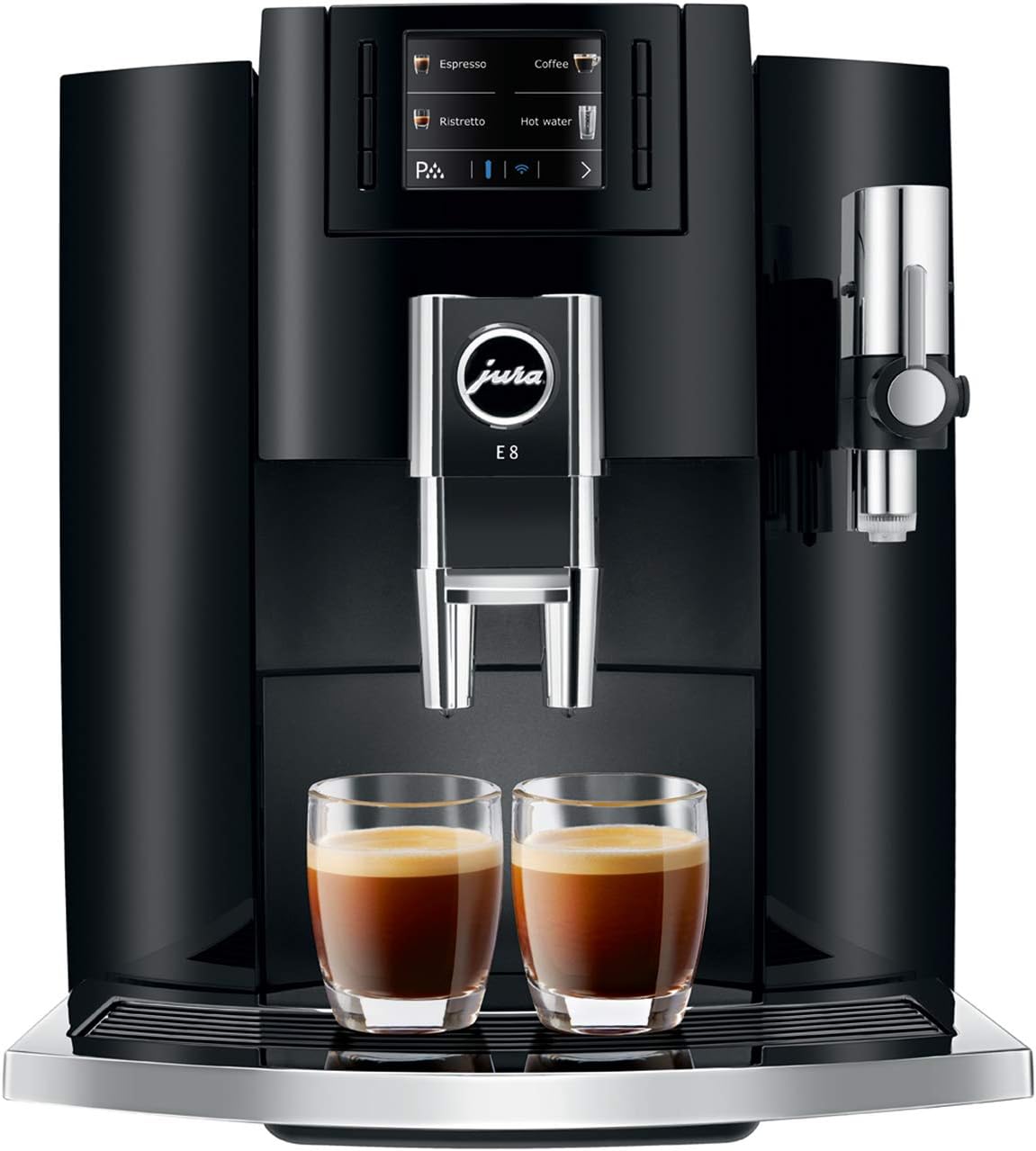
Superautomatic machines grind the beans, manage extraction pressure, water temperature and fill volume — all without you intervening, sometimes on factory presets, sometimes with parameters you choose. The catch most buyers miss: on most models you still froth the milk yourself. They suit people who want genuinely good results without giving up one-button simplicity.
Three checks separate good superautomatics from mediocre ones: water heat-up should take no more than 30 seconds; the grinder should be conical, for a more uniform grind; and it should offer multiple grind levels, which is what makes the result adjustable to you.
Semi-automatic and manual machines hand you the levers — and the learning curve. This is where coffee becomes a craft rather than a button.
Filter and pour-over is the quiet fourth option: inexpensive, capable of genuinely elaborate recipes, and better as a ritual than as a rushed daily default.
Three accessories worth more than an upgrade
The source's accessory advice is unusually practical, because each item patches a specific gap rather than adding luxury. An external milk frother turns any machine into a latte and cappuccino machine — most useful precisely when your machine has no milk system of its own. A calibrated tamper compresses and levels the ground coffee in the portafilter, and matters most on machines that do not build one in. And a digital scale with a timer is the personalisation tool: weigh the beans, time the extraction, and you can reproduce a good result instead of hoping for it.
Five questions that decide it
The source frames the decision as five questions, and they are better than any spec sheet:
- How much time do you have each morning? Minutes point to capsule or superautomatic; unhurried weekends open everything else.
- One button, or a process? Be honest — a manual machine you resent using is worse than a capsule machine you enjoy.
- Do you want to learn recipes? If experimenting appeals, a pour-over or semi-automatic rewards it; if not, automation is not a compromise, it is the right answer.
- Do you drink frothed-milk drinks? Then check how each machine handles milk — this is where superautomatics quietly differ most.
- How much cleaning will you actually do? Grinders and milk systems add maintenance; capsules add almost none.
The picks
Best overall — Ninja Luxe Essential. The strongest results in the field, with an excellent grinder and genuinely easy operation. Its one weak point is the cold-brew mode, which does not work especially well. A UK buying note: Ninja sells its Luxe espresso range here under different names — UK listings centre on the Luxe Café family, and the Essential designation does not appear as a first-party UK listing. Check the exact model rather than assuming the ranges map one-to-one.
Best with a built-in press — Sage Barista Express Impress. Very high quality, with an integrated tamper that takes the fiddliest step out of preparation. It is expensive, and it is worth it.
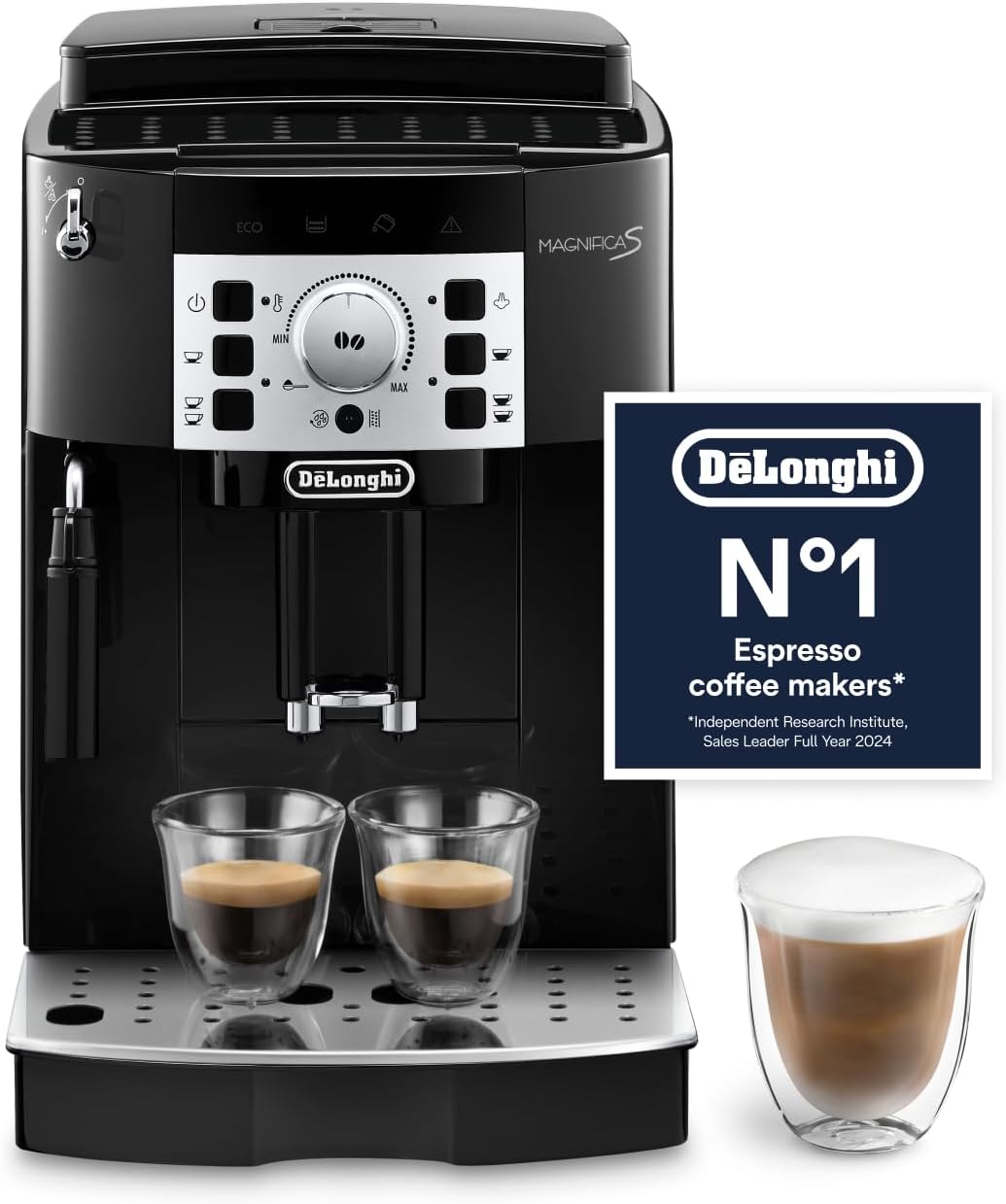
Best first superautomatic — De'Longhi Magnifica S. The classic route from capsules to bean-to-cup without losing simplicity. Its one quirk: it uses a good deal of water on switch-on and switch-off, part of its self-rinsing behaviour.
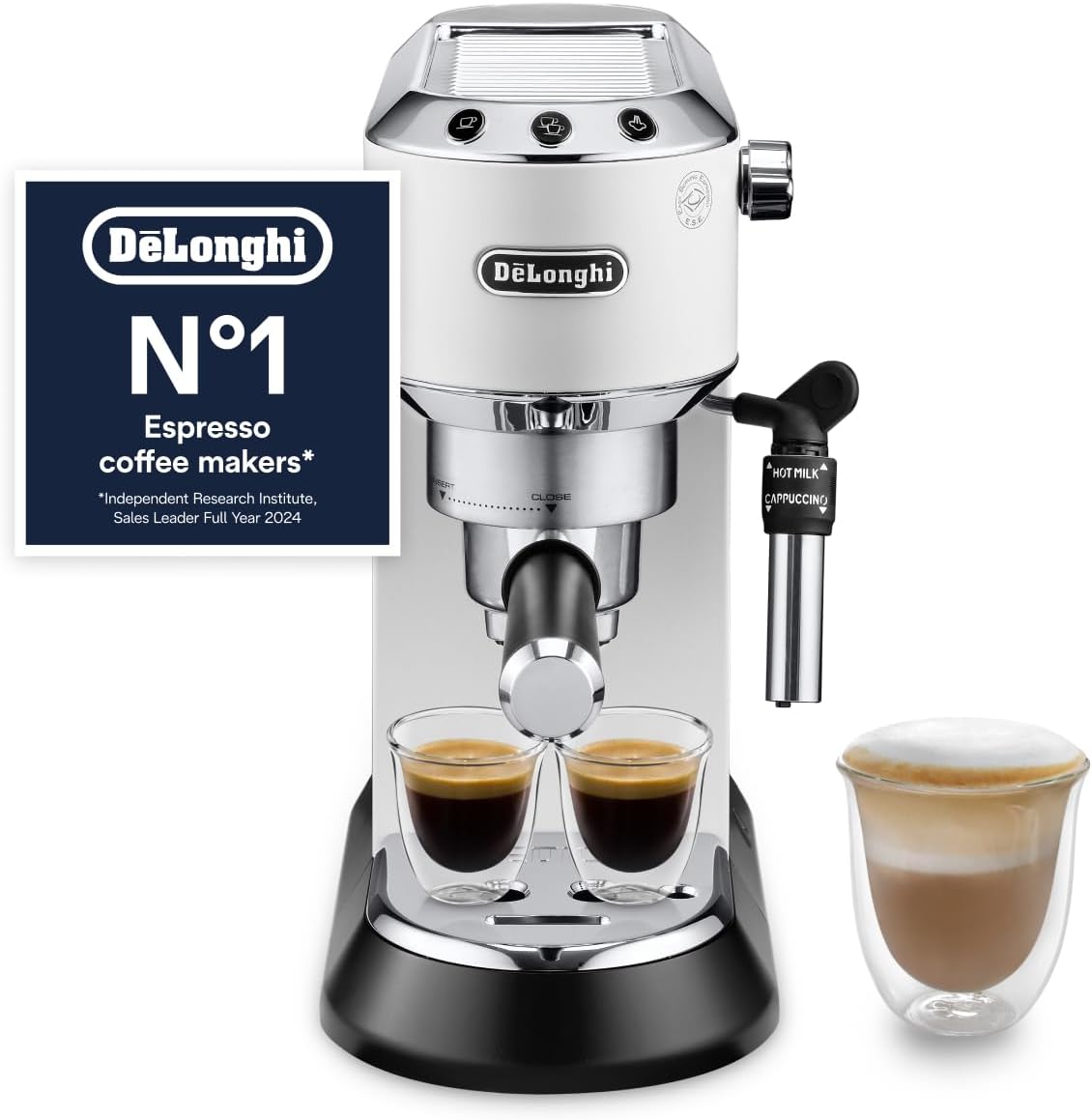
Best affordable manual — De'Longhi Dedica. The step into manual espresso without heavy spending: temperature is adjustable and it is very easy to use. It has no grinder, so budget for one — or buy ground coffee. It is also the winner of our dedicated best espresso machines guide, which covers it in far more depth.
Best for learning — Hario V60. Inexpensive, easy to start with, and the doorway to a very deep world of recipes. It is not an everyday-for-everyone machine — more a considered brew than a commute cup.
Best filter machine for enthusiasts — Fellow Aiden. Makes proper pour-over simple to produce well. Getting truly excellent results asks more of you than other machines here, which is the point of it.
Best capsule pick — Krups Nespresso Essenza. Fast, with automatic switch-off. The water tank is genuinely small at 0.6 litres, which is the price of its tiny footprint.
One tested model is not recommended for UK buyers: the budget Jata hot/cold machine is a Spanish-market brand with fragile build, and it has no meaningful UK presence.
Before you buy
Answer the five questions above before comparing any two machines — the type decides more than the model. And if you already know the type, we go deeper on two of them: best espresso machines for the manual route, and best bean-to-cup coffee machines for the superautomatic one.
Research sources
Sources recorded for this page are linked below. Reported third-party testing belongs to the original publisher; it is not testing performed by Truthful Reviews.