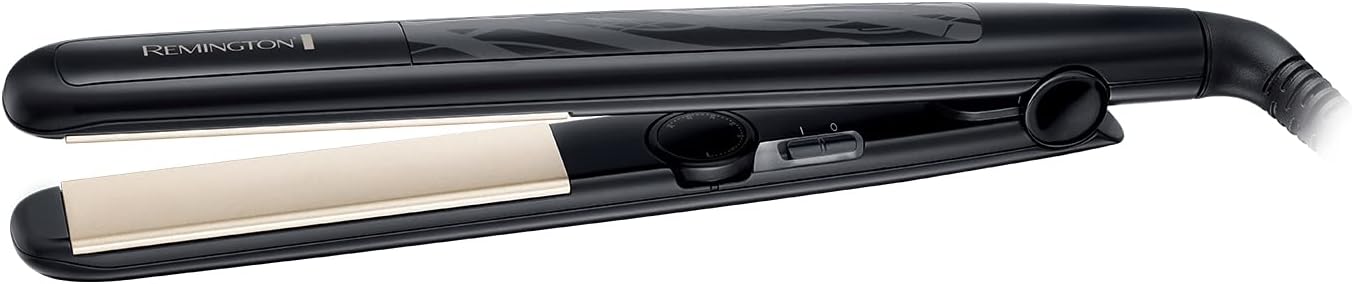
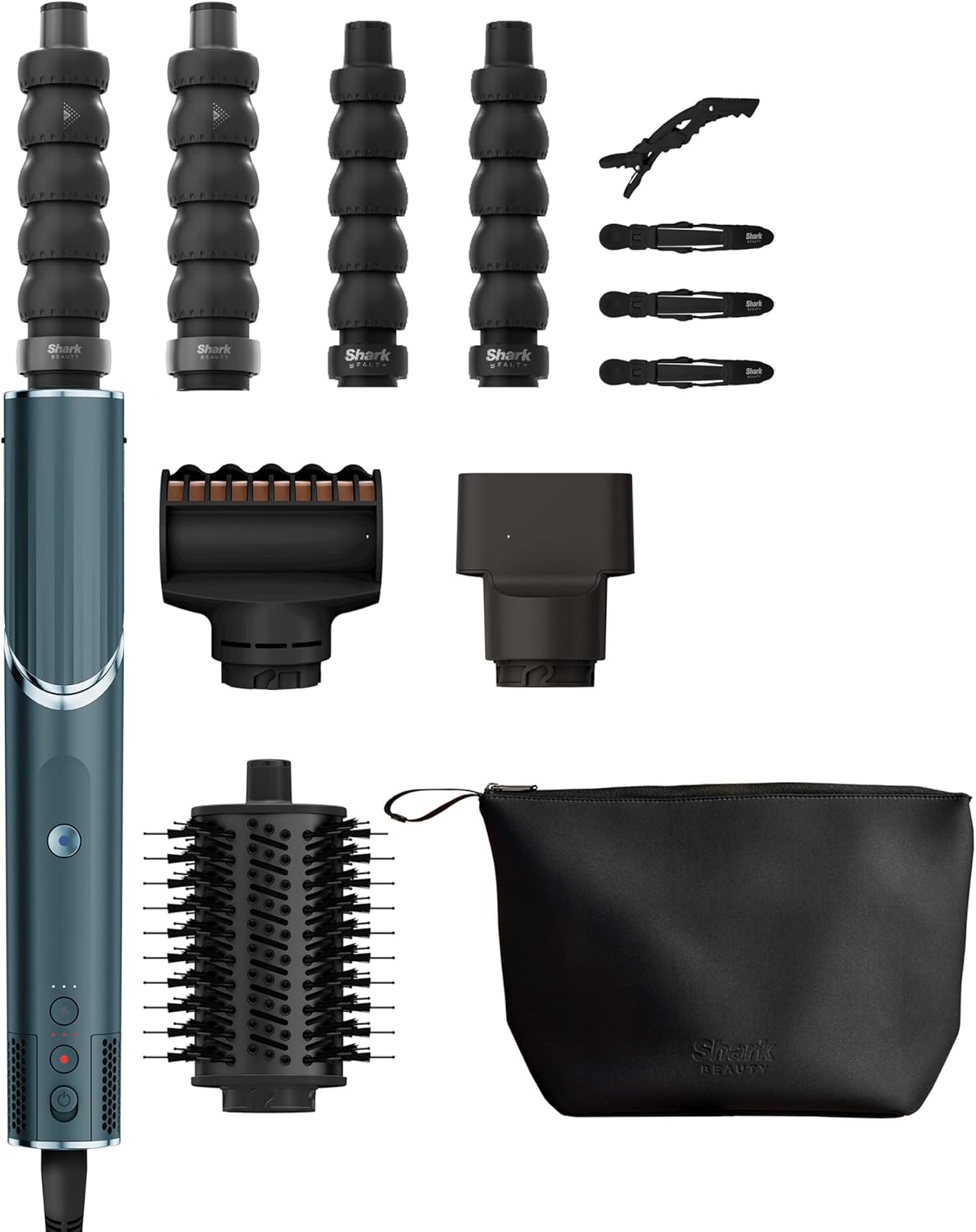
Almost every hair dryer sold today advertises ionic technology, several advertise brushless motors, and none of it matters as much as one number: 70 degrees Celsius. Above that, hair begins to take damage. A group test of hair dryers assessed how well current models keep you below it — and the honest answer is that the expensive ones mostly manage it by measuring, while the cheap ones manage it by being used carefully.
Why heat is the whole problem
Hot air pulls moisture out of hair. That is the point — the hair needs to dry — but hair that is already dry still holds moisture, and driving that out is what makes it brittle.
Two different temperatures get quoted in this category and they are easy to confuse, so it is worth separating them before any of the numbers below make sense.
The temperature at your head is the one that matters to your hair, and the guidance figure is around 70 degrees: past that, hair is at risk of damage. The practical test is unscientific but reliable — if it feels too hot on your scalp, it is too hot.
The temperature of the air leaving the dryer is a different and higher number. Across the tested field it ranges from about 39 to 98 degrees depending on the setting, and the fastest dryers push the air past 100 degrees. One model measured just over 80 degrees at minimal distance, which is the clue to how the two figures relate: the air cools between the nozzle and your head, so how hot the dryer runs and how hot your hair gets are not the same measurement.
That is why distance does real work. 15 to 20 centimetres is the sensible gap; closer than that irritates the scalp as well as cooking the hair. If you are in a hurry, the right move is a higher fan speed at a lower temperature, not more heat.
It is worth being straight about one thing: the tested material cites both 70 degrees as the point where hair is at risk and 150 degrees as the level that damages hair, without reconciling them. The lower figure is the one to design your habits around, and the higher one is best read as a manufacturer's benchmark for what its heat limiter prevents rather than a safe ceiling to aim at.
Two accessories do real work. A heat protectant spray, applied before drying, is worth using if you dry your hair often. A diffuser attachment spreads the airflow so no single patch takes the full force.
The winner: Shark SpeedStyle
The Shark SpeedStyle took the test win, and it does so by solving the heat problem directly rather than leaving it to the user. It samples the air temperature 1,000 times per second and never lets it exceed 110 degrees at the nozzle — the manufacturer's stated point being that the 150 degrees it describes as damaging is never reached. Read alongside the section above, that is a limiter on how hot the dryer itself can run, not a guarantee about the temperature at your scalp: distance still does part of the work.
Its other headline feature is the IQ function: whichever attachment is fitted, the dryer sets itself up appropriately rather than requiring you to remember. The test used three — concentrator, styling brush and gloss finisher — across different hair types, and rated the results highly: real shine, a smoothed hair structure, and gentle drying at high speed. It is also the compact, well-made option, with a powerful airflow for its size.
Two complaints. Run at its full 1,700 watts with no attachment fitted and it emits an unpleasant whistle. And it is on the heavy side, and not cheap — though it is the more affordable route to this class of performance than the Dyson.
Availability: Shark sells the SpeedStyle in the UK. Note the tested unit carries the European model code HD333EU; UK listings use their own codes, so check the specific model rather than assuming an exact match.
The luxury option: Dyson Supersonic Nural
The Supersonic needed an update and got a substantial one. The Nural is the pick if money is genuinely not the constraint: pre-programmed settings, a comfortable rather than shrill noise, excellent results and a wide range of attachments for different hair types. It also drops to a minimal airflow when you set it down, which is the sort of detail that only appears on hardware at this price. At 450 grams it is fractionally heavier than the Supersonic R.
The verdict was that it is effectively the perfect hair dryer apart from what it costs — a real recommendation with a real caveat attached, not a hedge.
Availability: listed on Amazon UK under the exact name.
The budget pick: ProfiCare PC-HTD 3113
The value choice for anyone who wants switchable ionic function and a couple of styling attachments without spending much. Its brush motor runs at 2,200 watts, which makes it genuinely powerful — and genuinely loud. The cable is short, which the testers noted as their main grumble while conceding it is a small complaint at this end of the market.
Availability: ProfiCare hair dryers are listed on Amazon UK, but the exact PC-HTD 3113 does not appear — the UK catalogue carries other models in the range. Treat the search below as a route to the range, not to this specific unit.
Ionic technology: what it actually does
Nearly every dryer now claims it, so it is worth knowing what the claim means.
Friction knocks electrons off atoms, leaving positively charged ions that repel each other. It is the balloon-and-hair experiment from school, and it is exactly what happens when you dry your hair: charged strands push apart and stand up. Ionic dryers generate negatively charged ions in the airflow to neutralise that, and the secondary claim is softer, shinier hair. Salons have used ionic dryers for years and it is now hard to buy a dryer without the feature.
The honest limits are these. An ionised airflow can genuinely reduce frizz — but only frizz caused by static charge, the kind you get after combing or brushing. It works on dry hair. Sceptics reasonably argue the feature has mostly been a way to charge more, and the strongest evidence for that view is that it now appears on inexpensive dryers too, including the budget pick above.
Also assessed
The wider field is worth knowing about, because weight and noise vary far more than the marketing suggests.
The Panasonic EH-NA9N-H825 runs a 1,600-watt motor and adds nanoe technology plus mineral ions, which the manufacturer says drives moisture back into the hair; it also carries alternating hot and cold cycles and dedicated programmes for the scalp, the ends and even facial skin.
The Valera Swiss Light 3200 is one of the genuinely light options at around 370 grams without its cable — a difference you notice during a long styling session, whatever the presentation of the packaging suggests.
The Babyliss Air Power Pro weighs 554 grams with the cable and is sold as "super quiet". The testers were unconvinced enough to measure it: 73 to 74 decibels from about a metre away on the highest speed setting. That is not quiet, and it is a useful reminder that noise claims are rarely substantiated.
Temperature control varies more than the marketing implies. Some models offer stepped settings at roughly 60, 80 or 100 degrees; one holds a constant 57 degrees; another runs an overheating sensor that actively keeps the air at 54 to 57 degrees specifically to avoid heat damage. If you want the heat decision taken out of your hands, those are the designs to look for.
The Beurer HC 100 Excellence takes a practical approach to maintenance: after 1,500 minutes of running time its three fan-indicator LEDs blink together to tell you the filter needs cleaning — the sort of feature that matters more than it sounds, since a clogged filter is the usual reason a dryer loses power.
How to choose
If you dry your hair most days, buy the temperature control: a dryer that actively caps its own heat protects hair better than any amount of care with a hotter one. If you dry it occasionally, technique does most of the work — 15 to 20 centimetres, higher airflow rather than higher heat, and a heat protectant. And if frizz is the specific complaint, ionic function is worth having, provided you understand it addresses static rather than hair texture in general.
Search current listings: hair dryers on Amazon UK | hair dryers on Amazon.com. For the Dyson: Amazon UK | Amazon.com. For the budget range: Amazon UK | Amazon.com.
Research sources
Sources recorded for this page are linked below. Reported third-party testing belongs to the original publisher; it is not testing performed by Truthful Reviews.