The most damaging thing you can do with a hair straightener is not choosing the wrong one — it is using the right one on freshly washed hair.
From a tested field of 45 straighteners, here is what the testing actually teaches, starting with the rules that protect your hair whichever model you buy.
The rules before the tools
Do not wash immediately before straightening. Freshly washed hair has not yet rebuilt its protective oil layer, so heat attacks it harder. Wash in the evening, style the next morning.
Wet hair is an absolute no — it can burn. The nuance: some straighteners explicitly permit damp hair while many strictly forbid it, and the two groups look identical on the shelf. This is the rare category where reading the manual first is genuinely load-bearing.
How often is safe? Thick, strong hair tolerates heat better than fine or split-prone strands, and the healthier the hair, the more often you may straighten. But even robust hair should not be straightened daily — twice a week is defensible depending on hair structure. Always use a heat-protection spray.
The temperature numbers that matter: more than 200 °C is generally unnecessary — beyond it the outer hair layer can melt — with extremely thick or frizzy hair the sole exception. The ideal for most hair is 185 °C, and fine, stressed or coloured hair should stay at 170 °C or below. Keep the iron moving rather than lingering on any one spot.
Technique that changes the result
The method matters as much as the machine. Work in sections from the bottom up, leaving the top layer until last, and keep roughly five centimetres clear of the scalp and ears — burns happen at the roots, not the ends. To avoid a flat finish, straighten over your head or pull strands out horizontally from root to tip.
And a genuinely useful fact: most straighteners also curl. Twist a strand loosely around the upper heating plate and draw the iron slowly downwards — waves without a second tool.
Aftercare is part of the technique. Straightening strains hair, so care for it more than usual: argan oil's unsaturated fatty acids restore silkiness and volume, or use a quality intensive treatment weekly. If the hair dries out anyway, the only honest fix is a straightening pause.
One field-wide observation worth using in the shop: heat-up times span roughly 15 to 60 seconds across the tested models, and the quick end is genuinely quick — several models are ready before you have sectioned your hair. Slow warm-up is a daily annoyance you can screen out before buying.
Coatings, decoded
Ceramic is the first choice, because it distributes heat evenly — and most straighteners on the market now use it. The blends fine-tune it: ceramic-tourmaline adds protection against static charge, and titanium-ceramic gives an ultra-smooth, hair-sparing plate surface. Any of the three serves; what you are avoiding is uncoated metal.
Shape follows hair
Straighteners split into classics on the tong principle — narrow plates with rounded edges, which also curl and wave — and extra-wide models whose large plates suit thick, unruly hair. Whatever the shape, the checklist is constant: multiple temperature settings, a long cable, and plates that close cleanly.
The picks
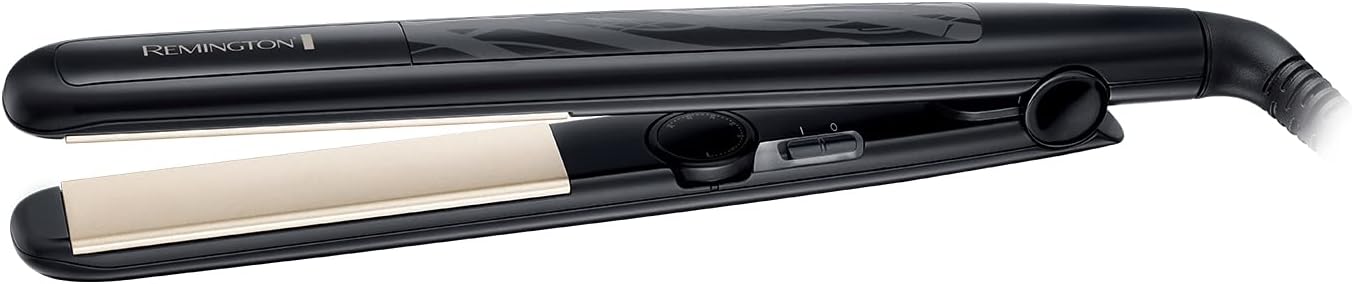
Best overall — Remington ProLuxe S9100. Elegant, heats up in a flash, and glides through hair with a particularly slippery ceramic coating — straightening strand by strand in just a few passes. Temperature adjusts to hair type across nine steps from 150 to 230 °C, and a Pro+ button held for two seconds jumps straight to the ideal 185 °C — reached in just 15 seconds. Operation is trivially easy, and it is a lightweight with a three-metre cable and an automatic safety cut-off after 60 minutes. A thoughtful touch: the heat-resistant storage pouch doubles as a styling mat. Its one weakness is cosmetic — the pale surface shows dirt easily. In the UK it sells as the ProLuxe ceramic straightener; the S9100 model code identifies the exact unit.
Best for shine — Golden Curl GL 829. Coated tourmaline-titanium plates deliver fast, glossy, long-lasting straightening across many hair types, with a temperature wheel spanning 12 steps from 120 to 230 °C, a large LED display and gentle infrared technology. Two honest costs: it tugs occasionally during styling, and it is expensive.
Most innovative — Dyson Airstrait. No heating plates at all: it straightens with directed airflow, which means it can be used even on wet hair — drying and straightening in one pass at genuinely mild temperatures — three settings of 80, 110 and 140 °C, a fraction of plate heat — and leaving light volume, like a round-brush blow-dry. It is especially gentle for exactly that reason. The costs: a bulky adapter plug, and a price to match the engineering.
Best value — Remington Pearl S9500. A solid, reliable straightener and a strong travel companion: ten temperature steps from 150 to 235 °C on an LC display, an auto-off function, a turbo-boost mode that jumps to maximum, and a warranty of up to six years — an unusual signal of confidence at this level. It straightens well rather than best, and the pearl-effect design is a matter of taste.
The cordless caveat
Battery straighteners exist, and the field's verdict is worth its bluntness: around 30 minutes of styling per charge — some models manage only about 20 minutes — then roughly 3 hours of charging. For a fringe, short hair or travel touch-ups that is genuinely useful; for long, thick hair or leisurely styling it is a countdown. Buy cordless for the specific job, not as the main tool.
Straightener or straightening brush?
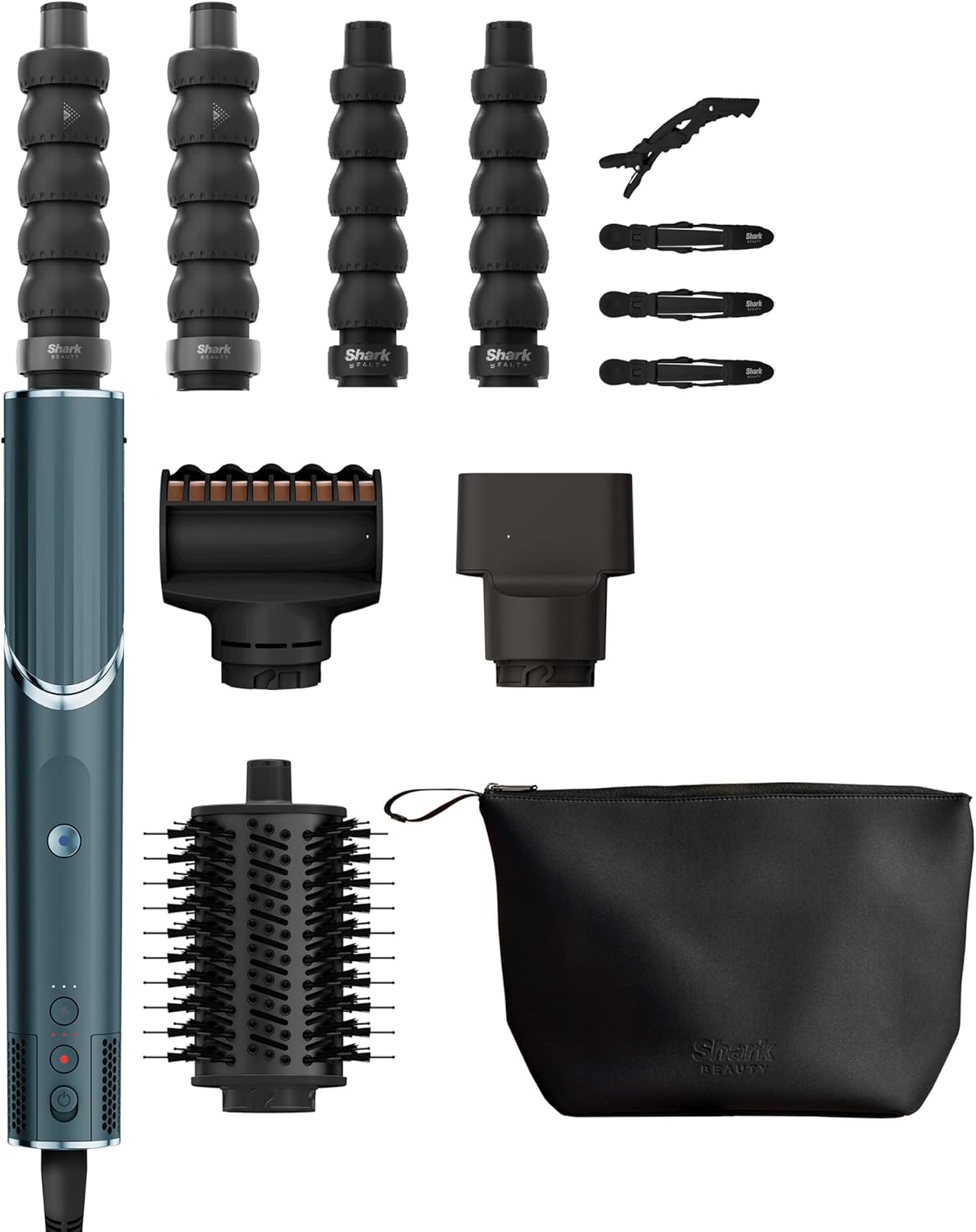
The tested field sits alongside a sibling category worth knowing before you buy either. A straightening brush is a heatable brush that smooths hair as you comb — some add a drying function — and the mechanism is why it is gentler: heat spreads along the strand as it glides through quickly, where an iron heats a larger area at a point, for longer. The practical consequences: no sectioning needed, more intuitive handling, and — counter-intuitively — you should run an iron at a lower temperature than a brush, because the iron's contact is harsher. The trade is finish: plates reach flatter, sleeker results and can curl; the brush tames and shines. Both want dry to at most towel-dry hair and heat protection.
Before you buy
Four questions. How healthy is your hair, honestly? That sets how often any of these should be used at all. Thick and unruly, or fine? Wide plates for the first, classic tongs for the second. Do you want waves too? Then rounded-edge tongs, not wide plates. And is the 200-degree ceiling respected? — some models go higher; going there is a hair decision, not a styling one.
Heat styling pairs with our best hair dryers guide, and the Dyson approach above has a full airflow-styling cousin in our best IPL and hair care coverage.
Research sources
Sources recorded for this page are linked below. Reported third-party testing belongs to the original publisher; it is not testing performed by Truthful Reviews.