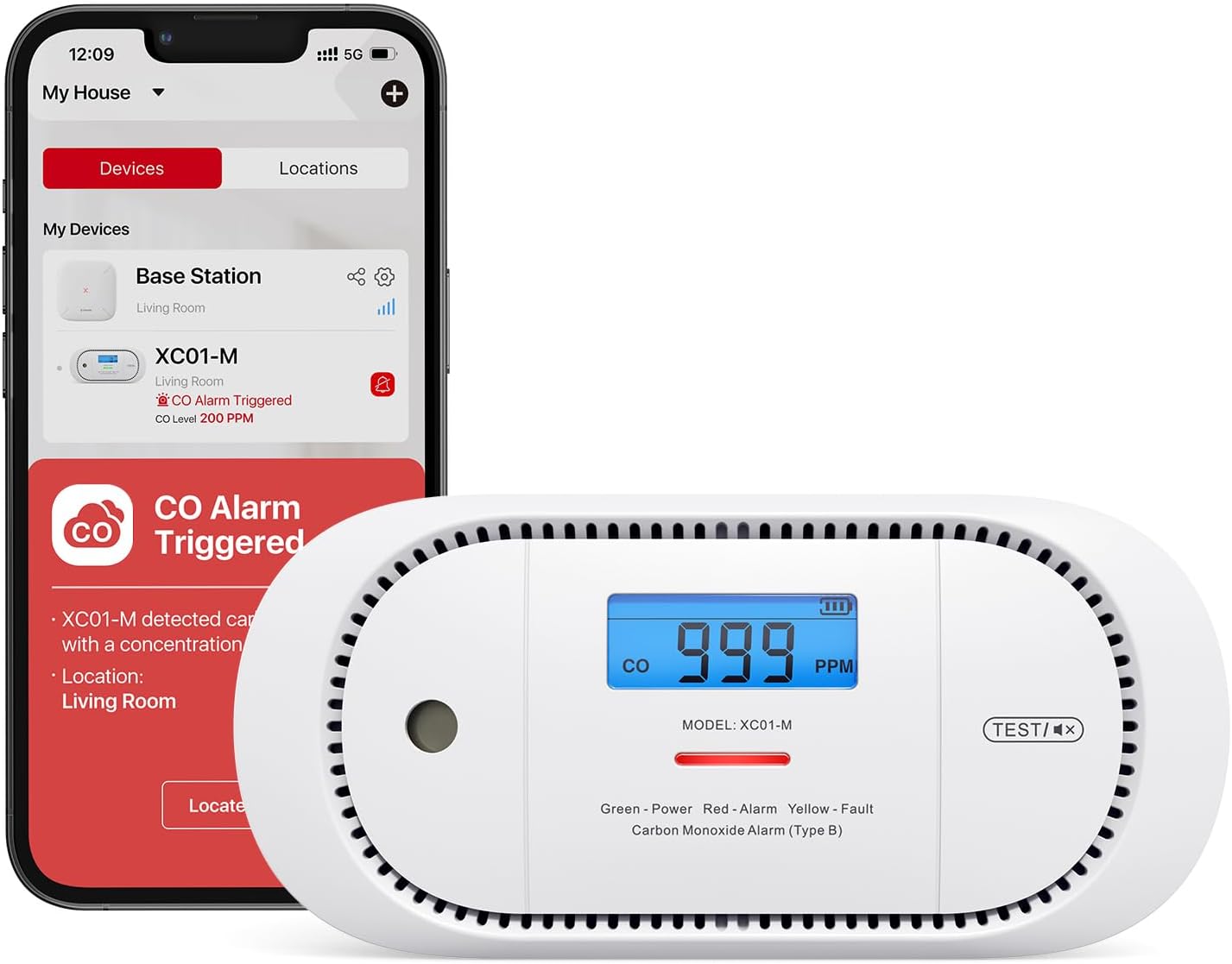
Where to put a carbon monoxide alarm is the most-asked question about these devices by a wide margin — and the popular answers, that it should go high like a smoke alarm or low because the gas sinks, are both wrong.
Carbon monoxide mixes with room air, so there is no universal "it rises" or "it sinks" mounting rule. Follow the instructions supplied with the specific alarm. UK guidance generally places alarms in the same room as a potential carbon-monoxide source and around 1–3 metres from it; depending on the model and setting, the approved position may be on a wall, shelf or ceiling.
Which rooms have a source
The rooms worth thinking about are the ones containing something that burns fuel:
- Boiler rooms and rooms with gas heaters — the risk is a technical fault or incomplete combustion.
- Living rooms with a fireplace or stove — open fires can produce dangerous concentrations where ventilation is poor.
- Kitchens with gas hobs — incomplete combustion produces carbon monoxide here too.
- Garages and adjoining rooms — vehicle exhaust can migrate into living space.
Carbon monoxide is invisible and odourless, which is what makes it so treacherous — there is no sensory warning, only the alarm. Requirements for alarms in homes and rented property vary and change, so check the current rules that apply where you live, and let the manufacturer's instructions and current local fire-safety guidance decide both siting and whether further alarms are needed.
What the certification numbers mean
The standard that matters is EN 50291-1:2018, which sets the alarm thresholds and response times a carbon monoxide detector must meet. Testing follows those thresholds exactly:
| CO concentration |
Required response |
| 30 ppm |
No alarm within 120 minutes |
| 50 ppm |
Alarm within 60–90 minutes |
| 100 ppm |
Alarm within 10–40 minutes |
| 300 ppm or more |
Alarm within 3 minutes |
Two related marks are worth recognising. EN 50291-2:2019 covers use in vehicles, boats and caravans — worth having if the alarm will travel. EN 14604:2005 is the smoke standard: a unit only detects smoke if it carries that certification, and combined smoke-and-CO units are comparatively rare. Read both certifications rather than assuming one device covers everything.
Sensors expire — check the dates
The electrochemical sensor in these alarms has a finite life, typically ten years, and most current models pair it with a sealed battery designed to last that whole lifespan. That makes them genuinely fit-and-forget, but it also means the unit itself expires. Look for clear marking of the production and installation dates, and note that better models print the replacement date on the housing.
The picks
Best overall — X-Sense XC04-WX. The winner of a 19-detector field on the strength of seamless Wi-Fi connectivity, app integration and real-time notifications when CO levels rise — the difference between learning about a problem at home and learning about it while out. It is certified to EN 50291-1:2018, has a durable sensor and marks production and installation dates clearly. The display is easy to read, installation is flexible — it can stand on a surface or mount on a wall, with a drilling template included — and it can be operated from the app. It is compact enough to take away with you. Weaknesses were hard to find.
Best without an app — FireAngel FA3322-EUX10. It displays the current temperature as well, and signals unambiguously when everything is in order rather than only when it is not. The slim, compact build stands up easily and suits mobile use, and it is certified to both EN 50291-1:2018 and EN 50291-2:2019 — so it is one to take to a caravan or boat. The battery is permanently integrated and covers the sensor's full lifespan. Wall mounting is possible, but neither fixings nor a drilling template are supplied.
Best smart alarm — Google Nest Protect. The premium choice, combining smoke and CO detection in one large, modern unit that uses clear spoken announcements instead of a shrill tone. Integration with Google's ecosystem allows automations such as switching cameras on automatically, with extensive app settings, plus a silence function and a discreet night light. The honest costs: it is markedly more expensive than a simple alarm, it is large, it has no display, and it cannot be stood on a surface — wall or ceiling only.
Best discreet option — FireAngel FA3820-EU. Reliable protection certified to EN 50291-1:2018 and EN 50291-2:2019, in a compact, slim body with a large test button for easy function checks. There is no display, which is the point — it barely registers in a living room. It stands or mounts, fixings are included but there is no drilling template, and the integrated battery matches the sensor's ten-year life, making it practical for a holiday flat. One caveat: the supplied instructions are in English and French only.
Best combined smoke and CO alarm — FireAngel SCB10-INT. One of the largest units in the field and distinctive for its round shape, it detects both smoke, via EN 14604:2005, and carbon monoxide, via EN 50291-1:2018 — a rare combination. Instead of a display it uses a large ring-shaped LED that glows light green during its minute-by-minute self-check, which depending on where you fit it may be intrusive. The sealed battery lasts the stated ten-year device life, and the replacement date is marked on top. The round body cannot stand on a surface, but the back detaches and doubles as a drilling template.
How the testing worked
Each alarm's contents were checked against the maker's claims, along with build quality and the flexibility of its standing and mounting options. Function was verified in a controlled environment using a CO measuring instrument, exposing each detector to different concentrations and timing the alarms against the EN 50291-1:2018 thresholds in the table above.
Before you buy
Four questions. Where are your fuel-burning appliances? Their locations shape the shortlist, while the manufacturer's instructions and current local fire-safety guidance determine siting and whether further alarms are needed. Will it ever travel? Then look for EN 50291-2:2019 as well. Do you want a smoke alarm too? Only units carrying EN 14604 detect smoke — most CO alarms do not. And when does the sensor expire? — ten years is typical, so note the installation date when you fit it.
Our best security cameras guide covers the rest of the home-safety kit, and our best smart plugs guide the wider connected home.
Research sources
Sources recorded for this page are linked below. Reported third-party testing belongs to the original publisher; it is not testing performed by Truthful Reviews.