The number printed on a power bank is not the number that reaches your phone — and the reason is not simple inefficiency.
Power-bank mAh figures are voltage-dependent, so compare watt-hours and rated output capacity. Xiaomi specifies 25,000mAh/90.8Wh at 3.63V and a rated output capacity of 14,000mAh at 5V/6A.
Why the headline figure misleads
The intuitive sum — a 3,000 mAh phone plus a 6,000 mAh battery equals two full charges — is wrong, and the voltage bases above are the main reason: the cell capacity and the output capacity are quoted at different voltages, so they are not comparable numbers. On top of that sit real losses from the device's own charging efficiency and the operating temperature, and, like the battery in your phone, a power bank has a finite life cycle and loses capacity progressively.
The practical rule: read the watt-hour figure and the rated output capacity, not the headline mAh, and compare those between models.
Size, ports and speed
Design is a compromise, not a preference. As with phones, higher-capacity batteries are physically bigger and heavier, so capacity and portability trade directly against each other. Because this is a thing that lives in a bag or rucksack, the casing — usually plastic or metal — should resist knocks, drops and scuffs, and should not be slippery in the hand.
Ports, and the cable nobody mentions. Whatever connector your phone uses, you charge from a power bank with a cable whose other end is USB — and that cable is often not included. The battery itself is refilled over micro-USB or USB-C, and that cable usually is in the box. Note carefully: the cable only, not the mains plug.
Beyond having the right sockets, check how many ports there are if you intend to charge several devices, and read their individual specifications — because they will not all charge at the same speed, and running several devices at once splits the available power between them. Most batteries manage that distribution automatically to optimise charging.
Charging speed cuts both ways. If your phone supports fast charging, buy a battery that supports it too, or the capability goes unused. On multi-port models the electrical load is deliberately uneven, typically with one fast port and one slow one. And speed matters at the other end as well: how long the power bank itself takes to refill is part of living with it.
The picks
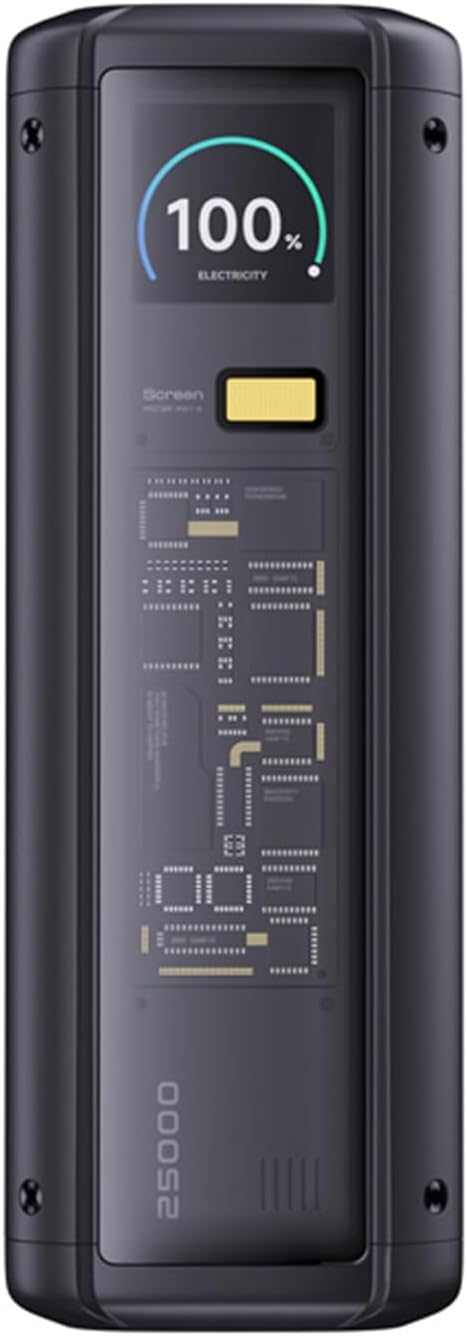
Best overall — Xiaomi 212W HyperCharge Power Bank 25000. Large capacity at 25,000 mAh with genuinely quick charging, able to run three devices at once, and enough output to charge a laptop — up to 120 W for phones. The build combines looks and function: a robust shell with soft lines and rounded edges, three transparent sides showing a geek-chic interior, and a colour smart display reporting the charging process. It is also suitable for air travel. Two honest costs: at 628 grams it is not the lightest here — high capacity always ends up as weight — and, per the specifications above, the headline 25,000 mAh is quoted at 3.63 V while the rated output capacity is 14,000 mAh at 5 V. The UK listing quotes 212 W total output with 140 W PD 3.1 on a single port.
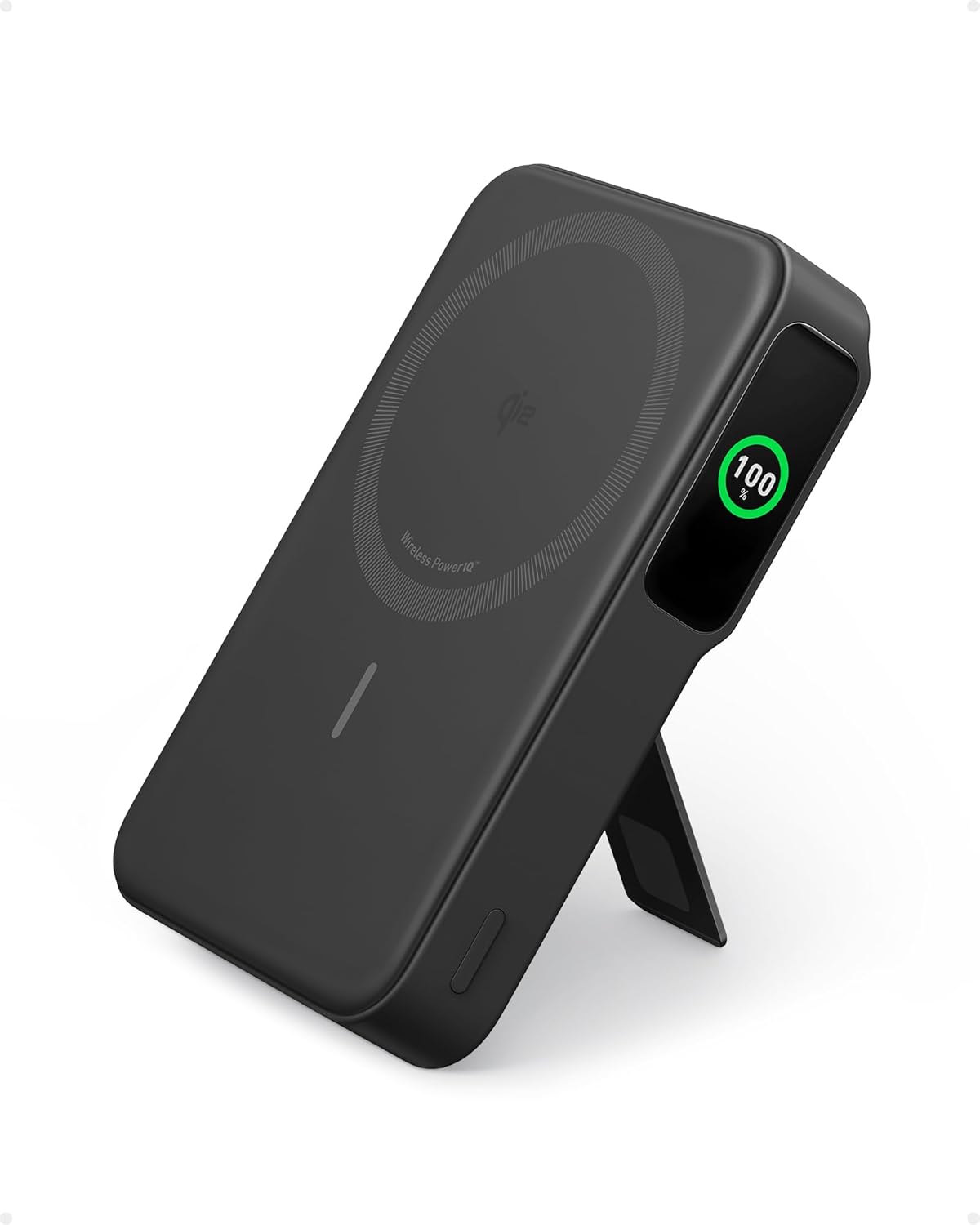
Most compact — Anker Nano Power Bank. A bestseller from one of the best-known names, pairing a 10,000 mAh capacity with a genuinely mini design at just 215 grams — enough to fully recharge a phone while staying pocketable. Its limit: only two devices at once. The UK listing includes a built-in USB-C cable and 30 W maximum output.
Best high capacity for the money — Baseus 20000 mAh 45 W. From a brand specialising in mobile accessories, this pairs 20,000 mAh with a keen price and — the practical touch — an integrated cable plus four charging ports. The maker rates it at up to 3.4 full charges of a current iPhone. It is not the most elegant battery on the market.
Thinnest and lightest — Belkin Boostcharge 10K. 10,000 mAh in a body just 1.57 cm thick weighing 211 grams, from a reference brand known for solid quality at accessible prices. The trade is speed: charging is somewhat slow.
Best budget big battery — Xiaomi Power Bank 20000. The considerably cheaper, lighter Xiaomi: 342 grams, 20,000 mAh, and three devices simultaneously. Its ceiling is output — a maximum of 22.5 W, so fast-charging phones will not stretch their legs.
Best everyday budget pick — INIU Power Bank 10,000 mAh. Cheap, compact, supplied with a case, and claiming to be the slimmest on the market. The catch is patience: it takes 8 hours to charge fully.
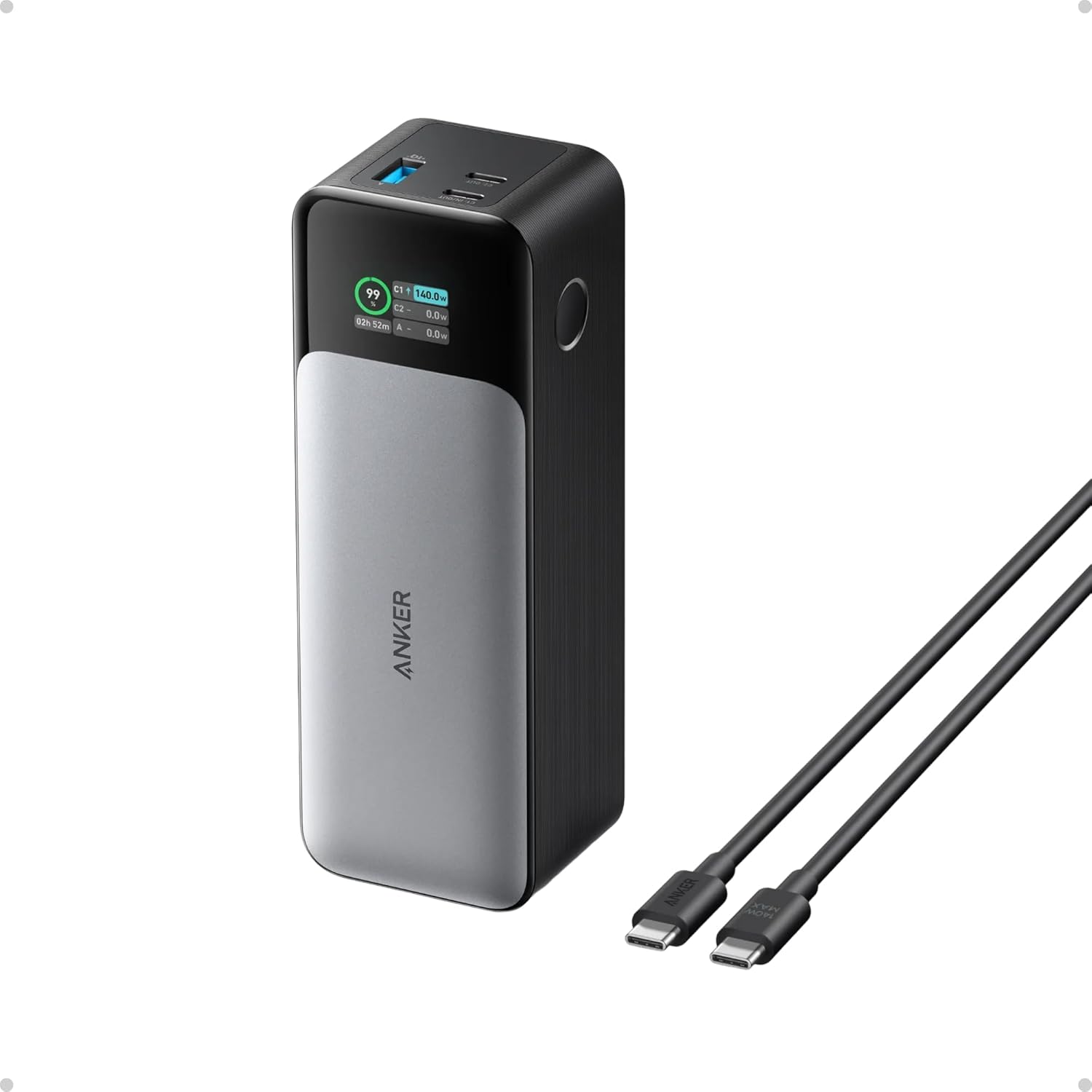
Fastest — Shargeek 170. The specialist choice: 24,000 mAh with a maximum output of 140 W, engineered to last. It sits well above the rest of this group in cost, so it is not for every budget.
Before you buy
Four questions. What capacity do you actually need? Compare watt-hours and rated output capacity between models, not the headline mAh. How many devices at once? That decides port count, and remember the power splits between them. Does your phone fast-charge? If so, match it — otherwise you are paying for headroom you cannot use. And how heavy is too heavy? — the largest pick here is roughly three times the weight of the smallest.
Our best wireless power banks guide covers the cable-free route, and our best portable power stations guide the much larger end.
Search current listings
Power banks on Amazon UK | Amazon.com. Best overall: Xiaomi 212W Power Bank on Amazon UK | Amazon.com. Compact pick: Anker Nano Power Bank on Amazon UK | Amazon.com.
Research sources
Sources recorded for this page are linked below. Reported third-party testing belongs to the original publisher; it is not testing performed by Truthful Reviews.