Robot vacuum spec sheets lean on one big number — suction, in pascals — and it misleads twice over: the units are not comparable between brands, and the maximum is not what the robot actually runs at.
From a six-model value field, here is how to read the category properly.
Decoding the suction number
Suction is quoted in pascals (Pa), kilopascals (kPa) or — Dyson's habit — air watts (AW). Pascals measure suction pressure alone. Air watts are the more complete measure, combining pressure with airflow, so they reflect total suction power. Comparing a Pa figure against an AW figure is comparing different physics; treat cross-brand numbers with suspicion.
For calibration: the basic tier currently sits around 5,000 Pa maximum, while exceptional flagships reach 25,000 Pa and even 30,000 Pa. More suction generally means more noise, though manufacturers damp their high-end models well — in quiet mode a robot produces roughly 55 to 65 dB, rising to about 70 to 72 dB in turbo. For reference, normal conversation runs 60 to 65 dB, so turbo is a presence in the room and quiet mode is not.
The second trap: the quoted figure is the maximum, and the robot does not work at maximum. In practice you will run either turbo (the headline number) or a smart mode where the robot adjusts suction to dirt and floor type. So check how many power levels a model offers — the usable range matters more than the peak.
The filter matters more than it looks — and "HEPA-type" is not HEPA
Robot vacuums ship with EPA, HEPA or ULPA filters, in ascending order of particle capture, and the practical advice is simple: choose a robot with a HEPA filter, particularly if allergies are part of why you are automating the vacuuming.
Then read the label twice. A genuine HEPA filter must capture particles of 0.3 microns and larger with 99.97% effectiveness under the established standards. A "HEPA-type" filter is a marketing phrase many brands use precisely because it sounds the same — and these filters do not deliver true-HEPA performance. The word "type" is doing a lot of quiet work.
How it finds its way matters as much as how it sucks
Genuinely intelligent navigation comes in two systems. Camera-based (vSLAM) builds its map from visual reference points — walls, doors, furniture — and is iRobot's usual approach. Laser-based (LDS) scans a precise 360-degree map and is the standard route for Xiaomi and others. Some models hybridise both, adding ultrasonic object detection, so they not only navigate but recognise and dodge obstacles.
The warning is at the bottom of the range: cheap robots often have no intelligent navigation at all, falling back on preset patterns — which is how a robot spends two hours cleaning one flat and still misses corners.
Battery follows navigation. Runtimes span roughly 75 to 240 minutes, but with intelligent mapping a normal home does not need the top figure — while a random-pattern robot in a complicated floor plan will burn its whole battery revisiting the same patch of floor.
Connectivity tiers, briefly: button-only at the bottom; remote-control models you can schedule; Wi-Fi models with an app you can run from anywhere, for full or partial cleans; and voice-assistant models above that — where, in practice, voice mostly just starts the robot.
Height and wheels are physics, not styling
A robot's shape decides what it can clean. Taller bodies with bigger wheels climb thick carpets better; lower bodies fit under sofas and between chair legs. No model does both perfectly, which is why the honest first question is about your floors and furniture rather than any specification.
The picks
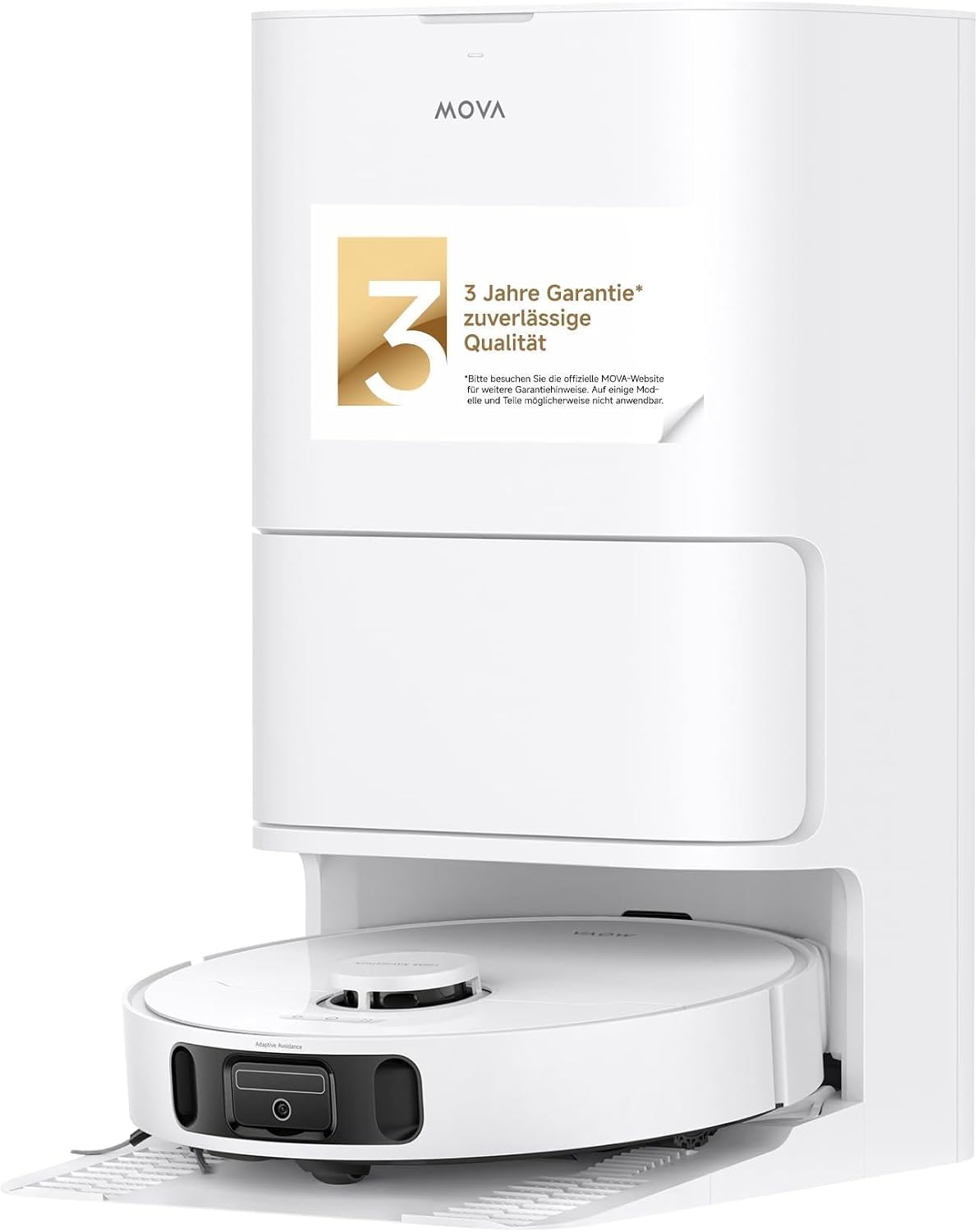
Best overall — MOVA E40 Ultra. A high-end cleaning experience at a mid-range outlay — the value case of the whole field. The trade is candidly cosmetic: it will not win any beauty contests.
Best for pet hair — iRobot Roomba 205 DustCompactor. Compact and minimalist with a rubber brush — the pet-hair tool — LiDAR navigation, 7,000 Pa of suction and a genuinely clever twist: it compacts the dust it collects, going up to 60 days without emptying despite having no self-empty base and no bag. Voice-assistant compatible.
Best vacuum-and-mop — Roborock QV 35A. The all-rounder with a capable self-empty base that clears the robot's bin in just 13 seconds and cleans the mop pads during the process, four suction modes (quiet, normal, turbo, maximum) and 30 mopping levels. Strong at everything it does; not notably cheap.
Most powerful — Dreame D20 Pro Plus. Exceptional suction at 13,000 Pa — the carpet specialist — with ultrasonic carpet detection and a claimed 150 days between dust-bin empties. Its honest limit: the mopping system cannot shift ingrained dirt, so treat the mop as a light-duty extra.
Best budget mop-vac — Xiaomi Robot Vacuum S20. The cheap way to get vacuuming and mopping in one, with Xiaomi's usual consistency. No self-empty base at this level.
Best affordable flagship — Xiaomi Robot Vacuum X20 Pro. High-end features at roughly half the cost of comparable models. The compromise is suction: 6,000 Pa is modest for its class, though at around 67 dB it stays civil about it — which, per the decoder above, matters less than the sheet suggests if its smart mode manages floors well.
Before you buy
Four questions. Carpets or clearance? Tall-and-big-wheeled climbs rugs; low-slung cleans under furniture — pick your floor plan's answer. Who empties it? Self-empty bases, dust compacting and 150-day bins are three different answers to the same chore. Allergies? Then the HEPA filter is non-negotiable. And do you actually need the mop? — the mops on hybrid models range from genuinely useful to a damp gesture, and the picks above say which is which.
For models whose mopping is the main event, our best robot vacuum-mops guide covers that side, and our Dreame L10s Pro review looks at one popular hybrid in depth.
Research sources
Sources recorded for this page are linked below. Reported third-party testing belongs to the original publisher; it is not testing performed by Truthful Reviews.