Flat-panel televisions have thin, mediocre speakers, and no amount of picture quality compensates. A cheap soundbar is the shortest fix there is: it makes films punchier, dialogue clearer, and most of them double as a Bluetooth speaker for music. These are the budget models worth buying, ranked by what you get for the money.
The short version
Best overall: Hisense HS3100
The HS3100 is the pick because of what it does that nothing else at this price does: a true 3.1-channel layout. Alongside the usual two drivers at the ends there is a dedicated centre speaker, and that is what guarantees genuinely clear dialogue. It sets the Hisense distinctly apart from the rest of this selection.
It is also the most powerful here at 480 watts, and it comes with a capable wireless subwoofer. DTS Virtual:X simulates a spatial, three-dimensional effect, and there are six preset audio modes to switch between.
Connections cover the essentials: HDMI ARC, optical, a 3.5 mm jack and Bluetooth 5.3 for music streaming. The one compromise is size — at 90 cm long it is bulkier than most of the field, so measure your television stand first.
If you watch a lot of films and care most about voice clarity and a sense of space, this is the one.
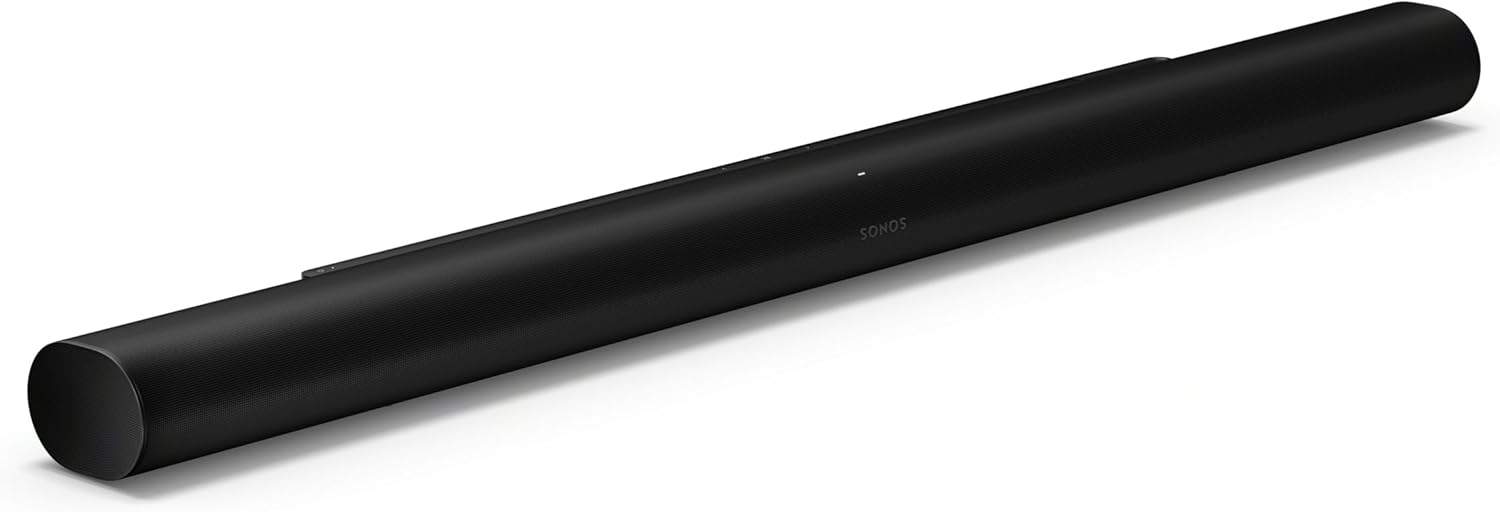
Best ultra-compact: Sonos Ray
At just 56 cm long, the Ray slots into spaces the others cannot, and it is a 2.0 system with no subwoofer. There is no remote control, but setup is unusually simple through an intuitive app.
For its size it surprises: a soft, balanced sound with real body, particularly suited to music and to bringing out dialogue, which stays very clear.
The concessions are real, though, and worth understanding before you buy. There is no HDMI connectivity at all, so you are left with the optical link. And because the drivers are grouped centrally, the soundstage is narrow — there is no surround effect to speak of. It remains an honest front-channel bar, and unlike anything else here it can grow into a genuinely immersive system if you add other Sonos speakers later.
Best modern all-rounder: LG S40T
A 2.1 system producing 300 watts, in a discreet 72 cm bar holding the two drivers, plus a wireless subwoofer for deeper effects in Dolby Digital and DTS.
It has HDMI ARC, which lets you drive it with your television remote, and Bluetooth 5.3 for streaming from a phone. AI Sound Pro adapts the presentation automatically to what you are watching — films, voices, games — and Clear Voice Plus pushes dialogue further forward.
If you already own an LG television there is a bonus: WOW Orchestra synchronises the television's own speakers with the bar rather than switching them off.
Best cheap upgrade: LG S20A
Cheaper again, and recommended on its own merits. It keeps HDMI ARC but does without a subwoofer entirely, which makes it very compact and a natural match for a small television.
What you get is a wider soundstage and far more distinct dialogue than any television manages on its own. For the outlay, it is a genuine bargain.
Most features for the money: TCL S55HE
TCL is better known for televisions, and its budget bar is a 2.1 system — two drivers in the bar and an external subwoofer — with a maximum of 220 W.
Its advantage over rivals at the same price is virtual Dolby Atmos: TCL uses digital processing to simulate Atmos's height effects. Combined with DTS Virtual:X, the bar manages a soundstage that is both wide and tall. AI Sonic-Adaptation handles automatic acoustic calibration on top.
Slimmest 2.0: Sony HT-SF150
At 90 cm long and only 6.4 cm tall, this slips under the majority of screens without blocking anything. It is a 2.0 system delivering a modest 120 watts — no subwoofer, so bass depth is limited, but it saves a good deal of space.
Against that it has a dedicated Voice mode that isolates dialogue for better clarity, and the characteristic richness of Sony's sound. It is one of the cheapest and most compact models in the selection.
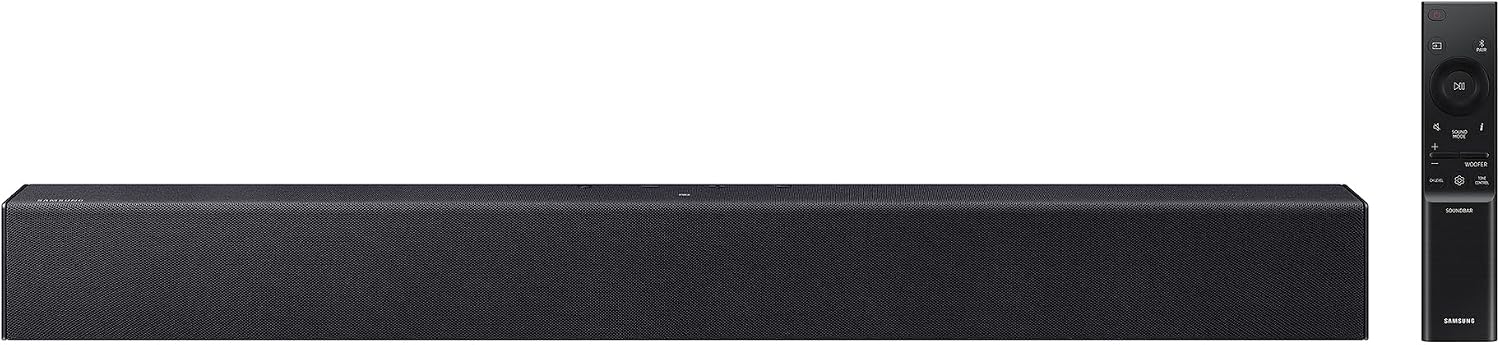
Balanced entry-level: Samsung HW-T420
Samsung's entry-level bar puts 150 watts across 2.1 channels. Its biggest flaw is the absence of an HDMI port, and therefore of ARC — the wired connection to the television is optical only. Bluetooth is present, so a wireless connection to the television is possible instead.
On features it offers Smart Sound, an algorithm that analyses in real time what is playing — a film, a match — and recalibrates voices accordingly, plus a dedicated Game mode.
Who should buy a budget soundbar?
Anyone who finds television dialogue hard to follow, or wants films and games to have some weight to them. Bars of this kind noticeably improve a 4K television or a projector, both of which tend to have rather mediocre speakers of their own, and the improvement carries across films, streamed series and gaming alike.
You do not need to spend heavily to get there. Everything above sits in the affordable band, and the differences between them are about shape and features rather than a cliff-edge in quality.
How to choose a cheap soundbar
Channels. The number tells you the layout. A 2.0 bar has two drivers and no subwoofer — compact, but limited in bass. A 2.1 adds a subwoofer for depth. A 3.1, like the Hisense, adds a dedicated centre channel, which is the single biggest upgrade for dialogue clarity.
Connections. HDMI ARC is the one to want, because it lets your television remote control the bar. Optical works but is less convenient, and two bars here — the Sonos Ray and the Samsung HW-T420 — have no HDMI at all. Bluetooth is near-universal and turns the bar into a music speaker.
Size. Measure before you buy. These range from 56 cm to 90 cm long, and the Sony is only 6.4 cm tall, which matters if your television sits low on its stand.
Virtual surround. DTS Virtual:X and virtual Dolby Atmos use processing rather than extra speakers to widen and heighten the sound. It is not the same as real surround, but on the TCL in particular it is a meaningful addition at the price.
Dialogue features. Clear Voice Plus on the LG, Voice mode on the Sony and Smart Sound on the Samsung all target the same complaint. If speech intelligibility is your actual problem, the Hisense's physical centre channel is the more thorough answer.
Frequently asked questions
Can you really get good sound for less? Yes. The point of this selection is that well below the price of a home-cinema system there is a set of bars that comfortably beat any television's built-in speakers, ranked here by value rather than by price alone.
Can I use one as a Bluetooth speaker? Almost all of them, yes — Bluetooth is standard across this field, and the Hisense and LG bars carry Bluetooth 5.3.
Is Dolby Atmos supported at this price? Not in its full form, which needs upward-firing drivers. The TCL S55HE simulates the height effects digitally, which is as close as this price band gets.
Which is best for dialogue? The Hisense HS3100, because it has a real dedicated centre channel rather than a processing trick. The Sony's Voice mode and the LG's Clear Voice Plus are the software equivalents.
Do I need a subwoofer? For depth, it helps — the Hisense, LG S40T, TCL and Samsung all include one. The Sonos Ray, LG S20A and Sony HT-SF150 go without, which makes them smaller and neater but lighter on bass.