

Battle Rounds
Scores compare the available published review ratings across 1 rated category. Missing ratings do not count as a win, loss or draw. These scores are not an editorial recommendation.
Overall
Design
Not comparableFeatures
Not comparableValue
Not comparableSamsung Galaxy S26 Ultra
Strengths
- Privacy Display is a genuinely useful new hardware feature
- Fast Snapdragon performance and strong overall responsiveness
- Noticeably better ergonomics for an Ultra phone
- Solid battery life with improved 60W charging
- Long software support and mature feature set
Weaknesses
- No native Qi2 magnet system
- Privacy mode heavily reduces image quality when active
- Camera improvements are meaningful but not dramatic
- Still very expensive
Apple iPhone 17
Strengths
- Exceptional, best-in-class screen calibration
- Bright 6.3-inch ProMotion OLED (3,000+ cd/m² peak)
- Good dual 48MP cameras, strong at night
- Premium IP68 build with Ceramic Shield 2
- Fast A19 performance and useful iOS 26 features
Weaknesses
- No dedicated telephoto lens
- Camera control button feels pointless
- Early iOS 26 software has bugs
Technical Specifications
| Specification | Samsung Galaxy S26 Ultra | Apple iPhone 17 |
|---|---|---|
| Operating system | Android 16 | — |
| Chipset | Qualcomm Snapdragon 8 Elite Gen 5 | — |
| RAM options | 12GB, 16GB | — |
| Storage options | 256GB, 512GB, 1TB | — |
| Display size | 6.9-inch | — |
| Display | — | 6.3-inch OLED, 120Hz ProMotion |
| Peak brightness | — | 3,030 cd/m² measured |
| Processor | — | Apple A19 |
| Rear cameras | — | Dual 48MP (wide + ultra-wide) |
| Front camera | — | 18MP Center Stage |
| Durability | — | IP68, Ceramic Shield 2 |
Our Expert Analysis
The Samsung Galaxy S26 Ultra and the Apple iPhone 17 are not quite like-for-like: the Galaxy is Samsung's biggest, most fully loaded flagship, while the iPhone 17 is Apple's excellent standard model rather than a Pro. They are separated by around £330, so this is a decision about how much phone you actually need — and, as ever, about iOS versus Android. Here is how they compare, drawn from independent expert reviews of each, with current UK prices.
At a glance
The Samsung Galaxy S26 Ultra (around £1,129.00) is the do-everything flagship: a bigger screen, a built-in stylus, a four-camera system with long zoom, and a large, fast-charging battery. The iPhone 17 (around £799.00) is the more compact, better-value phone, with a fast chip, a smooth 120 Hz screen and a capable dual camera — for £330 less. If you want the most phone possible, the Galaxy delivers; if you want the core modern iPhone experience without paying Pro money, the 17 is the smart pick.
Check the Galaxy S26 Ultra price on Amazon · Check the iPhone 17 price on Amazon
Operating system
Start here, because it outweighs everything else. The Galaxy S26 Ultra runs Android with Samsung's One UI, which is highly customisable and cross-platform, while the iPhone 17 runs iOS, which is simpler and links seamlessly with other Apple devices. If your world is already Apple, the iPhone fits in effortlessly; if you value flexibility or use a Windows PC, the Galaxy is the more open choice. This is the decision to make first.
Design and build
The two are sized very differently. The Galaxy S26 Ultra is the larger phone, with a 6.9-inch screen and an integrated S Pen stylus, yet it stays slim at 7.9 mm and weighs 214 g. The iPhone 17 is the more pocketable of the pair, measuring 8 mm thick with a lighter 177 g body and a compact 6.3-inch footprint. Neither feels anything less than premium. If you want the biggest canvas and a stylus, the Galaxy is the one; if you prefer a phone that disappears into a pocket, the iPhone wins.
Screen
Both use excellent OLED panels at a 120 Hz refresh rate, so scrolling is silky on either. The Galaxy has the size advantage at 6.9 inches and adds a clever hardware privacy filter that stops onlookers reading your screen. The iPhone 17's 6.3-inch display is smaller but superb, with a sharp 460 ppi resolution and a quoted peak brightness of 3000 nits (around 1000 nits in typical use). You are choosing between the Galaxy's sheer size and privacy trick and the iPhone's more manageable, very bright panel.
Performance
The Galaxy has the more powerful silicon. It runs the flagship Snapdragon 8 Elite Gen 5, whereas the iPhone 17 uses Apple's standard A19 — not the Pro version — paired with 8 GB of RAM. In everyday use both are fast and fluid; the Galaxy has more raw headroom for the heaviest tasks, while the iPhone's A19 is still quick and efficient. Unless you push demanding games or exports hard, both feel instant.
Cameras
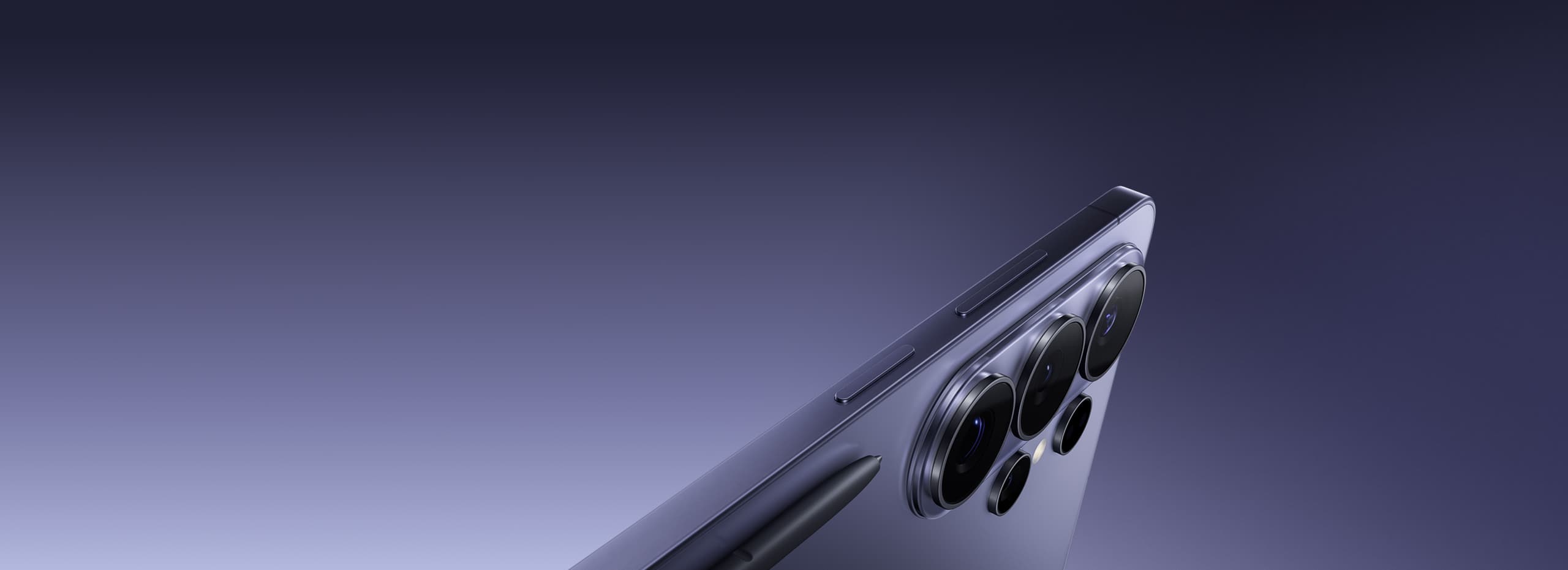
This is the Galaxy's biggest hardware advantage. It carries four rear cameras — a 200-megapixel main, a 50-megapixel ultra-wide and two telephotos (a 5x and a 3x) — giving it the highest-resolution sensor and real optical zoom. The iPhone 17 has a dual 48-megapixel system: a main camera and a 48-megapixel ultra-wide at a 13 mm equivalent, with no dedicated telephoto, though it films 4K video at up to 60 fps and its main sensor can crop to a 2x zoom. For everyday and wide shots the iPhone is very capable, but if you want long-range zoom and the most flexible camera, the Galaxy is well ahead.
Battery and charging
The Galaxy has the clearer practical edge. It packs a 5000 mAh battery and 60 W charging, while the iPhone 17 carries a smaller 3692 mAh cell and charges more slowly over a cable, with wireless charging up to 25 W. Both last a full day in normal use, but the Galaxy's larger battery and faster top-ups make it the more convenient on a heavy day.
Storage and features
Both start at 256 GB, with 512 GB options, and both run the latest software with years of updates promised. The Galaxy adds its S Pen and a broader set of hardware features to justify its price; the iPhone 17 keeps things focused and pairs its 48 MP cameras with the polished iOS experience. On core storage the two are matched; the Galaxy simply offers more extras.
Price and verdict
At the time of writing the Galaxy S26 Ultra is around £1,129.00 and the iPhone 17 around £799.00 — a £330 gap that is central to the choice.
Buy the Galaxy S26 Ultra if you want the most capable phone available: the bigger screen, the S Pen, the versatile four-camera system with long zoom, and the larger, faster-charging battery. It is a lot more phone, if you will use it and can absorb the price.
Buy the iPhone 17 if you want the core modern iPhone for much less: a fast chip, a 120 Hz screen, a capable dual camera and the iOS ecosystem, in a lighter, more compact body. For most people who do not need an Ultra's extras, the iPhone 17 is the more sensible spend — you are choosing your operating system, then deciding whether the Galaxy's extra hardware is worth £330 to you.
Disclosure: As an Amazon Associate I earn from qualifying purchases. Truthful Reviews may receive a commission when you buy through eligible Amazon UK or Amazon US links, at no extra cost to you. Affiliate partnerships never determine our verdicts or recommendations.
Share Your Experience
Loading comments...