Quick Specs
Our Verdict
The Samsung Galaxy S26 Ultra is a strong premium flagship with meaningful ergonomic gains, better charging and a genuinely original privacy feature. It is not a revolution, but it remains one of the best all-round Android phones in the top tier.
Research sources
Sources recorded for this page are linked below. Reported third-party testing belongs to the original publisher; it is not testing performed by Truthful Reviews.
Our editorial process
Research method, author and affiliate-independence details
Our editorial process
Research method, author and affiliate-independence details
Prepared by our editorial team using verified source material, product research, and a British-English editorial rewrite before publication.
- We review the working bundle for product facts, comparisons, and buyer-relevant tradeoffs before publishing.
- Non-English source material is translated into British English and rewritten into our house style without carrying over publication branding.
- Affiliate links and price references are handled separately from editorial judgements and never determine the verdict.
Read our full methodology: how we review
Affiliate links never determine our verdicts. Commercial relationships are disclosed separately from the editorial assessment, and we aim to keep buyer guidance clear, specific, and evidence-based.
Pros & Cons
Pros
- Privacy Display is a genuinely useful new hardware feature
- Fast Snapdragon performance and strong overall responsiveness
- Noticeably better ergonomics for an Ultra phone
- Solid battery life with improved 60W charging
- Long software support and mature feature set
Cons
- No native Qi2 magnet system
- Privacy mode heavily reduces image quality when active
- Camera improvements are meaningful but not dramatic
- Still very expensive
Key Features
Privacy Display is a genuinely useful new hardware feature
Fast Snapdragon performance and strong overall responsiveness
Noticeably better ergonomics for an Ultra phone
Solid battery life with improved 60W charging
Long software support and mature feature set
Price and positioning
The Galaxy S26 Ultra starts at GBP1469, which means Samsung is once again asking flagship-money-plus for its top Android phone. At that price the competition is ruthless. Buyers expecting clear dominance over the iPhone 17 Pro Max, Pixel 10 Pro XL or the best premium Chinese handsets are right to demand more than a mild spec refresh.
Samsung's answer is an unusually specific one. Rather than chasing the biggest battery or the flashiest zoom headline, it is leaning on a new hardware privacy filter, improved charging, top-tier Qualcomm performance and the familiar productivity appeal of the S Pen. The result is a phone that still looks unmistakably Ultra, but tries to justify its premium with smarter details.
Design and ergonomics
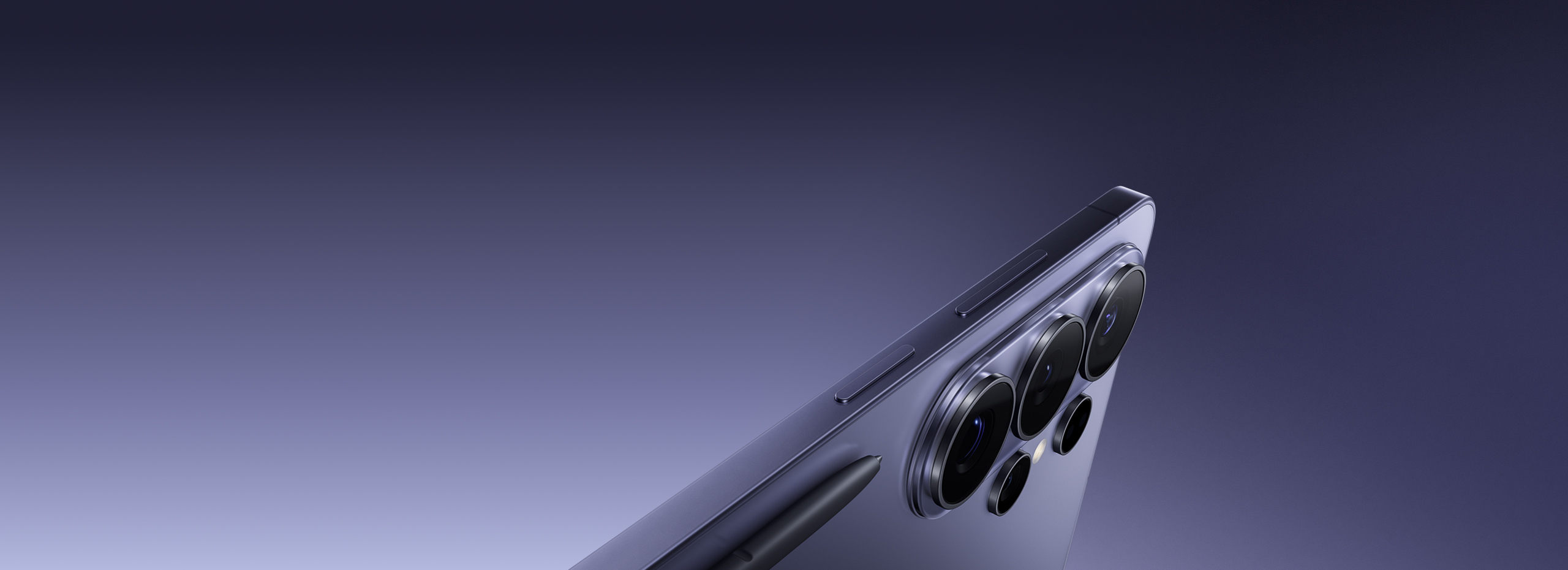
Visually, Samsung has not torn up the formula. The flat sides, squared-off identity and integrated S Pen all remain. The bigger shift is in the physical feel. Moving away from titanium to aluminium may sound like a downgrade on paper, but the payoff is lower weight and an easier in-hand balance. At 214g and 7.9mm thick, this is the most manageable Ultra Samsung has made.
That matters because earlier Ultra models could feel like miniature tablets with a stylus attached. Here, the softened ergonomics make long reading sessions, gaming and note-taking far less fatiguing. Materials still feel premium, with Gorilla Glass Victus 2 at the back, Gorilla Glass Armor 2 at the front and IP68 sealing completing the flagship checklist.
Not everything has improved. The rear camera layout still makes the handset wobble on a table without a case, and Samsung still refuses to build Qi2 magnets into the phone itself. At this price, that omission feels increasingly stubborn rather than strategic.
Privacy display
The headline feature is the new Privacy Display. When enabled, the viewing angles tighten so sharply that people beside you see a dim, obscured panel while you keep a readable image. As a hardware privacy feature on a mainstream phone, it is genuinely novel and potentially useful for banking, messaging and travel.
The catch is obvious once you look at the measured results. Enabling the mode cuts perceived sharpness dramatically, halves effective resolution and has a serious impact on brightness and contrast. The panel becomes duller and flatter, which means the feature is best treated as a situational tool rather than a permanent setting. Samsung deserves credit for letting you automate it for specific apps, because that makes the trade-off easier to accept. It is clever when used for banking or messaging on a train, but it is absolutely not the mode you want active for reading, streaming or photo work.
Panel quality without the filter
With the privacy layer off, the 6.9-inch Dynamic AMOLED 2X display returns to familiar Samsung territory. Outdoor boost brightness is strong, low-light use is comfortable and the Natural profile delivers much better colour accuracy than the default setup. There is still a small price to pay in off-angle sparkle because the privacy layer physically remains part of the stack, but the base panel is excellent enough that most users will accept it. Manual brightness remains weaker than some direct rivals, yet the real-world experience is still strong thanks to the high boost figures and the excellent adaptive refresh behaviour.
Performance
Samsung has reserved the Snapdragon 8 Elite Gen 5 for the Ultra, and unsurprisingly it delivers flagship-level speed. Synthetic results place it among the quickest Android devices available, while day-to-day performance should leave nobody wanting more. Heavy apps, AI tasks and demanding games all sit well within its comfort zone.
Thermal behaviour
The more interesting part is thermal management. Samsung has enlarged the vapour chamber, but sustained performance still drops under prolonged stress. Stability results in the source testing show that the phone throttles meaningfully under extended 3D load. That sounds worse than it feels in practice, because the base performance ceiling is so high that even reduced output remains more than fast enough for serious gaming.
This is not the coolest flagship around, but it is a very quick one. For most buyers, the bigger gain is that Samsung has kept the Ultra feeling responsive without making it as uncomfortable in the hand as some past generations could become.
Camera hardware and main camera
Samsung keeps the familiar four-camera layout, but the internal changes matter more than the numbers suggest. The 200MP main camera now uses a brighter f/1.4 aperture, the ultra-wide remains a useful 50MP option, and the 5x telephoto adopts Samsung's new ALoP optical design to slim down the hardware and improve background rendering.
The main camera appears strong, especially for detail retention and colour control. The ultra-wide also performs well, with limited distortion and solid edge consistency. ## Telephoto and video
The telephoto setup is more nuanced. The 5x system seems to deliver more attractive bokeh and a tidier overall module design, but it also loses some close-focus flexibility compared with the previous generation.
In other words, this is still a highly versatile camera phone, but not one that completely resets the class. Samsung has refined the package rather than transformed it. That distinction matters, because buyers spending this much may expect a dramatic leap. What they are really getting is a phone that remains dependable across focal lengths, with fewer obvious weak points than many rivals, rather than a device that crushes the field in every imaging discipline. The same applies to video, where features such as strong stabilisation, 8K recording and the APV codec add genuine utility without making every rival irrelevant.
Battery life
A 5000mAh lithium-ion battery looks conservative on paper in 2026, especially when Chinese rivals are pushing far bigger silicon-carbon packs. Samsung compensates with better efficiency, and the mixed-use figure of 23 hours, 15 minutes and 41 seconds is a strong result. It comfortably outlasts some major competitors and should translate into an easy full day for intensive users or around two days for lighter use.
Charging
Charging is the bigger improvement. Samsung has finally moved to 60W wired charging, which still is not class-leading but no longer feels embarrassing. A full charge takes just over an hour, and a 10-minute top-up reaches roughly 32 per cent. Wireless charging rises to 25W, with reverse charging still included. That is finally quick enough that topping up before leaving home feels practical, not tokenistic, and it narrows one of the clearest gaps between Samsung and the fastest Chinese flagships.
The obvious frustration is that there is no charger in the box and still no native Qi2 magnet array. For a phone positioned as the complete premium package, Samsung is still making buyers pay extra to unlock conveniences competitors increasingly treat as standard.
Software and long-term support
One UI 8.5 on Android 16 remains one of Samsung's strongest assets. Seven years of software and security support is still a serious promise, and Samsung continues to integrate AI features more convincingly than many rivals. Context-aware suggestions, notification summaries, photo editing tools and the broader Galaxy AI toolkit all push the experience forward, even if not every feature will matter to every buyer.
The interface is also mature. It may not be minimal, but it is feature-rich and polished, and it still works especially well if you already use other Galaxy devices. Buyers wedded to Gboard may still find some Samsung defaults irritating, yet the broader software story is one of depth rather than clutter. The larger point is that Samsung still understands why people buy an Ultra in the first place: they want a phone that can act as a notebook, media machine, camera and long-term workhorse all at once. One UI continues to support that better than most rivals.
Verdict
The Galaxy S26 Ultra succeeds because it improves the real experience of using a Samsung flagship, not because it radically reinvents the format. It is easier to hold, charges faster, remains extremely powerful and introduces a genuinely original privacy feature that some people will find far more useful than another marginal camera tweak.
At the same time, Samsung has not solved every old complaint. Native Qi2 magnets are still absent, the battery technology is conservative, and the camera advances look more iterative than disruptive. That means the Galaxy S26 Ultra feels more like a carefully refined flagship than a no-compromise moonshot. Even so, if you want a top-tier Android phone that balances productivity, endurance, software support and raw performance, it remains one of the safest premium buys available.
The result is a flagship that feels carefully improved rather than recklessly redesigned.
Frequently asked questions
When did the Samsung Galaxy S26 Ultra come out — is it available now? It is out: this review covers the shipping product in full. Search interest still asks about a release date; the phone is past that point.
Is the Galaxy S26 Ultra waterproof? Yes — IP68 sealing, with Gorilla Glass Armor 2 on the front and Victus 2 on the back completing the flagship durability checklist.
Does the S26 Ultra still come with the S Pen? Yes — the familiar productivity appeal of the S Pen remains part of the package, alongside the new privacy display and improved charging this generation leads with.
Ready to Purchase?
Check current prices and availability
Affiliate Disclosure: As an Amazon Associate I earn from qualifying purchases. Truthful Reviews may receive a commission when you buy through eligible Amazon UK or Amazon US links, at no extra cost to you. Affiliate partnerships never determine our verdicts or recommendations.