
Quick Specs
Our Verdict
The HP OmniBook 5 NGAI 16 makes the strongest case for itself through battery life, quiet operation and an excellent OLED screen. Its limited performance ceiling, minimal ports and poor upgradeability stop it short of being an easy all-round recommendation, but for buyers who want a slim 16-inch machine that lasts and stays calm under pressure, it is a convincing option.
Research sources
Sources recorded for this page are linked below. Reported third-party testing belongs to the original publisher; it is not testing performed by Truthful Reviews.
Our editorial process
Research method, author and affiliate-independence details
Our editorial process
Research method, author and affiliate-independence details
Prepared by our editorial team using verified source material, product research, and a British-English editorial rewrite before publication.
- We review the working bundle for product facts, comparisons, and buyer-relevant tradeoffs before publishing.
- Non-English source material is translated into British English and rewritten into our house style without carrying over publication branding.
- Affiliate links and price references are handled separately from editorial judgements and never determine the verdict.
Read our full methodology: how we review
Affiliate links never determine our verdicts. Commercial relationships are disclosed separately from the editorial assessment, and we aim to keep buyer guidance clear, specific, and evidence-based.
Pros & Cons
Pros
- Excellent OLED display with strong factory calibration
- Outstanding battery life
- Slim, tidy chassis for a 16-inch laptop
- Very quiet and cool in everyday use
- Large, accurate touchpad
Cons
- Raw performance is limited for heavier workloads
- Upgradeability is minimal
- Port selection is sparse
- Speaker quality is only average
- Glossy screen is too reflective in bright conditions
Full Specifications
Key Features
Excellent OLED display with strong factory calibration
Outstanding battery life
Slim, tidy chassis for a 16-inch laptop
Very quiet and cool in everyday use
Large, accurate touchpad
Price and positioning
The HP OmniBook 5 NGAI 16 is aimed at buyers who want a large-screen laptop that feels modern, portable and efficient without climbing into premium flagship pricing. It is pitched at students, commuters and everyday office users who value battery life and screen quality more than heavyweight workstation performance. That positioning matters, because this is not a gaming machine and it is not a serious mobile editing workstation. It is an OLED laptop built around an ARM platform, and the entire proposition depends on whether you prioritise endurance and comfort over brute force.
Design and build quality
HP gives the OmniBook 5 NGAI 16 an aluminium chassis that looks clean and businesslike, while keeping the machine fairly slim at roughly 13 mm and about 1.6 kg. That is a respectable result for a 16-inch model, even if it is not quite as featherweight as the most aggressively trimmed rivals. The rounded edges and wide opening angle make it easy to live with, and the overall shape avoids the bulky, utilitarian feel that larger mainstream laptops often drift into.
The finish is tidy, with an anodised, sandblasted look that gives the machine a more premium feel than the price alone might suggest. It does pick up fingerprints easily, which is a common downside with this kind of surface. Build quality is solid enough for normal everyday use, but the chassis does not quite reach the reassuring toughness of a good business laptop or the absolute polish of the more expensive premium category.
Display quality

The real attraction here is the 16-inch OLED touchscreen. Contrast is effectively perfect, colours are vivid and the panel covers the DCI-P3 gamut fully according to measured measurement data. Colour accuracy is also strong out of the box, which makes the display more than good enough for streaming, photography viewing and lighter creative work.
There are clear limitations, though. Brightness peaks at 285 cd/m², which is perfectly serviceable indoors but not ideal in strong daylight. The panel is also very glossy, so reflections quickly become a nuisance in bright rooms and near windows. Refresh rate is limited to 60 Hz, which rules out any pretence of serious gaming smoothness, but that is consistent with the rest of the laptop's positioning. As a multimedia and productivity screen it is one of the machine's biggest strengths; as an all-conditions display it is less convincing.
Keyboard and touchpad
The backlit keyboard offers 1.5 mm of key travel, which gives it a comfortable, reasonably responsive feel for longer writing sessions. Key spacing is conventional enough to settle into quickly, but HP has made a few layout choices that feel less natural than they should on a machine of this size. The bigger disappointment is the lack of a number pad. On a 16-inch chassis there was just about enough space to include one, and some buyers will miss it.
The touchpad is large, neatly centred and responsive in everyday use. Multitouch gestures feel accurate, and the surface is smooth enough to make navigation easy. The click action is a little heavier than ideal, and some users may find the pad slightly too slippery over long sessions, but overall it is one of the better parts of the user experience.
Ports and connectivity
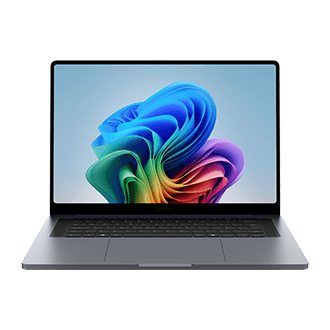
This is where the cost of thinness becomes obvious. You get two USB-C ports with charging and DisplayPort support, one USB-A port and a combined 3.5 mm audio jack. That is enough for basic modern use, but not much more. There is no HDMI, no card reader and no USB4. For a laptop that could easily become a main machine for students or mobile workers, that means dongles and adapters will often be part of the reality.
Wireless connectivity is stronger. Wi-Fi 6E and Bluetooth 5.3 are both present, which keeps the machine credible in everyday 2026 use even if the underlying controller is not especially cutting edge.
Audio and upgradeability
The speakers are serviceable rather than memorable. Treble and bass remain reasonably controlled, but volume is limited and low-end weight is light. That makes them fine for casual video watching in a quiet room, but not impressive enough for music or for use in noisier environments. The built-in microphones are acceptable for calls when the room is calm, although they are less convincing when echoes or background noise enter the picture.
Upgradeability is minimal. Once inside, the trade-off behind the slim design becomes obvious. The processor, graphics and memory are effectively fixed, leaving the SSD and wireless module as the only straightforward upgrade points. The battery is at least relatively easy to replace, which is welcome, but this is still a laptop you should buy in the configuration you actually intend to keep.
Performance and software trade-offs
The reviewed configuration uses Qualcomm's Snapdragon X Plus X1P-42-100, the entry-level version of that platform, paired with 16 GB of LPDDR5X memory and Adreno graphics. For light office work, web use, video playback and other uncomplicated daily tasks, that setup makes sense. Native ARM apps are where the machine looks healthiest, and that is still the best case for this sort of laptop.
Once workloads become heavier, the compromises are easier to see. Performance is decent enough for routine productivity, but it does not have the headroom of stronger x86 competitors, especially once more demanding creative or compute-heavy jobs enter the picture. The Adreno graphics are fine for basic graphical tasks and casual multimedia work, but they are not remotely a reason to buy the laptop if gaming or serious GPU workloads matter.
That leaves the OmniBook 5 NGAI 16 in a very specific lane. It is not slow in the sense of feeling broken, but it is clearly tuned for efficiency first. Buyers who understand that will probably be happy; buyers expecting premium all-round performance will not.
Battery life and charging
Battery life is the machine's standout achievement. With a 59 Wh battery and an efficient Qualcomm platform, measured benchmark data records more than 23 hours of endurance. That is the kind of result that immediately changes how a laptop feels in real life. It means working through long days without carrying a charger, treating travel more casually and simply worrying less about power management.
Charging performance is respectable too. A full charge takes about two hours from empty, but short top-ups are useful. Ten minutes recovers around 15 per cent, while less than an hour gets the battery to roughly three quarters. For the type of user this machine is aimed at, that is a very practical combination.
Noise, heat and everyday comfort
The thermal behaviour fits the platform's strengths. At idle, power draw is so low that the fan does not need to spin, leaving the machine effectively silent. Under sustained load, it still remains quiet, with noise levels staying modest and surface temperatures well under control. Palm-rest temperatures remain comfortable and even the hottest area towards the rear never becomes especially alarming.
That gives the OmniBook 5 NGAI 16 a calm, easy-going character in daily use. It is the sort of laptop that disappears into the background rather than constantly reminding you that it is working, and for many people that matters just as much as benchmark results.
Verdict
The HP OmniBook 5 NGAI 16 is easy to recommend to buyers who care about screen quality, silence and outstanding battery life more than raw speed. Its OLED panel is excellent, the design is slim and tidy, and its endurance is genuinely impressive. The compromises are equally clear: limited performance, a sparse selection of ports, average speakers and upgradeability that is almost nonexistent. If your needs line up with its strengths, it is a sensible and appealing 16-inch laptop. If you want wider software flexibility, more power or better connectivity, there are stronger alternatives.
Ready to Purchase?
Check current prices and availability
Affiliate Disclosure: As an Amazon Associate I earn from qualifying purchases. Truthful Reviews may receive a commission when you buy through eligible Amazon UK or Amazon US links, at no extra cost to you. Affiliate partnerships never determine our verdicts or recommendations.