Quick Specs
Our Verdict
The Samsung Galaxy Book6 Pro delivers what many premium Windows laptops have been promising for years: strong performance, long battery life and a superb screen in a genuinely slim chassis. Sparse ports and a few ergonomic compromises keep it from total dominance, but it is still one of the most convincing high-end Windows notebooks of the year.
Research sources
Sources recorded for this page are linked below. Reported third-party testing belongs to the original publisher; it is not testing performed by Truthful Reviews.
Our editorial process
Research method, author and affiliate-independence details
Our editorial process
Research method, author and affiliate-independence details
Prepared by our editorial team using verified source material, product research, and a British-English editorial rewrite before publication.
- We review the working bundle for product facts, comparisons, and buyer-relevant tradeoffs before publishing.
- Non-English source material is translated into British English and rewritten into our house style without carrying over publication branding.
- Affiliate links and price references are handled separately from editorial judgements and never determine the verdict.
Read our full methodology: how we review
Affiliate links never determine our verdicts. Commercial relationships are disclosed separately from the editorial assessment, and we aim to keep buyer guidance clear, specific, and evidence-based.
Pros & Cons
Pros
- Premium thin-and-light aluminium chassis
- Outstanding Dynamic AMOLED 2X display
- Very strong Panther Lake performance
- Excellent battery life for a Windows premium laptop
- Centred keyboard and huge haptic trackpad improve day-to-day comfort
- Galaxy ecosystem features are genuinely useful if you already use Samsung devices
Cons
- Port selection is still light for a Pro-branded 16-inch laptop
- No microSD card reader this generation
- Samsung software bloat has not disappeared completely
- Front edge can feel a little sharp under the wrists
- Sustained extreme 3D work still exposes thin-chassis thermal limits
Full Specifications
Key Features
Premium thin-and-light aluminium chassis
Outstanding Dynamic AMOLED 2X display
Very strong Panther Lake performance
Excellent battery life for a Windows premium laptop
Centred keyboard and huge haptic trackpad improve day-to-day comfort
Galaxy ecosystem features are genuinely useful if you already use Samsung devices
Price note: Overseas prices have been converted to approximate pound equivalents using the reference exchange rate current when this page was updated. UK prices and availability may differ.
Price and configurations
Samsung pushes the Galaxy Book6 Pro firmly into premium-laptop territory. The reviewed configuration uses an Intel Core Ultra X7 358H processor, 32GB of LPDDR5X memory and a 1TB SSD, with a second M.2 slot available if more storage is needed later. Lower trims start with less memory and a slower Core Ultra 7 356H.
This also explains where the Book6 Pro sits inside Samsung's own line-up. The Galaxy Book6 Ultra goes further with dedicated Nvidia RTX graphics and an even steeper price, while the standard Book models aim lower. The Pro therefore has to justify itself as the sweet spot: premium enough to challenge the MacBook Pro, but still lighter and more portable than the truly workstation-class alternatives.
Design and build quality
The Galaxy Book6 Pro does a strong job of looking expensive without trying too hard. Samsung keeps the design restrained, with a slim dark-grey aluminium chassis, understated branding and clean surfaces that feel appropriate in an office or studio. In the 16-inch size, the laptop is still notably slim at 11.9mm and light for its class at roughly 1.56kg.
The chassis feels impressively rigid. There is very little flex through the keyboard deck, the fit and finish are tight, and the hinge opens smoothly with one hand without lifting the base off the desk. Surface treatment is also well judged, because the finish resists fingerprints better than many competing metal notebooks.
The main ergonomic flaw is the lower front edge. It is slightly sharper than ideal, so long typing sessions can leave the wrists wanting a softer contour. It is a small complaint, but one worth noting on a laptop aimed at all-day work.
Keyboard, haptic trackpad and everyday ergonomics
Samsung made the right structural change this generation: the 16-inch model drops the numeric keypad and recentres the keyboard. That sounds minor, yet it greatly improves typing posture because the hands line up naturally with the display instead of sitting awkwardly to the left.
Key travel is shallow, as expected on such a slim machine, but the keyboard remains stable, precise and easy to type on at speed. The backlight is evenly distributed, and the overall layout feels more balanced than on older large Galaxy Books.
Below it sits a huge glass haptic touchpad. It borders on oversized, but the quality is hard to argue with. Glide is excellent, haptic feedback is consistent across the whole surface and multi-finger gestures are particularly easy to use. This is one of the better Windows trackpads available right now.
Ports and connectivity
The Galaxy Book6 Pro is better described as selective than generous with ports. Samsung includes one full-size HDMI 2.1 output, two Thunderbolt 4-capable USB-C ports, one USB-A 3.2 port and a 3.5mm headphone jack. That is enough for normal office or travel use, and the full-size HDMI port is genuinely useful in meeting rooms.
The missing piece is the microSD reader. Its removal is a real annoyance for photographers, videographers and anyone who regularly moves files off cameras or drones. On a machine marketed as a Pro model, that omission stands out more than the otherwise tidy port selection. Wireless connectivity is up to date, however, with Wi-Fi 7 and Bluetooth 5.4 both onboard.
Display quality
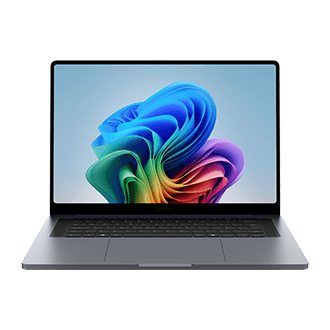
Samsung's Dynamic AMOLED 2X panel is one of the Galaxy Book6 Pro's biggest selling points. The screen runs at 2880 x 1800 in a 16:10 aspect ratio, which gives it a good balance between sharpness and usable workspace. Samsung also combines touch support with adaptive refresh from 30Hz to 120Hz, so the panel can feel smooth while still saving power when showing static content.
The panel is especially persuasive because Samsung also addresses OLED's usual weakness in bright rooms. Gorilla Glass with DXC treatment cuts reflections far more effectively than many glossy touchscreen laptops, while brightness reaches 500 nits in SDR use and up to 1000 nits for HDR material. The result is a laptop screen that looks vivid and premium without becoming a mirror every time overhead lighting gets strong.
The 16:10 shape also matters more than the specification sheet suggests. It gives noticeably more vertical room for writing, browsing and editing work, which suits the Book6 Pro's professional ambitions. Touch support remains responsive, even if most buyers will still treat this as a classic clamshell rather than a finger-first device.
Panther Lake CPU performance
Intel's Panther Lake platform is the story here. The Core Ultra X7 358H gives the Book6 Pro the kind of performance headroom that premium Windows laptops have been chasing for years, and the benchmark results back that up. Geekbench 6 scores of 2866 single-core and 16742 multi-core are excellent, while the 8873 overall PCMark 10 result confirms that everyday professional workloads are handled easily.
The sub-scores help explain why the laptop feels so complete. PCMark 10 Essentials lands at 10705, Productivity at 12876 and Digital Content Creation at 13751, which is exactly the kind of spread you want from a machine aimed at serious office work, creative suites and AI-assisted tasks. Samsung also avoids storage bottlenecks: the 1TB SSD keeps pace well, so large projects, app launches and file moves all feel immediate.
That translates cleanly into real work. Heavy multitasking, large browser sessions, productivity suites, light-to-moderate creative editing and local AI features all feel effortless. The NPU, rated for up to 50 TOPS, is also important because it helps the laptop qualify properly for Copilot+ style features and other on-device AI tasks without pushing everything back onto the CPU.
Integrated graphics and thermal behaviour
Samsung also benefits from Intel's stronger integrated graphics story this year. The Arc B390 iGPU is no replacement for a dedicated Nvidia GPU in a true 3D workstation, but it is much better than the kind of token integrated graphics that used to define thin-and-light laptops. A Geekbench 6 GPU score of 56118 and a 3DMark Night Raid graphics score of 73952 show that the Book6 Pro is capable of far more than spreadsheets and video calls.
Light gaming and GPU-assisted creative work are both realistic here, particularly if settings are adjusted sensibly and Intel XeSS upscaling is used where supported. That means the laptop can handle workloads such as photo editing, lighter video work, design tasks and even some demanding games if expectations are kept within reason.
Thermal management is similarly well judged. The laptop stays silent or near-silent in light workloads, and once the fans do ramp up they produce a lower, steadier sound than many slim competitors. There is some throttling under prolonged extreme CPU/GPU load, which is expected in a chassis this thin, but it does not derail normal use. The Book6 Pro is therefore best understood as a powerful premium ultraportable, not a mobile workstation for nonstop heavy 3D rendering.
Galaxy AI, speakers and webcam
The software layer is a mix of genuinely useful ecosystem features and the usual Samsung excess. On the positive side, Galaxy AI integration, Multi Control, Quick Share, Second Screen and the broader Galaxy-device handoff story all work in Samsung's favour if the laptop sits inside a wider Galaxy setup. A nearby Galaxy phone or tablet can become an extension of the workflow remarkably easily.
That matters because Samsung is not just adding AI labels for marketing. The laptop can lean on the NPU for Windows Studio Effects, live captioning and other local AI tasks, while Samsung's own tools make it simpler to move files, extend the desktop to a tablet or even use a Galaxy phone as a better camera source. For buyers already deep in Samsung hardware, that joined-up experience is a real advantage.
The downside is that Samsung still includes more bundled software than a truly clean premium Windows experience needs. It is not as intrusive as older Samsung builds, but some bloat remains.
Audio and communications are both strong. The speaker system is better than the average Windows laptop, with clearer mids and more bass presence than the chassis size suggests, while the 1080p webcam and AI-backed microphone processing are well suited to frequent meetings and remote work.
Battery life and charging
Battery life is one of the most impressive parts of the package. Samsung quotes up to 30 hours of video playback in lab conditions, and the real-world result is not far off the lofty reputation that implies. Depending on workload, the Galaxy Book6 Pro approaches 20 hours and consistently clears 15 hours in heavier mixed usage.
That is the crucial point. Plenty of thin Windows laptops look good on a spec sheet and then collapse once the workday stretches. The Book6 Pro does not. Writing, browser-heavy workflows, email, messaging, video playback and lighter creative tasks can all be handled without living next to a charger.
Charging is handled by the bundled 65W USB-C charger, which is compact enough to travel with and versatile enough to top up other devices too. Around 40 per cent charge in 30 minutes is not the fastest result in absolute terms, but it is fast enough to make short breaks genuinely useful.
Verdict
The Samsung Galaxy Book6 Pro is one of the strongest premium Windows laptops available right now. It combines a first-rate OLED display, genuinely excellent battery life, fast Panther Lake performance and meaningful ergonomic improvements in a chassis that still feels light and refined. For many buyers, that is enough to make it the most convincing Windows alternative to a MacBook Pro in its class.
It is not flawless. The missing microSD reader is an own goal, the port load-out is only just good enough for a so-called Pro machine, some Samsung software clutter remains, and sustained 3D creators will still be better served by the Galaxy Book6 Ultra or a thicker workstation. Even so, the balance is impressive enough that the Galaxy Book6 Pro earns a place near the top of the shortlist.
Ready to Purchase?
Check current prices and availability
Affiliate Disclosure: As an Amazon Associate I earn from qualifying purchases. Truthful Reviews may receive a commission when you buy through eligible Amazon UK or Amazon US links, at no extra cost to you. Affiliate partnerships never determine our verdicts or recommendations.