HomeArticlesBest Desktop CPUs 2026: 61 Processors Benchmarked
Buying Guide

Best Desktop CPUs 2026: 61 Processors Benchmarked

We compare 61 benchmarked desktop processors from Intel and AMD. The Intel Core Ultra 7 270K Plus wins with flagship performance at a mid-range price, with picks for budget builds, creators, integrated graphics and pure gaming rigs.

11 June 2026
10 min read
Best Desktop CPUs 2026: 61 Processors Benchmarked

The CPU is the heart of a computer and decisive for its performance, which makes choosing the right processor the most important single decision in any PC build. This comparison analyses the current models from the two leading manufacturers, Intel and AMD, in detail — drawn from a test field of 61 benchmarked desktop processors — and shows which processors offer the best ratio of performance to price for gaming, work and everyday use.

The Short Version

  • Best overall — Intel Core Ultra 7 270K Plus. The Arrow Lake-S processor with 24 cores (8 P-cores + 16 E-cores) and 5.5 GHz boost earned the test's only perfect overall verdict, topping the productivity and rendering benchmarks while costing far less than the flagship class — around 299 euros at the cheapest shop.
  • Budget pick — Intel Core Ultra 245K. Fourteen Arrow Lake cores and a 5.2 GHz boost for around 169 euros. It gives up a third of the winner's multi-core muscle but very little of its everyday and gaming responsiveness.
  • Best AMD CPU — AMD Ryzen 9 9950X. Sixteen full Granite Ridge cores at up to 5.7 GHz, built on a 4-nanometre process: the fastest processor in the field for 4K video encoding and Blender rendering, at around 419 euros.
  • Best integrated graphics — AMD Ryzen 5 8600G. The Phoenix APU with Radeon 760M graphics runs games credibly without any graphics card at all — its 22,661 points in the World of Tanks graphics benchmark embarrass every other processor here — for about 137 euros at a frugal 65-watt TDP.
  • Best gaming CPU — Intel Core i7-14700K. The Raptor Lake-S veteran with 20 cores still posts the best 3DMark Fire Strike and Time Spy results of the field when paired with a fast graphics card, at around 379 euros.

How Much Should a Processor Cost?

Performance jumps considerably between price classes, but requirements decide what is worth paying. Models between 50 and 150 euros suit simple PCs for office work and web surfing — and mid-range processors from one or two generations back often land here too, sometimes with enough power for a lightweight gaming build. Between 150 and 350 euros, far more computing power arrives: this class equips genuinely good gaming and productivity machines. The high end — Intel Core i7 and i9, AMD Ryzen 7 and 9 — typically costs 350 to 600 euros and pays off in powerful systems juggling several demanding tasks simultaneously. Only users of extremely compute-hungry specialist software need to dig deeper still.

One important warning for upgraders: 13th- and 14th-generation Intel desktop CPUs with a TDP of 65 watts or more can suffer a defect that damages the processor irreparably. Intel has been distributing microcode updates through its mainboard partners to prevent the damage — check whether your board maker provides the relevant BIOS update, and if not, temporarily revert any overclocked processor to its standard profile.

The Winner: Intel Core Ultra 7 270K Plus

The Arrow Lake-S based Core Ultra 7 270K Plus took the test's best overall verdict with top marks for CPU performance and very strong integrated graphics. Its 24 cores — eight performance and sixteen efficiency — boost to 5.5 GHz inside a 250-watt thermal envelope on the LGA1851 socket.

The benchmark sheet explains the win. In HandBrake's standard 1080p encode it finished in 128 seconds, the fastest of the five highlighted processors, and its 24,248 points in PCMark 10 Productivity towered over everything else in the comparison — the next-best managed 23,206. In the PovRay render it pushed 15,349 pixels per second, again the leading figure, and its Blender BMW27 scene completed in 32 seconds. Even the integrated graphics deliver: 5,288 points in 3DMark Fire Strike and a "very good" GPU grade, enough for undemanding gaming without a graphics card. Priced around 299 euros at the cheapest shop — against far dearer flagship parts it routinely beats — it also earned the test's best value rating.

Budget Pick: Intel Core Ultra 245K

The Core Ultra 245K distils Arrow Lake to the essentials: fourteen cores (six P, eight E), 5.2 GHz boost, the same LGA1851 socket, and a "good" overall verdict at roughly 169 euros. The gaps to the winner show mainly under sustained all-core load — 194 against 128 seconds in the 1080p HandBrake encode, 56 against 32 seconds in the Blender BMW27 render — while everyday responsiveness stays close: 11,158 PCMark Essentials points against the winner's 12,176, and gaming scores within a few per cent when a dedicated graphics card does the drawing. For a mid-range build that mostly games, browses and offices, the saving of around 130 euros is hard to argue with.

Best AMD CPU: AMD Ryzen 9 9950X

AMD's sixteen-core Granite Ridge flagship matches the winner's perfect CPU-performance grade and beats it outright in the heaviest creator workloads: 33 seconds for the 4K high-quality HandBrake encode (the best of the field), 245 seconds in the Blender classroom scene, 12,867 points in PCMark Digital Content Creation and 44 seconds in the Black-Scholes financial simulation. Built on a 4-nanometre process for the AM5 socket with a 170-watt TDP and a 5.7 GHz maximum boost, it is the processor to buy when rendering, encoding and simulation dominate the workload. Two caveats: the basic Radeon integrated graphics rate only "sufficient" — plan on a graphics card — and at around 419 euros it costs a class more than the winner.

Best Integrated Graphics: AMD Ryzen 5 8600G

The Ryzen 5 8600G is the field's specialist. As a Phoenix APU its CPU performance grades a sober "good" — its 307-second HandBrake encode is no creator's tool — but the integrated Radeon 760M is in a league of its own: 6,660 points in 3DMark Fire Strike, 2,880 in Time Spy and 22,661 in the World of Tanks benchmark, figures two to three times what Intel's integrated graphics manage here. At 65 watts it is also the most frugal processor in the comparison, and at around 137 euros the cheapest. For a compact, quiet PC that plays real games without any graphics card, nothing else in the test comes close.

Best Gaming CPU: Intel Core i7-14700K

The previous-generation Raptor Lake-S processor remains the gamer's pick. Paired with the test's reference RTX 3080, its 40,980 points in 3DMark Fire Strike and 18,789 in Time Spy were the best CPU-plus-graphics-card results in the entire comparison, and its "very good" 1.4 verdict reflects strong all-round performance: 149 seconds in the 1080p encode, 10,350 PCMark Gaming points and a 5.6 GHz boost across 20 cores. The costs are a 253-watt TDP — the hungriest processor here — weak integrated graphics, and the older LGA1700 socket, which limits future upgrade paths. As the engine of a dedicated gaming build around a fast graphics card, however, it still sets the pace. If you would rather buy the whole machine than build it, our guide to the best gaming PCs covers complete systems.

How the Processors Were Tested

CPU capabilities change constantly, and the test procedure changes with them. The method mixes measurement programs simulating everyday use — PCMark and UL Procyon — with multi-core stress tools like the current Cinebench and VeraCrypt, plus creator applications such as Blender and HandBrake. The integrated graphics unit faces games and benchmark suites, and each processor is additionally combined with a high-end graphics card to reveal whether it bottlenecks the GPU in games. Twenty-eight measurement results feed the performance rating, though every CPU actually runs through more than double that number of checks.

All measurements use fast RAM, quick SSDs and high-quality mainboards matched to each socket. Testing runs continuously: new benchmarks flow into the rating once enough products have been measured with them, old ones retire, and at every hardware refresh all relevant CPUs are retested from scratch for a fresh ranking. Power draw is measured too — for the whole system and the CPU alone — though only computing power counts towards the final verdict.

AMD or Intel?

Both manufacturers build convincing processors with distinct strengths, and in direct comparison they sit so close together that differences in performance and price often barely register in daily use. The traditional pattern holds: AMD convinces in multi-core applications, while Intel's higher clock rates often lead in single-core work. Anyone running without a separate graphics card currently profits from AMD's stronger integrated GPUs; combined with a dedicated graphics card, Intel leads across the price classes — paid for with higher power consumption. On price, the mid and upper segments show no clear favourite at present, while in the entry class from 80 to 200 euros AMD currently leads clearly.

Cooling Matters

Processors convert a great deal of electricity into heat — from around 50 to well over 200 watts depending on class. The TDP ("thermal design power") figure is a good indicator, and for an all-round or normal gaming PC, processors between 65 and 105 watts serve well. Whether a cooler ships with the CPU varies by generation, as does its quality: AMD has earned a passable reputation for its bundled fans over recent years, while Intel's stock coolers inspire little confidence. For frequently loaded systems, a cooler from a quality brand such as Noctua or Alpenföhn pays off — good cooling can even raise performance slightly, and more importantly prevents the processor throttling from overheating. Most coolers are specified for particular TDP ranges and socket types.

Reading the Technical Data

Where benchmarks are unavailable, the specifications hint at performance: core count, base and turbo clocks, process node, and the size and speed of the level-2 and level-3 caches. Without deep knowledge of the microarchitecture, though, the data only roughly separates better from worse — which is why a measured performance rating beats spec-sheet comparison. One rule of thumb survives: more cores, higher clocks and a higher IPC figure (instructions per cycle) mean a more capable CPU. The trouble is that the all-important IPC value is exactly the one manufacturers rarely publish.

Everything Must Fit — Including the Mainboard

Upgraders must ensure the new processor matches the existing mainboard's socket — the leaderboard lists socket types for exactly this reason. But a physically fitting CPU is no guarantee it runs: the board's platform controller may not support it. The reliable check is the current board manual from the manufacturer's website, which lists supported CPUs in factory condition. Boards often receive updates enabling CPUs released after the board itself — but not every mainboard can be updated without a compatible CPU already installed, which becomes a trap when buying all components new. Look for a "BIOS Flashback" function if you want to update a board with no processor fitted.

Because the CPU directly influences the performance and efficiency of nearly every other component — graphics card, memory, storage — it makes sense to decide on the processor first and tune the rest of the hardware around it.

The Leaderboard Beyond the Picks

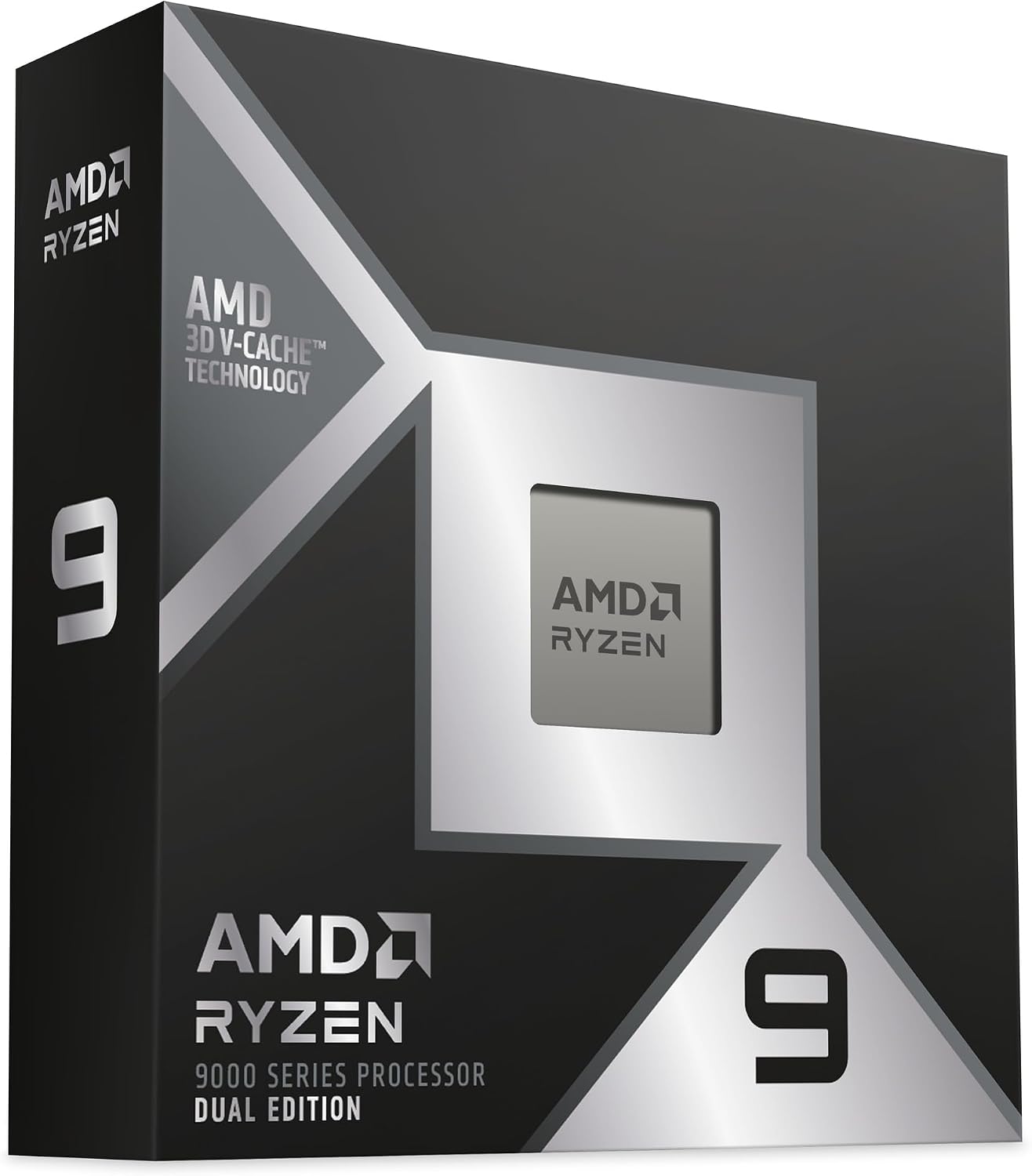
The top of the 61-processor ranking is tightly packed. Behind the winner, the AMD Ryzen 9 9950X3D matches the perfect 1.0 CPU grade and adds 3D V-Cache for gaming, at a stiffer 585-euro price; the Intel Core Ultra 285K (verdict 1.1) delivers near-winner performance with the same strong integrated graphics at around 509 euros; and the AMD Ryzen 9 9900X3D (1.2) undercuts its bigger X3D sibling at about 476 euros while keeping the gaming-cache advantage. All sit within a few per cent of each other — which is precisely why the 299-euro winner's value rating decided the top spot.

Frequently Asked Questions

What is a CPU, simply explained?

CPU stands for Central Processing Unit — the central computing engine of a computer. It calculates outputs from inputs and issues commands to the rest of the hardware, most of them several billion times per second.

What is a CPU for?

The CPU controls nearly everything in a computer. Without it the remaining hardware would not know what to do, and no programs, apps or even the operating system would function.

Are CPU and processor the same thing?

In the computing context the terms are used synonymously. A PC contains other processors too, but they mostly serve specialised tasks.

What is the best CPU?

Both Intel's Core i9 class and AMD's Ryzen 9 class are excellent — but that much power is unnecessary for most computers. Core i5 or Ryzen 5 models frequently suffice.

The Bottom Line

Sixty-one processors produce an unusually clear verdict. The Intel Core Ultra 7 270K Plus wins because it pairs flagship-class benchmark results with an upper-mid-range price; the Ryzen 9 9950X remains the creator's choice for sustained rendering and encoding; the Ryzen 5 8600G owns the no-graphics-card niche outright; and the Core i7-14700K still rules pure gaming builds. Buy by workload, mind the socket, budget honestly for cooling — and remember that in the entry class AMD currently gives the most computing power per euro.

Share Your Experience

Please sign in to leave a comment

Sign In

Loading comments...