The era when "cheap" meant "bad" is genuinely over — but the compromises have simply moved, and knowing where they moved to is the whole skill of buying at this end of the market.
This guide covers only budget phones the field actually recommends, each one tested rather than listed. The number of picks is small on purpose.
Where the money is saved
The screen used to be the giveaway — and no longer is. Two years ago an AMOLED Full HD panel at 120 Hz was unthinkable under £200; today it is available, and three of the four picks below have one.
Cameras are where the corners are still cut. Only the main sensor produces satisfying results, and only in good light — after dark, quality drops sharply. The supporting sensors that pad out the specification are rarely usable: the ultra-wide has its moments but is often mediocre, and the macro sensor is, bluntly, one to forget. Count the sensors you will actually use, not the ones on the box.
Performance is sufficient, not exciting. Web browsing, social media, streaming video and 2D games all run smoothly. Demanding 3D titles — Genshin Impact, Fortnite, PUBG Mobile — are where these phones struggle. If you are a power user, this is the wrong shelf.
Battery life is the category's genuine strength. Modest performance, large batteries and manufacturer power optimisation combine well: every phone here lasts a full heavy day, and up to two days with lighter use.
Which brands, honestly
Chinese makers long ruled this segment, but that has changed: Xiaomi, Samsung and CMF all field models that stand out now, because Samsung and Nothing recognised how large the affordable market is. The advice underneath the brand names is simple — stay with established makers you can hold to account, and check individual reviews before committing.
The picks
Best overall — Xiaomi Redmi Note 15 5G. Formerly a pick in the tier above, its price has fallen into this bracket and it now dominates it. The design is elegant and robust, the AMOLED panel genuinely fine, and the battery comfortably covers a day. The 108-megapixel main camera takes attractive daylight shots, and the software commitment is the standout: four years of Android updates and six years of security patches — long-haul reliability rare at this price. The limits are honest ones: raw power tells in demanding games, where you will notice latency; the 8-megapixel ultra-wide produces drab results; and the pre-installed app clutter in HyperOS wants a clear-out on day one. For most people it remains the king of pragmatism, and its value case is hard to beat.
Most interesting — Nothing CMF Phone 1. The one that breaks the monotony: an original design with a refreshing modular concept, backed by an AMOLED screen, good battery life and performance that is genuinely respectable for the money. The interface is well-made, Wi-Fi 6 is present, and microSD expansion survives — a real advantage now that most rivals have dropped it. The concessions are real: a mono speaker, no NFC (so no contactless payments), slow charging, and a single camera without stabilisation that shows its limits quickly. The swappable back panels are fun, but the phone is not repairable and gets only two years of Android updates.
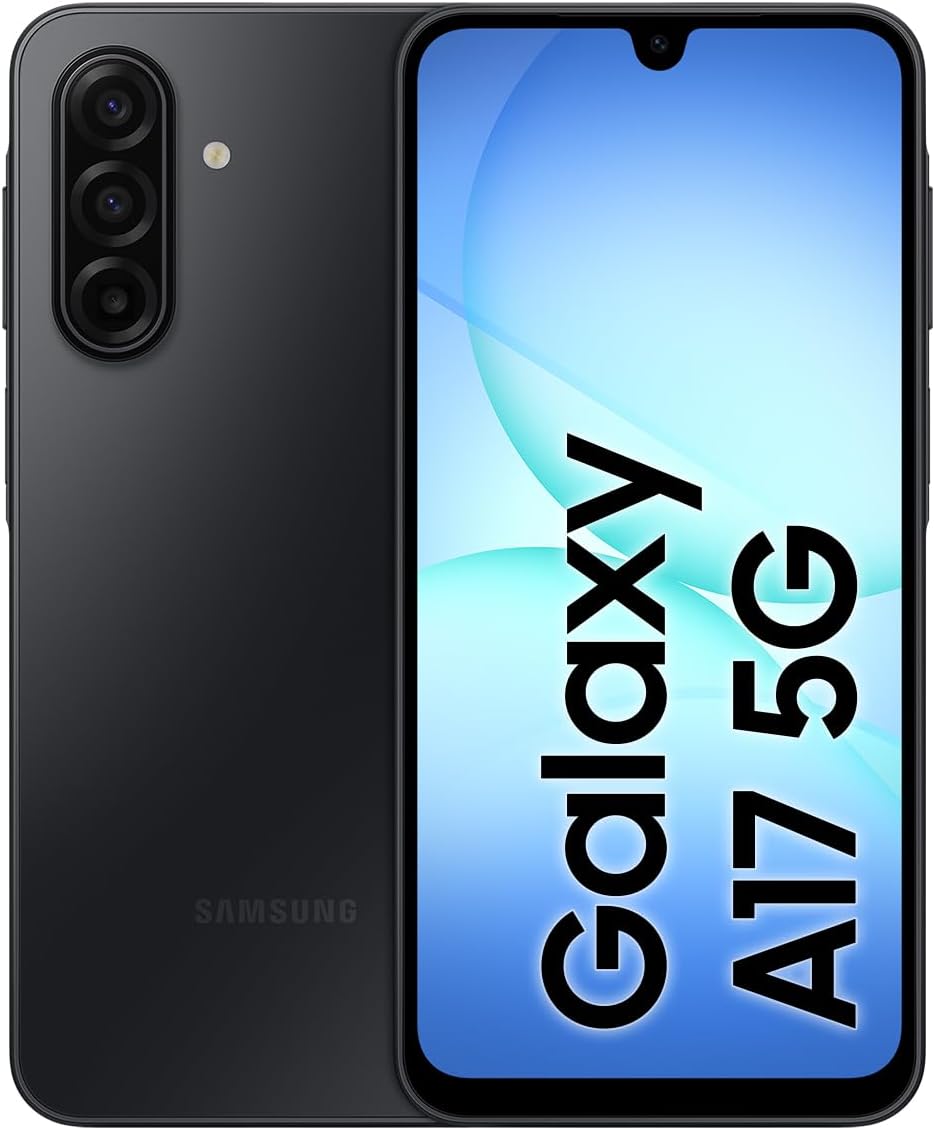
Best all-rounder — Samsung Galaxy A17 5G. The dependable choice: a well-finished body, a properly calibrated Super AMOLED screen that is finally bright enough outdoors, a slim chassis, Gorilla Glass Victus and six years of software support — rare in this category. Battery life covers a full day, 25 W charging is adequate, and the main camera now gains optical stabilisation. Its failings are equally clear: the Exynos 1330 shows its limits with interface stutters and difficulty in 3D games; the single mono speaker feels dated; thick bezels and no HDR give away the design's age; and the selfie portrait mode and camera app are buggy. Recommended for people who want the essentials handled and years of Android and Samsung software updates.
Best budget — Samsung Galaxy A16 5G. A slow starter made compelling by a significant price fall. It keeps a well-finished body, IP64 certification and the same six-year software promise (now five, a year after launch) — an unusual longevity guarantee at the entry level. For basics — social media, browsing, light streaming — or as a first phone, it remains reliable and balanced, and the gaps to the newer A17 are ultimately small. Its ceiling is visible: modest performance, photos that only work in daylight, a screen a notch dimmer than the A17's, and no progress on charging or sound. If you find it cheaply it is a coherent choice; if the prices are close, the A17 now edges ahead on screen calibration and camera stabilisation.
Who these phones are for
The field is candid about the audience: first phones for teenagers, straightforward handsets for parents, and anyone who wants something simple and effective day to day. That framing is worth taking literally — bought for those uses, these phones satisfy; bought as flagship substitutes, they disappoint.
Before you buy
Four questions. Which single camera will you actually use? Judge the main sensor and ignore the supporting cast. Do you need contactless payments? One pick here has no NFC. How long do you intend to keep it? Software support runs from two years to six across these four — the widest gap in the category. And do you play demanding 3D games? — if yes, budget for the tier above instead.
Our best phones guide covers the market above this bracket, and photography-first buyers should read our best camera phones guide.
Research sources
Sources recorded for this page are linked below. Reported third-party testing belongs to the original publisher; it is not testing performed by Truthful Reviews.