A turbo trainer converts an ordinary road bike into a stationary machine for riding indoors. Twenty-three of them were tested together, and one decision matters more than any single model: direct-drive or wheel-on.
What follows is recorded testing, translated. Nobody at Truthful Reviews has ridden any of these.
Direct-drive or wheel-on: the decision that matters
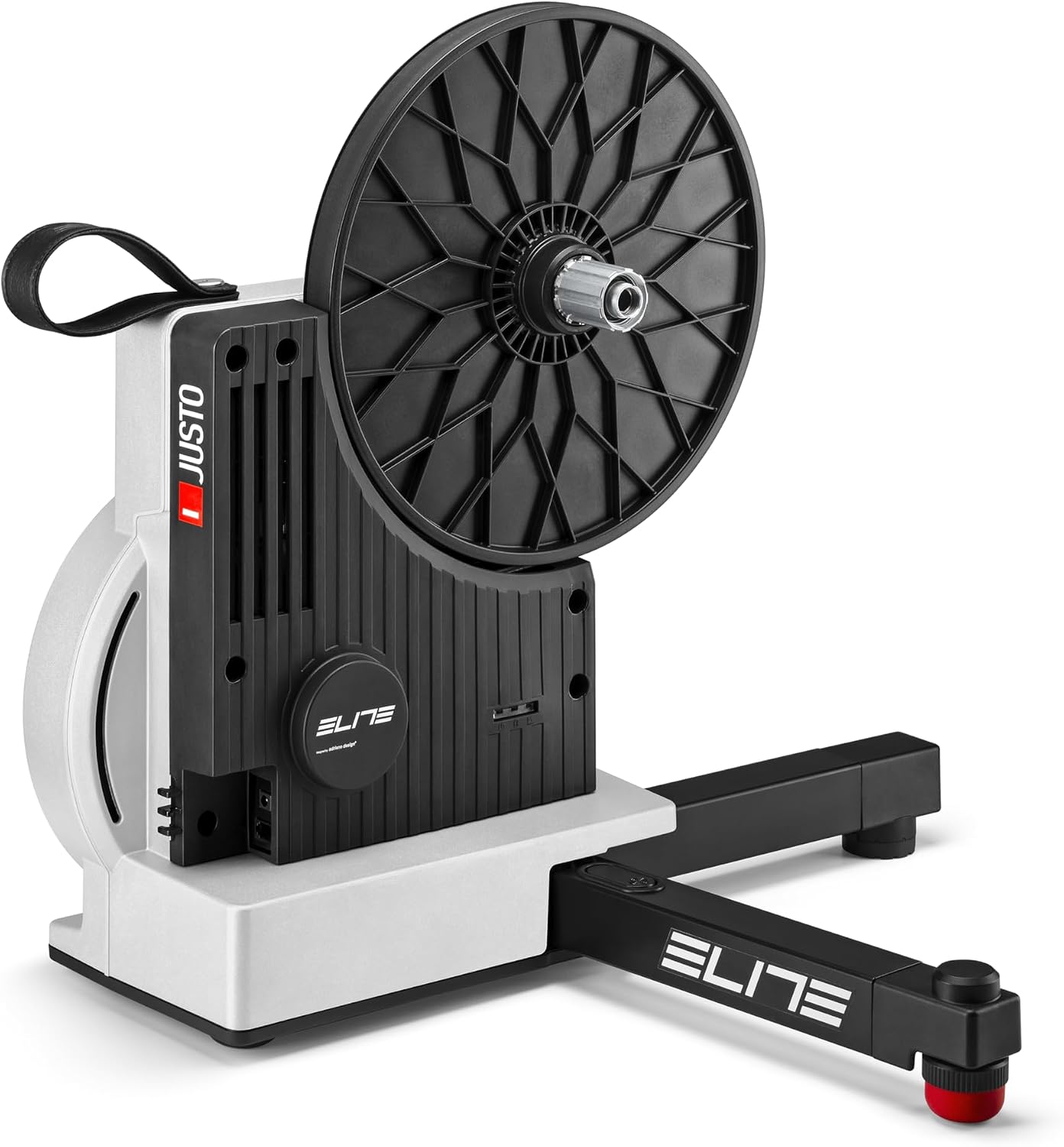
A direct-drive trainer removes the bike's rear wheel completely. The chain runs onto a cassette fitted directly to the trainer, and the trainer's own flywheel and resistance unit take the place of the wheel. That direct mechanical link is what gives these machines the most accurate power measurement, and it is why almost every smart trainer in this guide uses it. The trade-off is set-up: a cassette has to be fitted, it is not always included in the box, and the machines tend to be heavier.
A wheel-on trainer leaves the wheel on the bike. The frame clamps in and a resistance unit — a roller or a magnetic drum — presses against the tyre. Set-up is quicker because there is no cassette to fit, and the machines are lighter, but tyre-to-roller contact makes power readings less precise and can let the tyre slip under a hard effort. Not every wheel-on machine is a basic trainer, either: the Wahoo Kickr Snap is a wheel-on design that still pairs over Bluetooth to training apps. A third, rarer type, the free roller, has the bike resting unclamped on rollers with no resistance unit at all — it demands far more balance and stays a niche.
Connectivity and app compatibility
The smart trainers here pair over Bluetooth with a phone, tablet or head unit and connect to training apps, Zwift chief among them. Two go further: the Wahoo Kickr Core 2 Zwift Cog and Click ships with Zwift's own Cog drivetrain part and Click handlebar shifter, and the Wahoo Kickr Core Zwift One bundles a year of Zwift membership with the hardware. Pairing reliability and how logically the on-board controls are laid out were both part of testing, alongside the mechanical side.
Testing on the classic, non-smart machines also counted how many resistance levels each offered, and every control interface — smart or not — was checked for how logically its buttons and switches are laid out. What ships in the box was checked too, including whether converting from a quick-release skewer to a thru-axle needs parts bought separately, or whether everything required is already included.
The picks
Top pick — Elite Justo 2
A direct-drive smart trainer combining a maximum resistance of 2,300 W with precise power measurement, low weight and a small folded size. A 12-speed cassette is included, which removes one set-up step other trainers here leave to the buyer, and it has integrated lateral tilt for out-of-saddle riding. It runs quietly and is straightforward to operate, which together with its price positioning made it the standout across every level from beginner to more ambitious rider.
Search Amazon UK · Search Amazon US
Garmin Tacx Neo 2T Smart
A direct-drive trainer rated to 2,200 W, with a very small folded footprint and a reasonable weight for its class. It reacts quickly to changes in gradient and allows the bike to tilt slightly side to side. Two compromises: no cassette is included, and the stabiliser feet are not height-adjustable.
Search Amazon UK · Search Amazon US
Wahoo Kickr Core 2 Zwift Cog and Click
A direct-drive trainer weighing a touch over 14 kg, built specifically around Zwift's Watopia training environment. The Click shifter, included in the box, straps to the handlebar with a rubber tie and controls gearing within the app. It is compact, resists tipping, and its price positioning makes it one of the more accessible smart trainers here.
Search Amazon UK · Search Amazon US
Van Rysel RCR
Decathlon's in-house cycling brand supplies the highest maximum resistance on test at 2,800 W, with accurate power measurement alongside it — enough headroom for a strong amateur or professional rider. It folds down to a width of 23 cm and was among the quietest trainers tested, though it has no Wi-Fi.
Search Amazon UK · Search Amazon US
Elite Novo Force
Not a smart trainer, and lighter on features as a result, but the Novo Force still covers most of what a wheel-on trainer needs to: quick to assemble, a stable stance, and 12 mechanical resistance levels. A speed sensor is available as an optional add-on, and a front-wheel block is either bought separately or bundled in a higher-priced set. With no electronics to power, it needs no mains socket nearby, and it is the most affordable pick in the group.
Search Amazon UK · Search Amazon US
Also tested
- Wahoo Kickr Move — a direct-drive trainer, the heaviest tested at 29 kg, adding fore-and-aft movement to the usual lateral tilt for a more natural feel out of the saddle; it needs roughly 85 by 70 cm of floor space and ships with an 11-speed cassette that riders on older 10-speed groupsets will need to swap.
- Garmin Tacx Neo 3M Smart-Trainer — direct-drive on wide, Y-shaped legs for stability, with motion plates adding lateral tilt, 2,200 W maximum resistance, 25 percent gradient simulation, and among the quietest trainers in the test.
- Wahoo Kickr Core Zwift One — a mid-price direct-drive trainer built on the Kickr Core platform, bundled with Zwift's Cog and Click and a year of Zwift membership, running a little louder than some rivals.
- Wahoo Kickr Snap — a wheel-on smart trainer needing no wheel removal or cassette swap, supplied with its own quick-release skewer, pairing over Bluetooth to apps, and showing negligible tyre slip in testing.
- Wahoo Kickr Core — direct-drive with fixed cross-braces that give it strong stability, a roughly 5 kg flywheel, a smaller fold than the Tacx Flux 2, and a 1,800 W ceiling.
- Garmin Tacx Flux 2 — direct-drive with a 7.6 kg flywheel enclosed under a plastic cover, no lateral tilt, a louder run than either Wahoo direct-drive model, and a bulkier folded size.
- Garmin Tacx Boost — a wheel-on trainer supplied with a front-wheel block, a wide stance that gives it strong lateral stability, and a reasonably compact fold.
- AsViva SBT1 — a direct-drive smart trainer on fixed, non-folding legs, with good lateral stability and 2,000 W maximum resistance.
- Sportneer Magnetic One — a simple wheel-on magnetic trainer that folds out and clamps the bike directly, with speed and cadence sensors available as an add-on for app compatibility.
Footprint, power and fitting a cassette
A trainer needs little more floor space than the bike itself: allow roughly 30 to 50 cm of extra length and about 30 cm of clearance on either side. Every smart trainer here needs a mains socket nearby; simple wheel-on trainers with no electronics, such as the Elite Novo Force and the Sportneer Magnetic One, do not. Fitting a direct-drive trainer means putting a cassette matched to the bike's own gearing onto it before the first ride, and as several picks above show, that cassette is not always included in the box.
For related gear, see our fitness tracker guide and smartwatch guide.
Research sources
Sources recorded for this page are linked below. Reported third-party testing belongs to the original publisher; it is not testing performed by Truthful Reviews.