The single most consequential fact about smartwatches is one no specification sheet frames as a warning: the platforms do not interoperate. An Apple Watch will not pair with an Android phone, and Wear OS no longer works with an iPhone. Your phone chooses your watch.
Here is the rest of what the testing establishes, and four watches worth wearing.
What a smartwatch is actually for
Smartphones are indispensable and completely self-sufficient. Smartwatches are neither — they remain some way from the mass market. The watch suits you if you want to know continuously what your phone is doing: who is writing or calling, what is next in the diary. Beyond notifications it acts as an extended arm, launching apps directly from the wrist for weather, share prices or music, which can be stored on the watch itself given enough onboard memory.
They also absorb much of what fitness trackers do — recording routes when cycling or running, calories burned, top speed and heart rate, and working as a navigator. Because essentially every current smartwatch carries its own GPS sensor, you can leave the phone at home for exercise and still track the session.
The other split is SIM or no SIM. A watch with cellular can genuinely stand in for a phone — calls and internet without a handset or Wi-Fi nearby — but depending on the network that means either a separate mobile contract or a multi-SIM option, and either way a monthly fee. Without a SIM, a Bluetooth link to the phone does the work.
The operating systems, and who is locked out
- Apple runs watchOS 26 and seals itself off as usual: no interoperation with Android at all.
- Wear OS is used by Samsung, Google, Xiaomi, OnePlus and Mobvoi — and iPhones are not welcome. Older Samsung models ran Tizen. Wear OS brings the Google Play Store onto the watch, so apps install directly, and includes Google Assistant.
- Huawei now uses Harmony OS.
- Sports watches more than classic smartwatches run maker-specific systems: Fitbit OS, Garmin OS, Suunto OS, Zepp OS (Amazfit) and Polar OS.
The data warning worth reading
Germany's Federal Office for Information Security (BSI) points out that wearables and their apps collect personal data — and is blunt about the consequences. "If unauthorised third parties obtain this data, they can find out a good deal about the user," the experts write. The data involved depends on the device's function, but frequently covers personal details, health data, location data and sleep-rhythm data — enough, in combination, to build a good profile of someone without ever having met them.
The BSI warns specifically about misuse of personal data for criminal purposes. To guard against identity theft, its advice is to enable data encryption and install updates immediately.
The picks
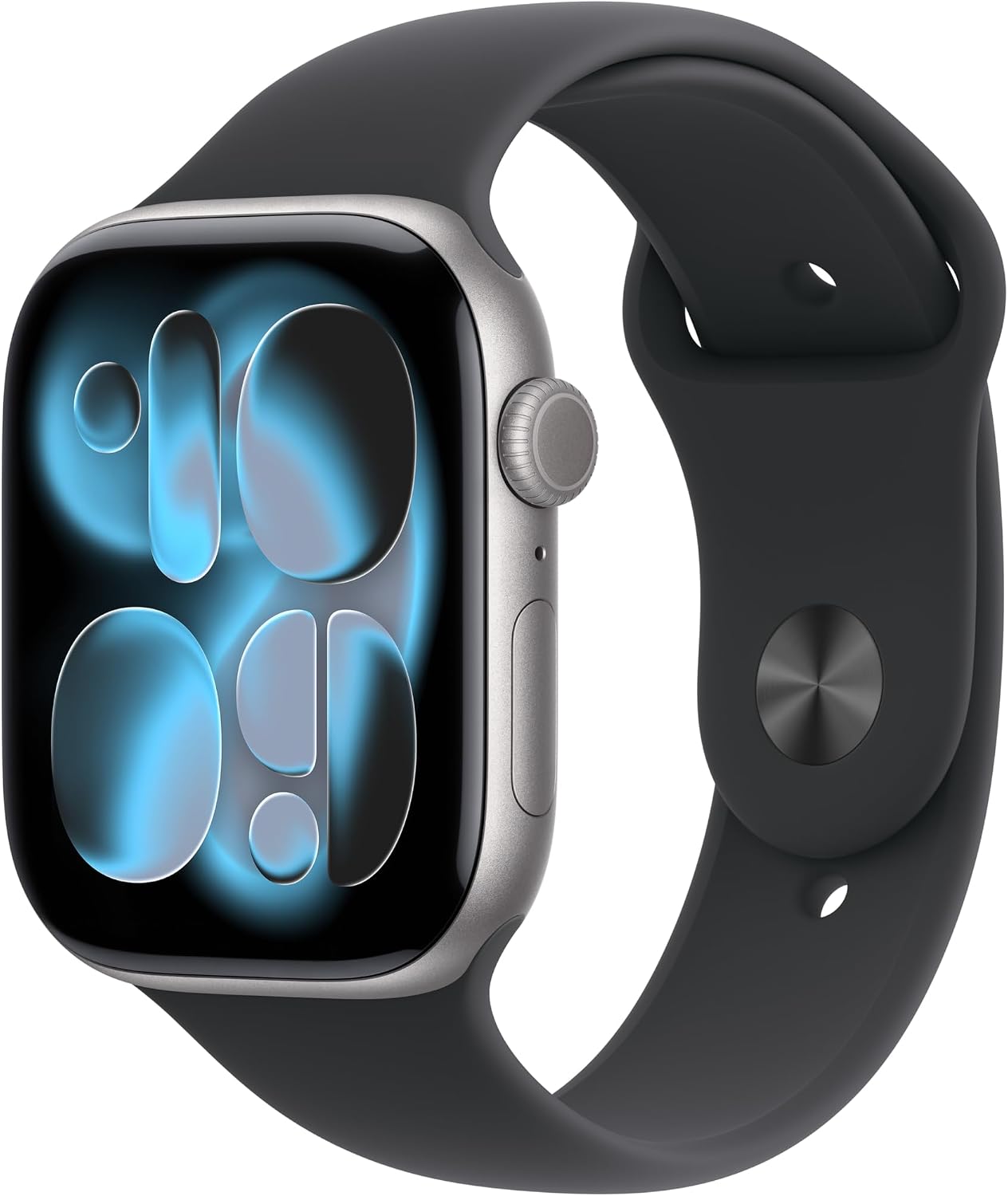
Best overall, and best for iPhone — Apple Watch Series 11. The current favourite for iPhone owners, and the first Apple Watch to support 5G, with a newly developed cellular antenna covering more bands that can activate both system antennas at once to strengthen a weak signal. On watchOS 26 it adds high blood pressure notifications, which use the optical heart sensor to analyse how blood vessels respond to heartbeats, with the algorithm working over 30-day windows; the feature was developed using training data from studies totalling over 100,000 participants and validated in a clinical study of more than 2,000. Also new is a sleep score covering duration, bedtime consistency, waking frequency and time in each sleep stage, plus a workout companion that gives spoken, personalised motivation based on heart rate, pace and distance. It also computes training load as a weighted average over 28 days, aimed at people preparing for a competition.
Its health sensing is the strongest part. The blood oxygen sensor uses four LED clusters and four photodiodes set into the back crystal: green, red and infrared LEDs shine into the wrist's blood vessels while photodiodes measure the light returned, and algorithms compute blood colour and oxygen content. Measurements in testing returned 96 to 100 per cent, against a normal saturation range of 93 to 99 per cent. The watch also writes a proper ECG, using four laser diodes to sharpen pulse readings and electrodes set into the back and crown — touch closes the circuit, and the reading takes just 30 seconds, with the app able to flag signs of atrial fibrillation. Resting-pulse thresholds are user-settable and trigger an alert when crossed.
The display holds up in the conditions that defeat cheaper watches: detail is optimally legible, text and figures razor-sharp, blacks extremely deep, and peak brightness of 2,000 nits is comfortably enough to read in direct sunlight. It is water-resistant to 50 metres, so pool swimming is within scope. The unfixed weakness is battery. Under normal use of the main functions you get at best slightly more than a day, and often the watch is flat after 20 hours — no significant improvement over the previous generation, despite Apple's claims. GPS shortens it; telephony is the worst battery killer; and the constant Bluetooth link drains the iPhone considerably too, so a phone that only just lasts your day will need charging by mid-afternoon once a watch is paired. Charging is the compensation: a coil in the metal back means 15 minutes gives up to 8 hours of normal use, 8 minutes covers up to 8 hours of sleep tracking, and about 30 minutes reaches 80 per cent. Paired over Bluetooth the calling quality is excellent even without cellular — callers cannot tell you are talking to your wrist — which makes the pricier cellular variant a narrow proposition, and it needs a carrier offering Apple Watch eSIMs, which not all do. Anyone wanting to spend less should look at an earlier Apple Watch.
Best for Android — Samsung Galaxy Watch 8. The pick for Android users, and Samsung phone owners can exploit it fully. It takes apps generously, measures blood pressure, writes an ECG and records sleep in detail, including body composition and snoring analysis, with plenty of sport functions. Gesture control lets you reach apps and functions without touching the screen, Google Gemini is newly added for voice commands, and the case is squarer and more distinctive now. It too is water-resistant to 50 metres for swimming and showering, matches the 2,000 nits peak brightness, and returns in a Classic variant at 46 mm with a rotating bezel in black or white. The honest costs: fairly short battery life, Android only, and several features that need a Samsung handset. A UK buying caution from our own check: the cheapest Amazon UK listings for this watch include a "CAD Version & Warranty" import, which carries a different warranty from a UK unit — check the version text before ordering rather than sorting by price.
Best for health monitoring — Huawei Watch D2. One of the most innovative watches on the market: a real inflating blood pressure cuff built into the strap, whose readings are astonishingly precise, with 24-hour blood pressure measurement available. With ECG, blood oxygen, sleep analysis and round-the-clock heart rate, it is the watch for anyone keeping health permanently in view; build quality is high. Two structural limits: no third-party apps can be installed, and it is not suitable for swimming.
Best classic design — Withings ScanWatch Horizon. A wolf in sheep's clothing — a smart-looking chronometer for people who dislike the modern smartwatch look, hiding ECG, blood oxygen, sleep analysis, breathing monitoring and step counting under a stainless steel case, with accurate readings and long battery life. The trade-offs are equally clear: no GPS, and a small display. A note from our verification: Amazon UK results now lead with successor models in this design line rather than the Horizon itself, so check you are buying the model you read about.
Before you buy
Four questions. Which phone do you own? That decides the shortlist before anything else — the platforms genuinely do not cross. Do you want health monitoring or fitness tracking? They are different: one pick here inflates a real cuff, another is a sports-first design. Can you charge daily? The best all-rounder here often does not last a full day under real use. And do you want it to look like a watch? — exactly one of these does.
For training-focused wrists, our best sport watches guide covers that lane, and our best Apple Watch guide compares the Apple line-up.