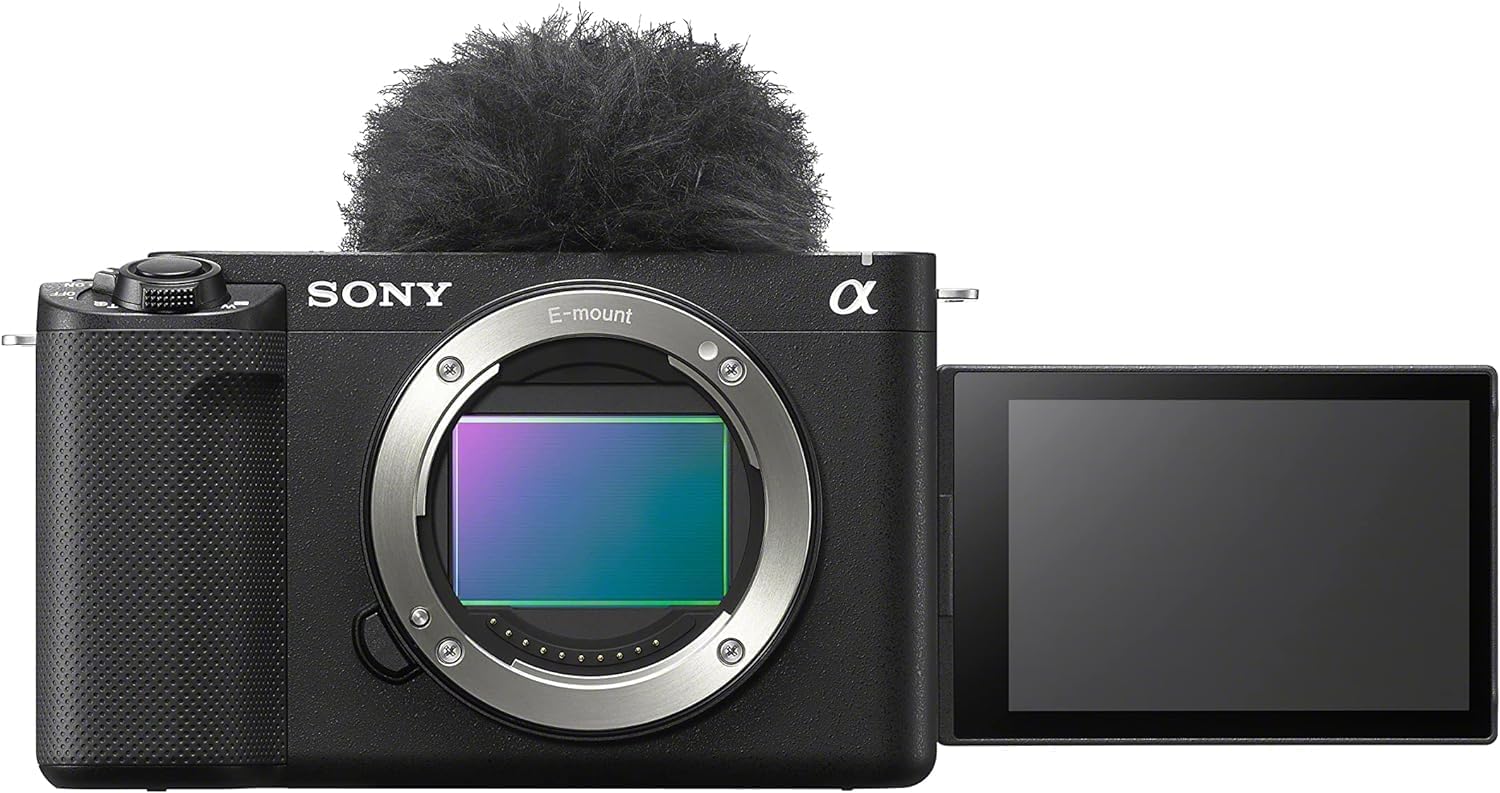
A phone will get you started, but a dedicated vlogging camera transforms a channel: better low-light footage, reliable face-tracking autofocus, a screen that flips to face you and audio that does not sound like a tin can. measured comparisons of more than 100 cameras sort the field for video creators. These are the five best cameras for vlogging in 2026, from a professional-grade hybrid to a pocketable all-in-one — with pointers to the compacts worth a look alongside them.
The Short Version
- Best overall — Panasonic LUMIX GH7. The tested top camera for serious video, with pro codecs and active cooling.
- Best full-frame — Sony ZV-E1. A low-light specialist with superb autofocus, built for the solo creator.
- Best mid-range — Sony α6700. Flagship-level video features and autofocus in an APS-C body.
- Best entry-level — Sony ZV-E10 II. Advanced 4K video and Sony's vlogging tricks at a friendlier price.
- Best pocket all-in-one — DJI Pocket 2. A stabilised gimbal camera that fits in a back pocket.
Best Overall: Panasonic LUMIX GH7
The test's top pick for advanced video and vlogging, the Panasonic LUMIX GH7 continues a GH series that has been a YouTuber favourite for years. Its Micro Four Thirds sensor gives up some low-light ground to full-frame rivals, but in controlled lighting it captures excellent video, and it supports an unusually wide range of recording formats, including ProRes codecs and internal RAW capture. Built for demanding shoots, it has active cooling fans and heat vents to prevent overheating, a tilting and fully-articulated screen and a CFexpress card slot. The test's caveat is fair: for casual day-to-day clips it is overkill — but for creators serious about videography, nothing else it tested does more. Check the price on Amazon
Best Full-Frame: Sony ZV-E1
Related Articles
For shooting on the move in unpredictable light, the test recommends the Sony ZV-E1, Sony's first full-frame vlogging camera. Its 12-megapixel sensor is optimised for low light, making it one of the best options for dim or uncontrolled conditions, and it records 4K at up to 120fps with internal 10-bit 4:2:2 capture and a remarkably effective autofocus system. There is no viewfinder, but a built-in directional mic, fully articulated screen and in-body stabilisation make it the ultimate solo-operator vlog camera. The test's honest notes: it commands a premium price and overheats during longer recording sessions — our full Sony ZV-E1 review has the detail. Check the price on Amazon
Best Mid-Range: Sony α6700
The test's mid-range champion, the Sony α6700, packs a huge amount of video capability into an APS-C body for far less than the full-frame options. It records 4K at up to 120fps (with a crop), uses the same incredibly effective autofocus as the pricier ZV-E1, and adds in-body stabilisation and a fully articulated screen for monitoring yourself. More advanced shooters can tap internal 10-bit 4:2:2 for flexibility in the edit. The test also flags the Fujifilm X-S20 as a strong alternative in this bracket, with a dedicated Vlog mode, though its autofocus is less reliable. Check the price on Amazon
Best Entry-Level: Sony ZV-E10 II
Related Articles
If the α6700 is a stretch, the test points to the Sony ZV-E10 II as a great lower-cost route into interchangeable-lens vlogging. The main trade-off is the lack of in-body stabilisation — offset with stabilised lenses and electronic stabilisation — but the video features are surprisingly advanced, with 4K 120fps slow motion, internal 10-bit 4:2:2 and excellent autofocus in video mode. It keeps the familiar Sony vlogging kit: a fully articulated touchscreen, a Background Defocus button for instant shallow depth of field, and a Product Showcase mode for reviews. Beginners on a tighter budget will also find our Sony ZV-1F and Sony ZV-1 II compacts worth a look, along with the Canon PowerShot V1. Check the price on Amazon
Best Pocket All-in-One: DJI Pocket 2
Not everyone wants interchangeable lenses. The test's pick for a cheap, grab-and-go option is the DJI Pocket 2, a unique all-in-one with a built-in three-axis stabilised gimbal that delivers buttery-smooth handheld footage with no separate stabiliser — and the whole thing fits in a back pocket. It is the simplest way to capture steady walking-and-talking clips, and creators after the latest stabilised pocket format can also read our DJI Osmo Nano review. Check the price on Amazon
What to Look for in a Vlogging Camera
A few features separate a good vlogging camera from a merely good camera. A flip-out screen that faces forward is essential so you can frame yourself. Reliable autofocus — ideally face and eye tracking — keeps you sharp when you move. Stabilisation, whether in-body or gimbal-based, smooths handheld walking shots. Low-light performance scales with sensor size, so a larger sensor helps if you shoot indoors or at night. And watch for overheating on the most powerful cameras during long takes, plus a decent built-in or external microphone, since audio makes or breaks a vlog.
How These Picks Were Chosen
Every recommendation here reflects measured comparisons across more than 100 cameras, scored for video quality, autofocus, stabilisation and vlogging features rather than judged on the spec sheet. For creators weighing a camera against their phone, our best camera phones guide is worth a read, and those after a stills-first hybrid should see our best full-frame cameras under £1,500 guide.
This guide compares documented specifications, measured performance and practical buyer considerations.


