For a long time, full-frame cameras counted as exclusive professional equipment — powerful, but big, heavy and expensive. That has changed: Canon, Nikon, Sony and Panasonic now build compact, affordable full-frame cameras that suit ambitious hobby photographers just as well as working professionals. This comparison, drawn from a test field of 93 benchmarked system cameras, surveys the best full-frame models under 1,500 euros — cameras that combine outstanding image quality with a genuinely attractive price.
Full-frame holds a particular fascination. The large sensors deliver exceptional sharpness and minimal image noise, and the creative play with shallow depth of field succeeds far more precisely and professionally than with smaller-sensor models. What has changed is the entry price: costs have fallen and bodies have shrunk markedly, while the outstanding image quality remains.
The Short Version
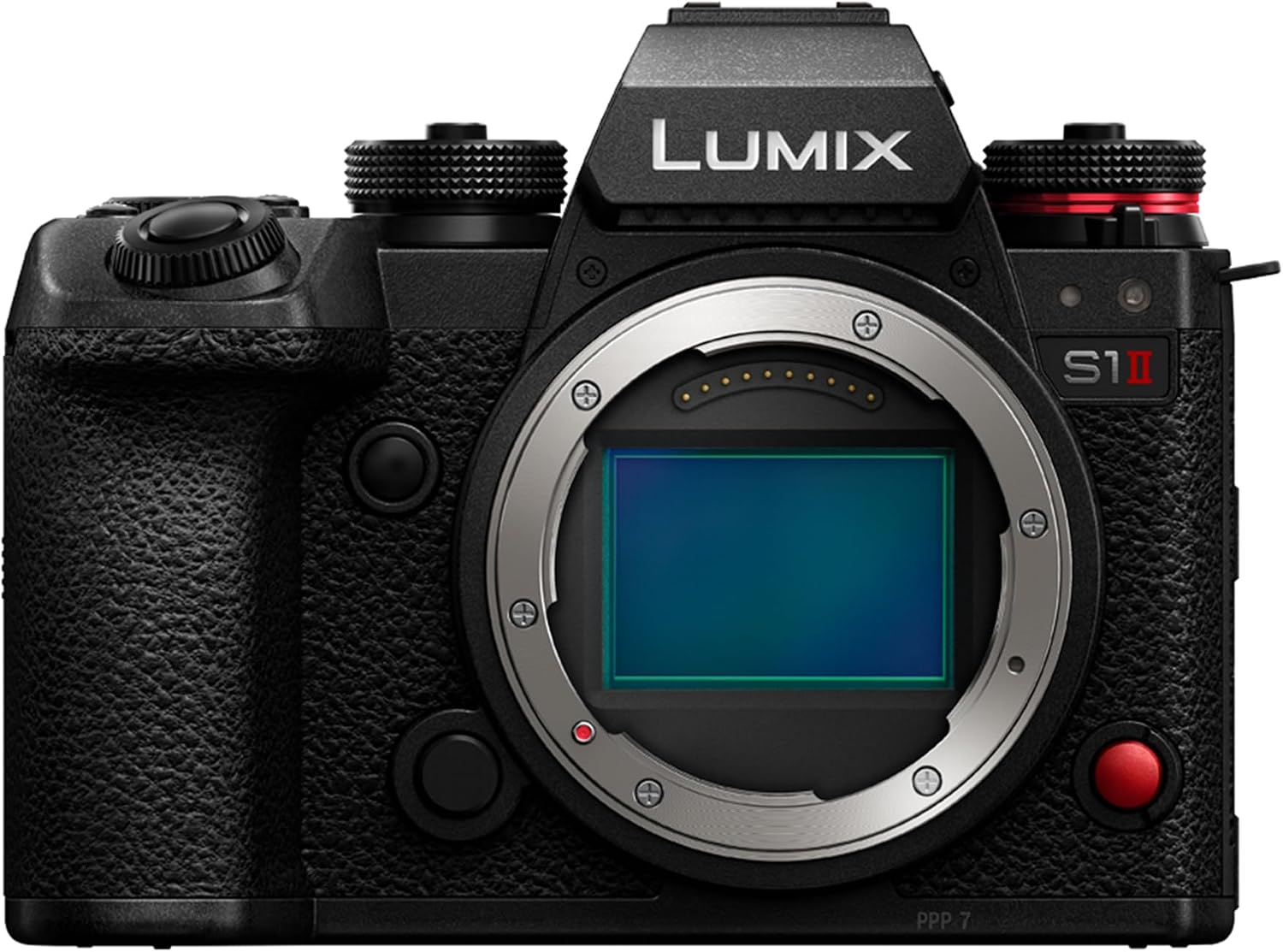
- Best overall — Panasonic Lumix DC-S5 II. The hybrid champion: razor-sharp 6K video, unlimited UHD recording at 60 fps with cooling vents, a fast hybrid autofocus and 30 frames per second burst shooting earned the best overall verdict (1.3) at around 1,373 euros.
- Budget pick — Panasonic Lumix DC-S5D. Sold only as a kit with a zoom lens from about 670 euros, with very good image quality, in-body stabilisation, a weather-sealed body and dual UHS-II card slots. Only the 7.2 fps burst rate and the low-light autofocus are leisurely.
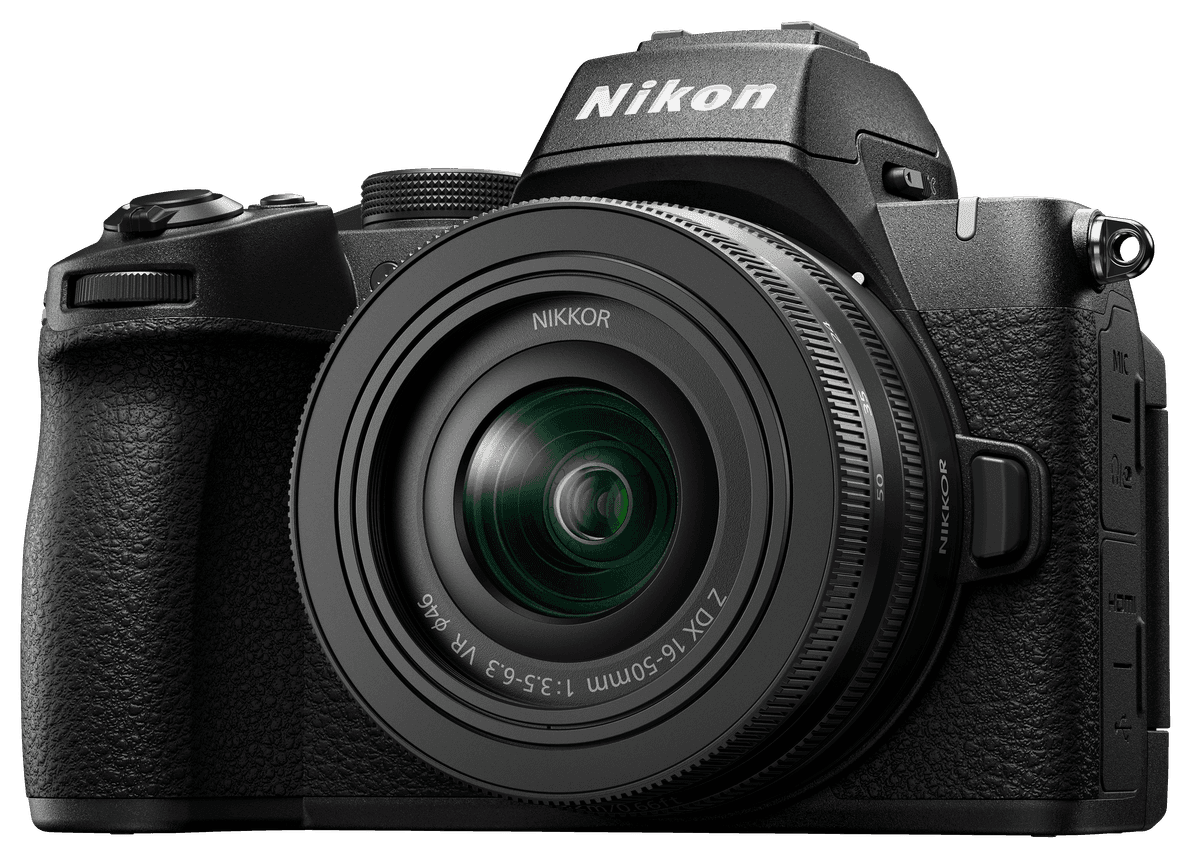
- Top alternative — Nikon Z6II. Clean images to ISO 12,800, 14 fps bursts, a large high-resolution viewfinder and a handsome 705-gram body with shoulder display, from around 1,199 euros.
- Best image quality — Sony Alpha 7 III. The 2018 veteran still matches current models for sharpness and detail (image-quality grade 1.2), with an extremely short shutter lag — held back only by a convoluted menu and 30 fps UHD video, at about 1,299 euros.
- High-speed specialist — Canon EOS R8. A sensational 35-40 frames per second from a featherweight 461-gram body, with crisp UHD video — but no in-body stabiliser and the weakest battery in the field (380 shots), at around 1,489 euros.
The Winner: Panasonic Lumix DC-S5 II
The Lumix S5 Mark II is the camera for people who film as much as they photograph. Its 24-megapixel sensor convinced in laboratory testing with very good photo quality and razor-sharp 6K video (5,952 × 3,968 pixels); UHD records at up to 60 frames per second with no time limit, kept cool by ventilation slits in the body. Professional features — zebra patterns, a waveform monitor, a vectorscope — round out the video toolkit, and the video-quality grade of 1.1 was the best in the comparison.
Photography keeps pace. The hybrid autofocus with phase and contrast detection works very fast and accurately (0.19 seconds shutter lag with autofocus in daylight), bursts run at a rapid 30 JPEGs per second, and the in-body stabiliser steadies long exposures. The one structural caveat is the L-mount's smaller lens catalogue compared with the Sony and Nikon ecosystems. With top grades in all four test disciplines — image quality, equipment and handling, video, speed — and a "cheap" value verdict at around 1,373 euros body-only, the S5 II is the most complete camera under 1,500 euros in the field.
Budget Pick: Panasonic Lumix DC-S5D
Related Articles
The S5D is a compact full-frame camera at a genuinely low price — currently sold only in a kit with a zoom (cheapest with the 18–40 mm), so no separate lens budget is needed to start. The 24-megapixel sensor delivered very good image quality in testing, and the equipment list reads far above the price: in-body stabilisation, a weather-protected housing, two fast UHS-II card slots and a fully articulating three-inch touchscreen that flips right round to the front.
Shutter lag pleases at 0.07 seconds with manual focus and 0.19 seconds with autofocus in daylight, though in low light the autofocus reacts noticeably more slowly. The burst rate of 7.2 frames per second is leisurely — enough for most subjects, but not sport or action. Video records in genuine 4K (4,096 × 2,160), with a good 60 fps in UHD. With the test's best-possible value rating (1.0) from about 670 euros, this is the cheapest sensible entry into full-frame.
Top Alternative: Nikon Z6II
The Z6II from 2020 remains a powerful all-rounder. Its 24-megapixel sensor and noise reduction keep images clean up to ISO 12,800, bursts reach 14.1 frames per second, and a firmware update brought 60 fps UHD for slow-motion work. The high-quality 705-gram body with its shoulder display stays handy and ergonomic at 134 × 101 × 70 millimetres; the 3.2-inch touchscreen is high-resolution and tiltable (though not front-facing for selfies), the viewfinder large and sharp. Storage is unusually flexible: one UHS-II SD slot plus one for faster XQD or CFexpress cards. From around 1,199 euros, it is the pick for available-light and long-exposure photographers in the Nikon system.
Best Image Quality: Sony Alpha 7 III
Related Articles
The Alpha 7 III dates from 2018 and still competes with current models where it counts: the 24-megapixel files hold their sharpness and detail richness largely intact even at high ISO settings, earning the best image-quality grade in the comparison (1.2). Autofocus is quick, and with manual focus the shutter lag is extremely short. The compromises are era-typical: a convoluted menu structure with rudimentary touch functionality, bursts limited to 10 frames per second, and UHD video at only 30 fps — fine for everyday scenes, not for fast action. The 3-inch touchscreen and electronic viewfinder are not the highest-resolution but convince in quality, and at 650 grams the body is relatively light and compact. From about 1,299 euros, it is the budget route to reference-grade stills.
High-Speed Specialist: Canon EOS R8
The EOS R8 left a deliberately split impression. On one side: sensational speed. Bursts run at up to 39.9 JPEGs per second in the lab measurement, shutter lag is delightfully low (0.20 seconds with autofocus), and at 461 grams the compact, weather-resistant body is the lightest in the field — though its plastic surface feels less premium. UHD video comes out crisply sharp, albeit capped at 30 fps.
On the other side: the sensor is not stabilised, so longer shutter speeds blur more readily — the biggest single drawback — and the battery manages only 380 viewfinder shots, the weakest endurance in the comparison. Image quality is very good at base ISO, with details fading as sensitivity climbs. For action photographers who shoot fast lenses in good light, the R8's speed is unmatched at this price; everyone else should weigh the missing stabiliser carefully.
Also Recommended
Two further models earned places in the leaderboard. The Panasonic Lumix DC-S5, the 2020 original, remains one of the cheapest ways into full-frame (around 980 euros) with detailed 24-megapixel photos, noise visible only from ISO 3,200, eye/face/animal autofocus, 60 fps UHD slow motion and the field's best battery life of 820 shots — only its seven-frame burst rate shows its age. The Nikon Z5II impressed throughout: a stabilised 24-megapixel sensor on a par with far dearer Nikons, a 700-gram sealed body, a sharp 3.2-inch fully articulating display, unlimited 15 fps JPEG bursts, a hybrid autofocus recognising nine subject types and a dedicated Picture Control button for quick colour looks — at the cost of a relatively short 460-shot battery life, from about 1,489 euros.
For photographers happy with a smaller budget still, the field also yielded the Panasonic Lumix DC-S9 (around 880 euros): the same very good image and video quality in a gripless, colourful compact body that trades handling comfort (equipment grade 2.5) for portability, and the original Nikon Z5 (around 989 euros), a solid "good" all-rounder whose 2.5-grade speed marks the honest difference to its successor.
Stepping Up to the Professional Class: What to Know
Professionals choose full-frame above all for the superior image quality, but equally for the robust, thoughtfully designed bodies. The biggest trump is low-light performance: when ISO must climb to 6,400 and beyond, the generously sized pixels still gather enough light for a clean signal, keeping noise low and colours and contrasts attractive. Note that sensor size has nothing to do with resolution — many full-frame cameras offer 24 megapixels, no more than a good APS-C model.
The second advantage is the housing: dust- and splash-protected magnesium-alloy bodies, ergonomically mature, with direct-access buttons and two or more control dials that allow "blind" operation with practice. Stabilisation and an articulating touch display are standard in this class; the small status display on the camera's shoulder, typical of high-end models, is usually the first thing dropped at these prices.
Full-frame also has genuine disadvantages. Bodies and compatible lenses cost more, and the photographer carries roughly a third more weight. More subtly, depth of field is shallower: at open aperture the sharp zone can span only a few centimetres, which looks wonderfully professional in portraits, product shots and macro work, but demands focusing experience — a high ratio of missed shots frustrates quickly, especially with fast-moving subjects. Wildlife photographers with telephoto lenses may even be better served by APS-C, where precise focusing is easier and the 1.5× crop factor turns a 200 mm telephoto into a 300 mm equivalent free of charge.
Why Bigger Pixels Beat More Pixels
Full-frame designates sensors measuring 36 × 24 millimetres — the exact size of a frame of traditional 35 mm film, which is why the format is also called "Kleinbild" in German-speaking markets; the first digital SLRs simply adopted the mature analogue standard. Upper-amateur system cameras mostly use APS-C sensors of about 24 × 16 millimetres — less than half the area — while the widespread Micro Four Thirds format offers roughly a quarter.
At identical resolution, sensor area decides image quality: larger sensors give each pixel more room, making it less prone to noise, and full-frame models additionally profit from higher dynamic range and better colour reproduction. The same physics, incidentally, explains why even the best phone cameras — compared in our Xiaomi vs Samsung camera-phone guide — cannot out-resolve a full-frame sensor in difficult light.
Bargain Warning: Where Cheap Full-Frame Cuts Corners
The test shows that even affordable full-frame models beat smartphones, compacts and smaller-sensor system cameras for image quality by a wide margin. But particularly cheap models can carry limitations a buyer might not expect:
- Savings in the body. Cheap full-frame cameras still use magnesium alloys, sealing and touch displays — but the stabiliser or viewfinder can fall away, some models carry only one SD slot, and finders and screens are often smaller and lower-resolution (if still good). Many direct-access buttons and a status display remain high-end privileges.
- Restricted video functions. Nearly all current models offer UHD/4K, but anyone needing higher resolutions, high frame rates or advanced profiles like Log or RAW may have to reach for a dearer body.
- Slower bursts. Many cheap models manage around 10 frames per second — enough for most subjects, but sport and fast action profit from more.
- Autofocus limits. The newest tracking algorithms ship in the top models first; cheaper or older cameras may recognise faces and eyes but not animals or vehicles. Check the subject-recognition list against your needs.
How the Cameras Were Graded
All system cameras — with and without mirrors — pass through a standardised laboratory test procedure that makes models directly comparable. Every camera receives an overall grade combining four disciplines: image quality, equipment and handling, video quality, and speed, expressed on the familiar school-grade scale to one decimal place. The rankings are dynamic: the best value currently achieved in each individual discipline serves as the reference for all others, so grades shift as the state of the art advances.
Frequently Asked Questions
What is a full-frame camera?
A digital camera with an image sensor measuring 24 × 36 millimetres — about the size of a traditional 35 mm negative or slide frame. The large area gives the pixels more room, which improves image quality especially in poor light.
What are the advantages of full-frame?
Generally better image quality, particularly in low light; shallower depth of field for attractive bokeh; and typically more detail and dynamic range in the files.
Can I use my old lenses on a full-frame camera?
It depends on lens and camera. The same mount should pose no problems — unless the lens was optimised for APS-C sensors, in which case a full-frame body will show strong vignetting: dark corners around the frame.
The Bottom Line
Ninety-three tested system cameras leave a clear path through the under-1,500-euro full-frame class. The Panasonic Lumix S5 II wins as the most complete hybrid — class-leading video with no real photographic weakness — while the S5D kit undercuts everything sensible at 670 euros, the Nikon Z6II anchors the Nikon system with superb low-light files, the Sony Alpha 7 III remains the stills-quality bargain, and the Canon EOS R8 owns pure speed. Decide first between the ecosystems — the lens catalogue you buy into matters longer than the body — then match the spec sheet to your subjects: stabilisation for low light and long lenses, burst rate for action, articulating screens for video. The image quality, in this class, is no longer the question.