Why the Avata 360 matters
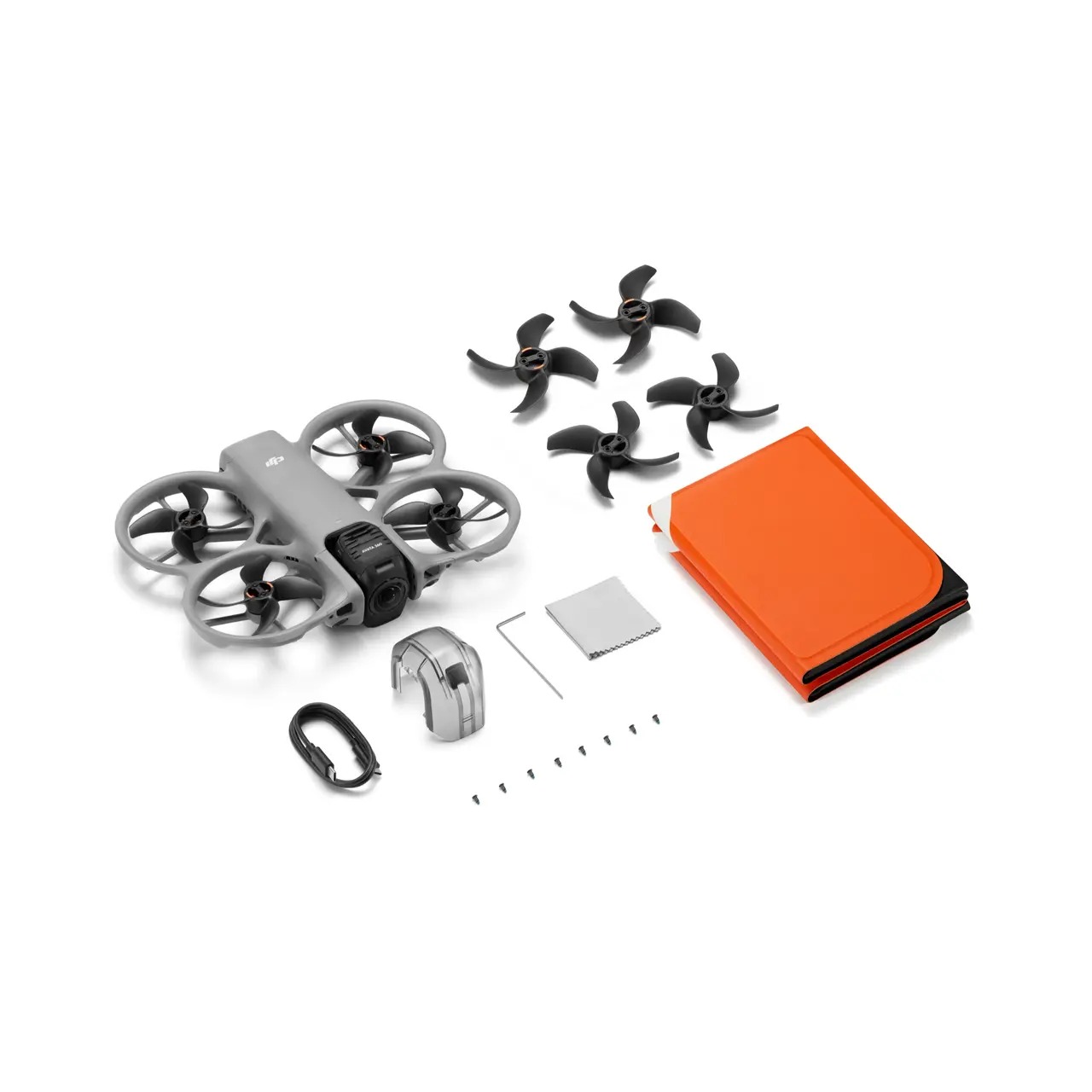
The DJI Avata 360 enters a part of the drone market that has been waiting for a serious response from DJI. Immersive FPV flying and 360-degree capture have mostly belonged to specialist conversations, with Insta360 often dominating the narrative whenever people wanted dramatic reframing and all-angle footage in one package.
This new model changes that immediately. Rather than lightly refreshing an existing Avata formula, DJI appears to have built a different kind of FPV machine around the idea of immersive capture.
Hardware built around 360 capture
The headline feature is the camera system. The Avata 360 uses two 200-degree cameras and pairs them with dual 1.1-inch 64MP CMOS sensors. That is a serious specification on paper, and it helps explain why this drone is physically more substantial than a typical ultra-light FPV machine.
The trade-off is obvious. That extra weight is one of the few immediate downsides in the early picture, but it also underpins the Avata 360's technical ambition.
DJI also seems to be aiming well beyond simple novelty footage. The drone is quoted as capable of 8K at 60fps and stills up to 120MP, which turns it into something much more flexible for creators who want to reframe footage afterwards rather than settle for a single fixed point of view.
Flight behaviour and imaging promise
Early impressions point to a drone that feels extremely comfortable in the air. It supports DJI's familiar control ecosystem, including RC 2, RC-N2, RC-N3, RC Motion 3 and DJI Goggles, so pilots already inside the DJI universe are not forced into an awkward new control method.
The feature set sounds equally rich. ActiveTrack 360, Spotlight Free and a virtual gimbal capable of swinging the viewpoint dramatically all suggest that the Avata 360 is designed for dynamic, high-energy footage rather than conservative aerial documentation. The ability to record immersive material and then crop or redirect the framing afterwards is one of the strongest arguments for this kind of drone, and DJI seems determined to push that advantage hard.
Low-light performance could be another major differentiator. With large sensors and an f/1.9 aperture, the Avata 360 looks better equipped than many rivals when the light gets difficult.
Range, endurance and transmission
DJI is also making a strong numbers case around operation rather than just capture. Claimed range stretches to 20km, and battery life is rated at 23 minutes per pack. Real-world endurance will always depend on wind, route and flying style, but the source evaluation suggests around 20 minutes was realistic enough in use, which is a respectable outcome for a drone aimed at immersive flight.
Transmission quality sounds equally important here. DJI's O4+ system reportedly delivered a clean, stable live feed even when the drone moved several kilometres away, which is exactly the sort of behind-the-scenes performance that makes a premium FPV drone feel trustworthy rather than stressful.
Price, packs and market positioning
DJI sells the Avata 360 directly through its own store and, as usual, has structured the range around multiple bundles. Check the price on Amazon
Early verdict
The early impression is clear: the Avata 360 looks like a major DJI launch, not a niche side project. The specification is ambitious, the flight ecosystem is mature, and the image pipeline appears strong enough to tempt anyone who has been waiting for DJI to take 360 FPV capture seriously.
The main compromise remains weight. But for creators who care more about image flexibility, immersive footage and DJI's broader flying ecosystem, that compromise may be completely acceptable.
At this stage, the Avata 360 looks like one of the most convincing new drones in the immersive-capture space.
Research sources
Sources recorded for this page are linked below. Reported third-party testing belongs to the original publisher; it is not testing performed by Truthful Reviews.