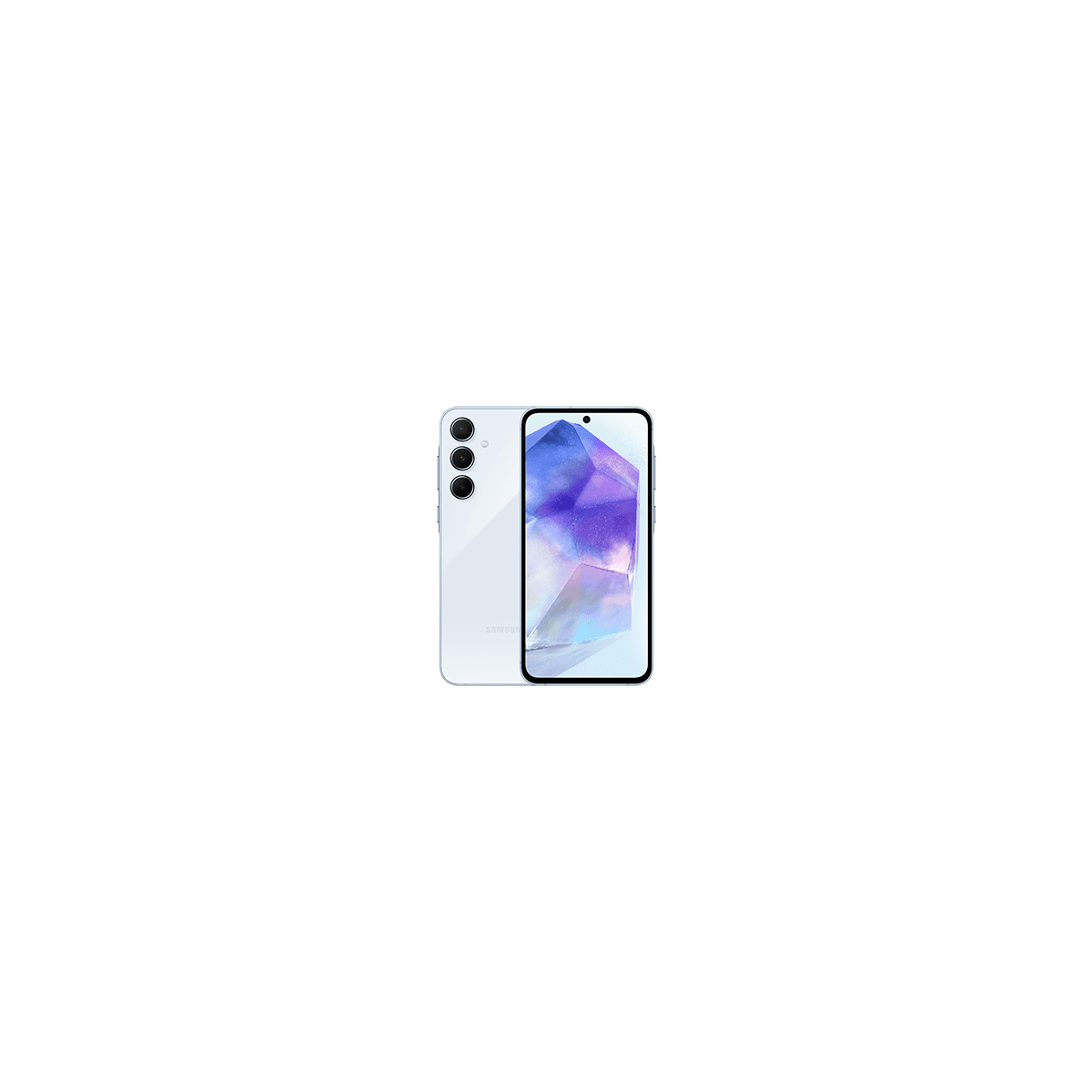
Samsung's top-tier phone for 2026 arrives with the same challenge that faces every Ultra launch after a successful generation: how do you make progress feel meaningful when the formula is already mature? The Galaxy S26 Ultra has a clear answer, at least on paper. It introduces a privacy display mode designed to shield sensitive information from prying eyes while keeping the rest of the panel usable, and it pairs that with the usual round of chipset and camera refinements.
That innovation is clever, useful and more substantial than most gimmicks. The problem is that almost everything around it feels like another careful nudge rather than a real leap. The S26 Ultra is still one of the most complete Android flagships money can buy, but it also makes Samsung's caution impossible to ignore.
Overview
The Galaxy S26 Ultra remains the showcase for Samsung's hardware ambition. It sits at the top of a premium market crowded with other ultra-phones from Xiaomi, Oppo and Vivo, yet its brief is unchanged: deliver the broadest Samsung experience in one device, from productivity and camera flexibility to software features and battery life.
This year's model continues that tradition with a large AMOLED display, Qualcomm's latest flagship silicon and a four-camera rear array led by a 200MP main sensor. None of that is surprising. What is new is the privacy display concept, which uses a revised pixel arrangement to hide sensitive information more effectively when needed. It is the kind of feature that sounds niche until you think about commuting, payments, travel or working in public.
Design and build
Anyone hoping for a dramatic visual reset will be disappointed. The S26 Ultra looks and feels very close to the S25 Ultra. Samsung has altered the details rather than the identity, so the device is still unmistakably an Ultra: large, angular and substantial. It measures 16.36 x 7.81 x 0.79 cm against the S25 Ultra's 16.28 x 7.76 x 0.82 cm, and weighs 214 g rather than 218 g — a 4 g saving you will never feel in a pocket. The camera island is the exception: it stands proud enough to take the effective thickness to around 12.5 mm, which leaves the phone rocking on a table.
The more interesting change is material rather than silhouette. Samsung moves away from the titanium framing used on the two previous Ultra models and adopts Armour Aluminium 2 instead. That sounds like a downgrade until you look at the reasoning. Aluminium is lighter and better at dissipating heat, and the phone does indeed shed a little weight while remaining reassuringly solid.
The drawback is that nothing here feels newly desirable in the hand. The camera island remains very thick, the device is still enormous, and the changes are too subtle to make the S26 Ultra feel fresh. It feels refined, not reinvented.
Display: privacy as the main event
On the fundamentals, the screen remains what you would expect from Samsung: a 6.9-class AMOLED 2X panel with LTPO refresh from 1Hz to 120Hz and a sharp 1440 x 3120 resolution. Colour, contrast and motion still sit at flagship level. The difference is the underlying matrix arrangement that enables Samsung's so-called confidential display mode.
This mode acts like an on-demand privacy filter, letting the user obscure the most sensitive parts of what is on screen without permanently compromising the visual quality of photos, video or other content. It is a more elegant idea than the blunt physical privacy filters some people still use, and it gives the S26 Ultra a genuinely distinctive use case.
It does not change the fact that the broader display experience is not massively different from before. Without the privacy feature, the panel behaves like another excellent Samsung flagship screen. With it, the S26 Ultra at least has one talking point that cannot be reduced to a minor spec bump.
Performance: effortlessly fast
Samsung reserves its new Exynos silicon for the smaller S26 models, so the Ultra gets a Snapdragon 8 Elite Gen 5 for Galaxy. Its two Oryon V3 Phoenix L cores run at 4.74 GHz alongside six Phoenix M cores and an Adreno GPU, and in practice that means performance is as strong as you would expect from a top-end Android handset in 2026. Multitasking is exceptionally smooth, heavy apps do not trouble it, and the phone has no issue behaving like a productivity device rather than just a media slab.
Graphics performance is equally convincing. The phone sustains around 125fps in demanding titles, and while heat still builds under prolonged heavy loads — peaking near 43 °C — it does so within predictable flagship limits. The overall impression is not one of revolutionary speed but of abundant headroom. The S26 Ultra feels overqualified for almost everything, which is exactly what most buyers at this level want.
Cameras: excellent, but evolution rather than upheaval
Samsung keeps the familiar four-camera strategy: a 200MP main camera, 50MP ultra-wide, 50MP 5x telephoto and 10MP 3x telephoto. Hardware changes are limited mostly to wider apertures on some modules, so expectations should be calibrated accordingly. The S26 Ultra is not a photographic reset. It is a refined continuation.
In daylight, the main camera remains predictably strong. Detail is abundant, colours remain characteristically warm, textures are well preserved and overall rendering feels polished. Low-light improvements exist, especially in exposure and colour retention, but they are not dramatic enough to redefine the category.
The 5x telephoto benefits from the wider aperture as well, though the gains are more about brighter exposure than a wholesale jump in crispness. The 3x zoom remains usable but clearly less exciting than the longer lens, and the ultra-wide continues to favour colour consistency over dramatic reinvention. In other words, Samsung is polishing a proven camera stack rather than rethinking it.
That still leaves the S26 Ultra as one of the most flexible camera phones available. You can move from very wide to genuinely long reach without feeling that any one lens is a token inclusion. What you do not get is a sense that Samsung has leapt ahead of the field. The camera system is better described as comprehensively good than newly dominant.
Video: where Samsung pushed harder
The clearest area of camera-side ambition is video. Samsung introduces its APV codec, aimed squarely at more serious creators, and backs it up with LOG recording, LUT support, HDR capture and improved stabilisation options. Dolby Vision still does not appear, but the overall package is broader and more creator-friendly than before.
The new Super Stabilised option with horizontal lock is particularly practical. By leveraging the high-resolution wide and ultra-wide sensors, the phone can crop and steady motion-heavy footage more effectively for running, cycling or other active shooting. That may not matter to every buyer, but it is one of the few areas where the S26 Ultra feels like it has moved beyond routine annual polishing.
Battery life and charging
Samsung continues to avoid the silicon-carbon battery arms race and sticks with a familiar 5000mAh lithium-ion cell. On raw capacity that no longer looks especially ambitious next to some Chinese rivals, but Samsung's optimisation remains strong enough to keep the S26 Ultra competitive.
The source testing measured more than 26 hours of mixed-use endurance, which places the phone comfortably in the top tier for stamina. That is the expected part. The more welcome surprise is charging. Samsung has finally pushed this area forward, and while it still does not become the outright fastest option in class, it is no longer so easy to criticise the Ultra for lagging far behind rivals.
This matters because the S26 Ultra already excelled at lasting the day. Faster charging closes a real usability gap and makes the phone feel more up to date than the battery spec alone would suggest.
There is also a broader point here about how Samsung wants the Ultra to be perceived. Rather than chase brute-force specifications at any cost, the company is still leaning on balance: dependable endurance, strong thermals, polished software and consistent camera behaviour. That approach produces fewer headline surprises than some rivals, but it does make the phone easier to trust as a daily flagship.
Who Should Buy the Galaxy S26 Ultra?
The Galaxy S26 Ultra only makes sense for a particular buyer. If you are coming from a much older Samsung, or you simply want the most complete Android phone on sale — the best big screen, dependable battery life, the sharpest video and now a genuinely novel privacy display — it is an easy recommendation. If you already own a recent Ultra, it is not: the year-on-year gains are modest, and a privacy display alone does not justify four figures. If you mainly want a superb camera for far less money, a Pixel does most of this for under half the price — our best phones guide covers the cheaper options that suit most people better.
Verdict
The Galaxy S26 Ultra is still a top-rank flagship because its weak points are relative rather than absolute. It remains powerful, versatile, well built and long-lasting, with a display that is excellent even before you factor in the new privacy mode.
The problem is that Samsung's annual progress has become so incremental that the S26 Ultra can feel like a device searching for a reason to exist beyond maintaining the status quo. The privacy display is a real innovation, and the video upgrades plus better charging are useful improvements. Outside that, though, this is another familiar Ultra with only modest imaging changes and no broader sense of reinvention.
If you are coming from a much older Samsung or want one of the most complete Android phones available, the S26 Ultra remains an easy recommendation. If you already own a recent Ultra, the argument is much harder.