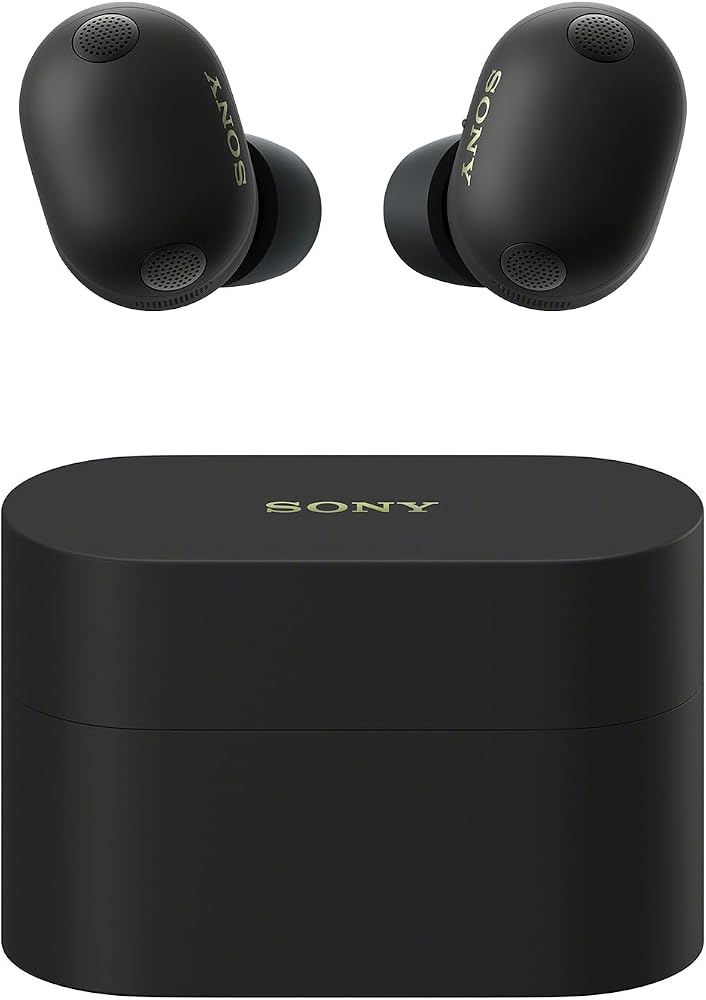
Sony’s WF-1000XM line has reached the stage where dramatic reinvention would probably be riskier than careful refinement. The WF-1000XM6 follows exactly that logic. Sony has not torn up the recipe that made the WF-1000XM5 one of the most respected premium true wireless models on the market. Instead it has adjusted the fit, revised the tuning, improved transparency and call handling, and promised stronger active noise cancellation through a new processor and extra microphones.
That approach sounds conservative, and in some ways it is. The new earbuds are still unmistakably Sony: premium, feature-rich, serious about sound quality and unapologetically in-ear. Yet the changes are meaningful in daily use. The sound signature is more mature, the controls are less frustrating, transparency feels more natural, and real-world battery life ends up comfortably ahead of the official claim. The main price of those gains is physical. The earbuds and case are larger than before, and the fit remains intrusive for anyone who never got along with Sony’s foam-tipped philosophy.
Overview
Sony’s goal with the WF-1000XM6 is not to shock existing fans. It is to preserve a flagship identity that already works while sanding down the areas that had become easiest to criticise on the XM5. The new model therefore aims to be more complete rather than radically different: better call quality, more control customisation, more natural transparency and a more polished tonal balance.
That strategy makes sense in a market where Sony already has strong brand equity in premium ANC earbuds. The XM6 needs to stay on the shortlist of buyers cross-shopping Bose, Apple and high-end Sennheiser rather than chase novelty for its own sake.
Price and availability
Sony launched the WF-1000XM6 in February 2026 in black and silver finishes. The current UK check found a £209 sale price in Sony’s own store, against a £249 recommended price, while the exact Amazon UK listing was £249. That keeps them squarely in the premium bracket, which means they are judged not only against other flagship earbuds but also against Sony’s own discounted WF-1000XM5. Check the WF-1000XM6 price on Amazon UK.
The company therefore has to justify the premium through actual use, not just a longer feature list. The eight-microphone array, QN3e processor, 10-band equaliser and improved command mapping all help on paper, but they only matter because the everyday result is genuinely better in several key areas.
Design
The earbuds themselves look like a clear evolution of the XM5 rather than a new design language. Sony keeps the rounded silhouette but shifts it towards a more regular, elongated cylindrical form with flatter surfaces and a more obvious central recess. The matte finish is a good move because it feels less slippery and more confidence-inspiring than the glossier treatment used before. Despite the larger dimensions, each earbud gains only 0.5g over the XM5.
This is still a premium-looking pair of earbuds, but the emphasis has moved from sleekness to practicality. Sony appears to have prioritised grip, handling and internal space over visual minimalism.
Comfort
That trade-off comes with consequences. The shells are bulkier, and once inserted they sit more prominently in the ear than the previous generation. Sony continues to rely on memory-foam tips and a fairly deep in-ear fit, which remains divisive. Listeners who like strong passive isolation and a locked-in feeling will probably accept the XM6 immediately. Those who dislike intrusive earbuds still will not be persuaded.
The new venting system does at least improve the wearing experience. Pressure build-up is lower, so the buds feel less occlusive over longer sessions. Combined with the revised shape, that makes them more comfortable than the XM5 for compatible ears, even if the design remains far from universal. IPX4 protection is also still present, enough for rain and light workouts, though these are clearly commuter and travel earbuds rather than sport specialists.
Case
Sony has fully reworked the charging case as well. Build quality is better, the lid feels tighter, the matte finish is cleaner and one-handed opening is easier than before. Those are all real improvements.
The downside is bulk. The case grows taller and heavier, rising from 37g to around 45g, so it is less graceful in a jeans pocket. The gain in usability is there, but so is the extra mass. The XM6 feels more substantial overall than the XM5, not more discreet.
Controls
One of the most practical upgrades is the control scheme. The larger touch area reduces accidental triggers and also lessens the uncomfortable sensation of pushing the earbuds deeper into the ear whenever you tap them. That alone makes the XM6 easier to live with.
Sony has also finally abandoned some of the old command rigidity. Instead of forcing users into a narrow set of grouped functions, the XM6 allows much more useful assignment of taps and long presses. Volume control is no longer tied to the old multi-tap routine that made the XM5 unnecessarily awkward. This is the sort of improvement that may not look glamorous on a spec sheet but matters every single day.
Connectivity and app
The connectivity package remains modern even if it does not overreach. Bluetooth 5.3 stays in place, along with AAC, SBC and LDAC, and Sony also keeps LE Audio and Auracast support. Native latency is around 230ms for uncompensated content, although LE Audio reduces the delay on compatible Android phones. Multipoint remains available, and in real use connection stability is strong.
The Sound Connect app continues to be powerful rather than welcoming. It can still feel crowded with features and explanations, especially for newcomers, and device recognition can be a little slow when multipoint is active. Even so, the app’s usefulness is undeniable. The jump to a 10-band equaliser is a meaningful upgrade and gives more room to shape a sound profile that is already strong out of the box.
Sound quality
This remains the central argument for the XM6. The new 8.4mm drivers use a flexible surround and are paired with Sony’s QN3e processing. Sony has not turned the earbuds into a caricatured bass cannon or a hyper-etched detail machine. Instead it has refined the tonal balance in a smart way. The most obvious change is the reduction of the upper-mid and lower-treble push that could make the XM5 a little too eager with sibilants or aggressive consonants.
The new tuning sounds smoother and more mature without becoming dull. High frequencies still carry strong presence and excellent detail retrieval, but they do so with less glare. The midrange remains clear, articulate and free of veil, while the low end is slightly cleaner through the upper bass and low mids, which helps the overall presentation breathe more naturally.
That also benefits staging. The XM6 sounds broad, lively and immersive without tipping into a fake V-shape. There is a mild cost in that leaner recordings can lose a little body compared with the XM5, but overall the tonal judgement is better. Sony has made the line more balanced without sanding away the character that made it enjoyable in the first place.
Noise cancelling
Sony claims a 25 per cent uplift in ANC, but the real-world experience is more subtle than that number suggests. The XM6 does not obliterate the XM5. What it does do is maintain Sony’s place near the top of the category while making the isolation experience more comfortable.
Low-frequency attenuation remains excellent, which means transport rumble, engine vibration and urban drone are pushed far enough down to create that prized bubble of quiet. The new venting system does reduce passive isolation slightly across parts of the spectrum, but the combined result still feels at least as convincing overall as before. Crucially, ANC feels less pressurised and more natural in long listening sessions.
Transparency and call quality
Transparency mode is one of the clearest upgrades. The XM5 could sound too boxed in, whereas the XM6 restores more believable voices and better spatial awareness. Background sounds are easier to place, speech is clearer, and the whole mode feels less like a concession and more like something you can actually leave active when needed.
Call quality improves in parallel. With eight microphones and bone-conduction assistance, Sony finally delivers voice pickup that remains usable near noisy roads and junctions rather than only in calm environments. Apple may still hold a small edge for pristine call clarity, but Sony has moved firmly into premium territory here instead of merely offering acceptable telephony.
Battery life
Sony quotes eight hours with ANC enabled. Continuous playback reached 9 hours and 45 minutes at a comfortably realistic listening level. That is an excellent result and a meaningful one, because endurance is one of the easiest ways for premium earbuds to feel less premium in daily life.
On that front, the XM6 performs with the sort of headroom buyers expect at this level. It is not just good enough; it is comfortably above average.
Verdict
The WF-1000XM6 succeeds because it improves the right things. The tuning is more refined, the transparency mode is much better, the controls are less irritating, calls are stronger and battery life is comfortably above average. Sony has not transformed the concept, but it has sharpened it in ways that matter.
That does not erase the drawbacks. The earbuds are bulkier, the case is more cumbersome, and the fit remains deeply in-ear in a way that will still exclude some listeners outright. For everyone else, though, the WF-1000XM6 justifies its status as a premium flagship. It is not simply more of the same. It is more of the same, done better.