Quick Specs
Our Verdict
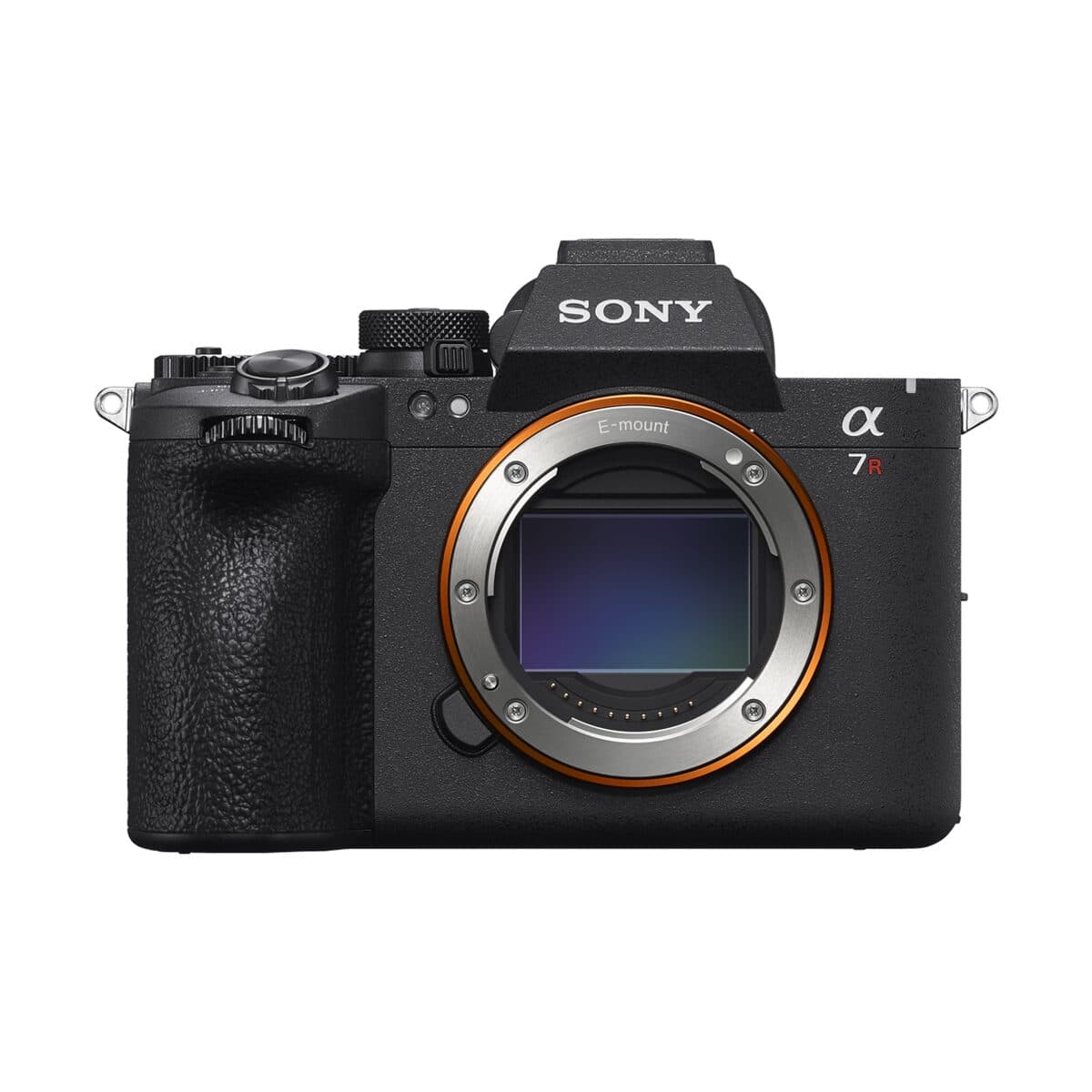
A formidable high-resolution all-rounder that adds real speed to already-excellent image quality, crowned by the best viewfinder in Sony's line-up; only minor niggles hold it back.
Research sources
Sources recorded for this page are linked below. Reported third-party testing belongs to the original publisher; it is not testing performed by Truthful Reviews.
Our editorial process
Research method, author and affiliate-independence details
Our editorial process
Research method, author and affiliate-independence details
Prepared by our editorial team using verified source material, product research, and a British-English editorial rewrite before publication.
- We review the working bundle for product facts, comparisons, and buyer-relevant tradeoffs before publishing.
- Non-English source material is translated into British English and rewritten into our house style without carrying over publication branding.
- Affiliate links and price references are handled separately from editorial judgements and never determine the verdict.
Read our full methodology: how we review
Affiliate links never determine our verdicts. Commercial relationships are disclosed separately from the editorial assessment, and we aim to keep buyer guidance clear, specific, and evidence-based.
Pros & Cons
Pros
- 66-megapixel sensor with extremely detailed images
- Fast, accurate AI autofocus and up to 30.6fps bursts
- Class-leading viewfinder, large and high in contrast range
- 8K30p and 4K120p video that looks great on defaults
- Long-lasting new battery with fast USB-C charging
Cons
- Sharpness falls away above ISO 3200
- No USB-C charger supplied in the box
- Built-in microphone sounds slightly echoey
Full Specifications
Key Features
66-megapixel sensor with extremely detailed images
Fast, accurate AI autofocus and up to 30.6fps bursts
Class-leading viewfinder, large and high in contrast range
8K30p and 4K120p video that looks great on defaults
Long-lasting new battery with fast USB-C charging
When Sony introduced the original Alpha 7R in 2013 — its first full-frame mirrorless camera with a high pixel count — the focus was on light weight and dimensions well below the DSLRs that dominated at the time. The models since have proved the concept allows better cameras too, and that holds for the sixth generation.
New Silicon, and AI for the Autofocus
The imaging electronics are completely new, starting with the BIONZ XR2 processor. Inside it sits an AI unit that handles subject recognition for the autofocus, so the Alpha 7R VI can identify people by their build alone — something that required a separate chip on the previous Alpha 7R V.
The new processor refines subject recognition further and works very quickly and very accurately even on default settings. Focus tracking is genuinely fast too; only Sony's own flagships, the Alpha 1 II and Alpha 9 III, are quicker and more accurate. On particularly difficult subjects — a dog running straight at the camera, for instance — it is worth setting subject recognition to match what you are shooting, which raises the hit rate again.
Faster Readout, and What It Unlocks
Older Alpha 7 models read their sensors line by line. The drawback was that the process took one or two tenths of a second, so fast movement of camera or subject could produce distortion when using the electronic shutter. Only the professional Alpha 1 and Alpha 9 models worked faster, using additional memory on the sensor itself — which makes that sensor considerably more expensive.
For the Alpha 7R VI, Sony chose a middle path and fitted particularly elaborate readout electronics, an approach so far used in relatively few cameras such as the Nikon Z6 III, the Nikon ZR and the Panasonic Lumix S1 II. With the electronic shutter active, that faster readout allows not only a much higher burst rate — a maximum of 30.6 frames per second — but also a pre-capture mode, where the camera records continuously and, when you press the shutter, saves everything from up to a second beforehand. That is ideal for fleeting moments.
One warning: pre-capture generates enormous amounts of data, so fast memory cards are compulsory. For SD, UHS-II cards are the recommendation. Considerably faster but also considerably more expensive are CFexpress cards, and the Alpha 7R VI takes two of the smaller Type A cards.
Resolution: Extremely Detailed

The sensor increases slightly over the previous model, from 60 to 66 megapixels at 9,984 x 6,656 pixels. That delivers extremely detailed images; only medium-format cameras such as the Hasselblad X2D II 100C or the Fujifilm GFX100 II do better. Shooting RAW, you can also upscale later using Sony's free Imaging Edge Desktop software.
For higher resolution still there is a pixel-shift mode, where the camera takes up to 16 images in succession and assembles them into one photo. That only works if neither camera nor subject moves, and the quality gain is usually small.
Images look genuinely good at high ISO too — up to ISO 1600 the quality loss against the base ISO 100 setting is very small. Extremely high ISO values are less to its taste, though, and sharpness falls away from ISO 3200. Cameras with lower resolution do better there, and anyone regularly working at ISO 6400 and above is better served by an Alpha 7 V or Alpha 9 III. An alternative for occasional very high ISO work is shooting RAW and developing in software such as DxO PhotoLab 9 or Photoshop, which process RAW files more thoroughly.
The Viewfinder Is Genuinely Excellent
Sony has long fitted particularly high-quality viewfinders to its more expensive cameras, and this is no exception. As on the previous model there is an extremely detailed finder at 2,048 x 1,536 pixels — quoted by the manufacturer as 9.44 million dots, since Sony, like every maker, counts the red, green and blue subpixels separately.
The finder image is particularly large at 0.90x magnification; only a few cameras go bigger, such as the medium-format Fujifilm GFX100 II and Hasselblad X2D II 100C at 1.00x. New here is that the viewfinder can display a particularly wide contrast range, which helps on very high-contrast subjects — an interior shot with a window in the background, for instance.
Battery: A New Cell

The Alpha 7R VI is the first to use the new NP-SA100 battery, which has a higher capacity at 2,670 milliamp-hours and a higher voltage at 7.82 volts than the NP-FZ100 used until now.
The stronger battery lasted a genuinely long time: filming in 4K at 30 frames per second, it ran for three hours before stopping. Recharging is quick, either through the supplied twin charging cradle or in the camera, where it charges over USB-C at up to 28 watts — in testing the in-camera battery was more than half full again after half an hour. Sony does not supply a USB-C charger, but common USB-C Power Delivery models can be used, and for continuous operation the power supply plugs straight into the camera.
Video
Video has long been standard equipment on a mirrorless camera, and the Alpha 7R VI adds substantially over its predecessor: up to 8K at 30 frames per second at 7,680 x 4,320 pixels, and 4K at up to 120 frames per second. The footage looks genuinely good on default settings.
There is a reason not always to max the settings out. In 4K60p the processor does not have to run flat out, and the camera stayed merely hand-warm even after hours of filming — at which point only storage limits the recording time, with roughly 11 hours possible in one stretch on a 512 GB card.
Sound from the built-in microphone is a little echoey, as on most cameras, but that is easily solved with an external one. There are two connections in the usual Sony fashion: analogue over a 3.5-millimetre jack and digital through the accessory shoe, which takes microphones such as the ECM-B10 and ECM-B1M. Among a huge range of additional functions is 32-bit float audio recording with the XLR-A4 adapter, whose very wide dynamic range prevents accidental clipping.
Verdict
The Alpha 7R VI gains most on speed: burst shooting now reaches 30 frames per second, and the autofocus works considerably faster and recognises subjects far more accurately than older models. Image quality improves only slightly — but it was already excellent on the previous generation.
The real highlight is the built-in viewfinder: extremely detailed, very large and with a particularly wide contrast range. On that one measure the Alpha 7R VI is better than Sony's own flagship Alpha 1 II and Alpha 9 III.
No Amazon UK listing for the Alpha 7R VI was found when we checked on 2 August 2026 — the results returned the older 7R IV, 7R V and 7CR — so no price is quoted here and the links below run a live search. Search on Amazon UK or search on Amazon US
Ready to Purchase?
Check current prices and availability
Affiliate Disclosure: As an Amazon Associate I earn from qualifying purchases. Truthful Reviews may receive a commission when you buy through eligible Amazon UK or Amazon US links, at no extra cost to you. Affiliate partnerships never determine our verdicts or recommendations.