Twenty million Germans live with high blood pressure, and one in five knows nothing of the danger in their own arteries — figures from the World Health Organisation's global hypertension report. That ignorance puts four million people's lives at risk, because high blood pressure is the number-one risk factor for cardiovascular disease, which accounts for a third of all deaths in Germany. Only those who measure their blood pressure spot the danger early.
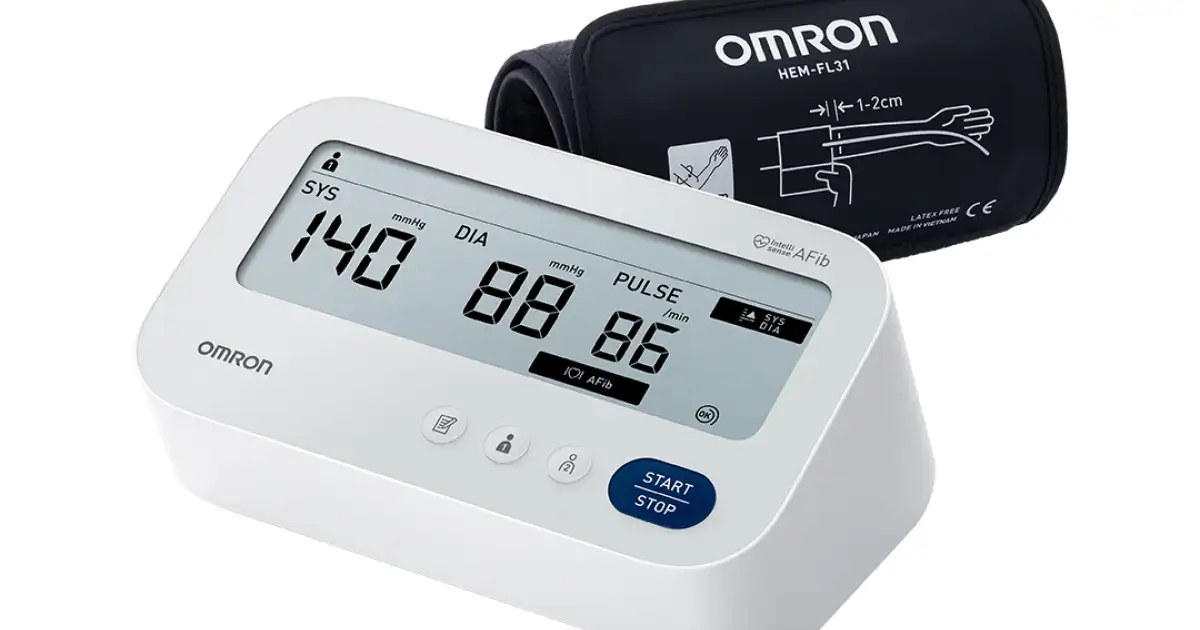
This comparison covers 87 blood pressure monitors — 41 wrist models and 46 upper-arm devices. The best wrist monitor proved to be the Sanitas SBC 22; upper-arm devices measure more reliably and more accurately, and there the Omron X3 Comfort is the winner.
The headline finding deserves stating plainly: wrist monitors are practical — uncomplicated to use and easy to carry — but they cannot match upper-arm devices for accuracy. Of the 41 wrist models, only a few delivered genuinely precise values; among the 46 upper-arm monitors the share of very accurate results was markedly higher. Wrist devices are fundamentally more error-prone. The clear recommendation: anyone who wants dependable readings should choose an upper-arm monitor — they are easy to use and usually cost little more. If you opt for a wrist model anyway, do not let a single startling reading alarm you; repeat the measurement, because mismeasurements are simply more common with this design.
Systolic and Diastolic: What the Two Numbers Mean
Every blood pressure measurement produces two values: the systolic and the diastolic pressure — the highest and lowest pressure with which the heart pumps blood through the vessels. When the left ventricle contracts, it forces its blood into the aorta and pressure in the vessels rises sharply; that peak is the systolic value. The ventricle then relaxes and pressure falls; that low point is the diastolic value.
The systolic figure thus describes the peak load on the vessels, the diastolic the sustained load. "120 over 80" means pressure in the vessels peaks at 120 and never falls below 80, measured in mmHg — millimetres of mercury, a unit dating from the era of mercury barometers, also called Torr. Neither value is categorically "more important": both belong together, because their relationship to each other can point to different underlying causes and call for different therapies.
Inflation or Deflation?
Inflation and deflation matter not only in economics but in blood pressure monitors too. Conventional models use the deflation technique: the cuff is fully inflated first, and the measurement happens as the air slowly escapes. Most monitors on the market work this way. The counterpart is the inflation technique, which measures during pumping itself — cuffs need not be inflated to the limit, measurements finish faster, and the risk of a painfully tight cuff drops.
That does not make inflation categorically better. Deflation devices are cheaper on average — and accuracy favours them too: the measurements in this test show a tendency towards larger deviations among upper-arm models with inflation technology, and among wrist devices the discrepancy is greater still. Consider carefully whether the comfort is worth paying for with money and, potentially, precision.
When to See a Doctor
Related Articles
High blood pressure — hypertension — is a disease of the vascular system, and a single high reading is not yet hypertension. Blood pressure fluctuates with every hour, every coffee, every annoyance; only repetition exposes the danger. Where you measure matters too: the surgery is not the living room, and nervousness at the doctor's often drives values up, which is why the threshold there is 140 over 90 mmHg. At home, people are more relaxed — whoever averages more than 135 over 85 mmHg across seven days should see a doctor. Alongside medication, lifestyle does real work here: weight, salt, sleep and above all regular exercise — the kind of training we examined in our Peloton Cross Training Bike+ review — measurably lowers resting pressure.
The Best Wrist Blood Pressure Monitors
For people often on the move, or measuring several times a day, a wrist monitor appeals: it is ready within seconds. But wrist accuracy stands and falls with posture. Both designs require measuring at heart height — upper-arm cuffs sit there automatically, while wrist models demand the arm be angled and held correctly to deliver valid readings. Forty-one wrist monitors went through the test; these are the recommendations.
The short version
Related Articles
- Best wrist monitor — Sanitas SBC 22. The most accurate readings in the wrist field, a large legible display with a printed risk scale, three years' warranty — and the cheapest device in the entire test series.
- Also good — Omron RS4. Very accurate thanks to its position control, which refuses to measure until the arm is held correctly. Five years' warranty; no risk scale and a single user profile.
- Big memory — Medisana BW 315. A large, readable display, pleasant buttons and 120 stored measurements per person for two users at a budget price. Accuracy good rather than top-tier.
- Always on — Hilo G1. A 24/7 wearable that estimates blood pressure continuously with optical sensors, calibrated monthly against a supplied upper-arm cuff. Excellent app; expensive, and the subscription costs extra after the first year.
The Winner: Sanitas SBC 22
The Sanitas SBC 22 convinced above all in the discipline that matters most: measuring. It achieved the most accurate results of all wrist devices and delivers a solid package everywhere else — at the lowest price in the whole test field.
It measures blood pressure very precisely and shows the current pulse, like every monitor in the test. A detailed risk scale printed beside the LC display lets you classify your reading instantly. The SBC 22 warns of cardiac arrhythmia, calculates an average of the last three measurements, and displays systolic and diastolic values plus symbols for arrhythmia, inflation/deflation, pulse, user and battery. Automatic shut-off, date and time are all aboard.
Four buttons cover time, memory, user and start/stop. The blood pressure figures read easily; the pulse digits are somewhat smaller, and the date becomes tricky for older eyes. At around 45 seconds, measurement duration sits mid-field — the device takes a moment to get going, but the values at the end are very accurate. The cuff is stiffened, making it easier to put on, fits wrists from 13.5 to 19.5 centimetres, and carries a small printed guide to correct positioning. Batteries and a small, handy storage box that opens easily are included. Two user profiles store 60 measurements each, switched simply via a dedicated button.
The criticisms are modest: the manual is comprehensible and thorough but could use larger type, and the design is not exactly modern — though with medical devices, accuracy outranks looks. Solidly built and stable, with three years' warranty for the case of cases, the SBC 22 offers a terrific price-to-performance ratio. Worth knowing: one major consumer-testing organisation rated this device far more harshly, citing measurement accuracy — a verdict this test cannot confirm, and notably that organisation attested poor accuracy to all wrist models it tested bar a single exception.
Also Good: Omron RS4
The Omron RS4 scores with clean build quality and simple operation. The package includes a storage box, AAA batteries, instructions and a blood pressure logbook — a printed spreadsheet, but it serves. Digital record-keepers use the Omron Connect app; the RS4 has no Bluetooth, so values must be entered manually, after which the app stores, analyses and exchanges data with Apple Health, Google Fit and Samsung Health. The price of admission: registration. The plastic travel box feels cheap but works. One manual explains the device with graphics, simply and well; the second is a wall of small, dense text that is an imposition for seniors — though anyone who only wants to measure needs none of it, since one button press suffices.
Workmanship is tidy, the firm cuff sits comfortably, and the 4.2-centimetre display is big enough, though the clock is too small. A risk scale for classifying readings is missing; a symbol lights if hypertension is indicated. The readings convince — deviations were rare across the test subjects — and the secret is the position control: because monitors must measure at heart height, the RS4 refuses to work while the arm lies wrong, with an indicator steering the user into position. It detects irregular heartbeats, and measuring three times within ten minutes earns an automatic three-measurement average. Memory holds 60 readings for a single user — sharers need pen and paper. For anyone seeking a small, dependable monitor for daily checks, the RS4 delivers, minus frills: no display light, no classification scale, no second user.
Big Memory: Medisana BW 315
The Medisana BW 315 delivers a good all-round package at a fair price: solid build, a legible display, buttons with very pleasant action. Its trump is memory — 120 measurements each for two people. It shows the average of the last three readings, detects arrhythmia, and prints a risk scale beside the display; the cuff attaches easily. A measurement takes about 40 seconds. The values were not quite as exact as the Sanitas SBC 22's or the Boso Medistar+'s, but still good enough for a recommendation.
Always On: Hilo G1
The Hilo G1 measures at the wrist and stays there around the clock. It needs no pumping: optical sensors gather data and algorithms compute the pressure, with a supplied upper-arm cuff handling initial calibration and monthly re-calibration. The box contains the band (pod and strap), a charging cradle, the Hilo Cuff, a micro-USB cable and a manual whose tiny print defeats anyone with imperfect eyesight. No mains adapter is included. The band runs roughly 15 days per charge; tattoos, dark skin and heavy hair growth can shorten it. The cuff fits arms of 22 to 42 centimetres; the band's strap feels distinctly rubbery — nylon replacements exist on the manufacturer's site — and IP68 certification keeps it on through hand-washing and swimming. Neither device has a display, so everything runs through the genuinely good iOS/Android app.
A user profile and subscription are required: the first year is free, renewal costs around 120 euros annually. Initialisation pairs band and cuff across five days, then the system asks for monthly recalibration. Thereafter the band monitors continuously, measuring whenever the arm is still, via photoplethysmography (PPG), which lights the skin and tracks changing blood volume in the vessels beneath; the app sends the data to Hilo's servers, where algorithms compute the pressure. The maker states the data resides on European cloud servers under GDPR-compliant policies, secured with AES-256 encryption and TLS transport; the device carries CE certification as a Class IIa medical product and clinical validation under an ISO 81060-2 protocol adapted for cuffless devices.
The cuff's results convince — the maker claims average deviations under 5 mmHg for both values, and the test's findings agree. Spot checks of the band (continuous measurement cannot be started manually) convinced too. The maker stresses the band supports monitoring and replaces no medical diagnosis. The G1 rethinks blood pressure measurement: by collecting data without gaps, it exposes dangerous spikes that one-off measurements at the surgery never catch. Young, healthy users whose pressure reads permanently "optimal" will lose interest fast, and for them 200 euros plus subscription is poor value; for the at-risk, it earns its keep — only those who know their hypertension can fight it.
Also Tested: The Wrist Field
Braun iCheck 7
Striking curves, very good build and a tidy if very small display, plus a heart-shaped indicator lamp that colours by result. The single button gives no tactile feedback — a small but needless irritation. Operation is otherwise excellent: the part-stiffened cuff goes on easily, and an on-screen posture guide makes correct arm position child's play — a small touch more monitors deserve. The Healthy Heart app receives readings via Bluetooth, charts them over time, and lets you log sleep, diet and movement with sliders; transfers happen automatically, even retroactively. No recommendation nonetheless, for two reasons: accuracy trails the competition (without being catastrophic), and the price is steep.
Visocor HM60
A frequently travelling solo user gets an attractive offer: no frills, but high accuracy in a conspicuously small housing. The design is downright staid, the smallish screen uses its space well with large measurement digits (the clock is harder to decipher), and the display is neither lit nor viewing-angle stable — given the mandatory arm posture, a modest flaw. The cuff wears comfortably, is stiffened on one side, and mercifully does not block the battery compartment as some rivals' do. What lifted it once into the recommendations is the measurement precision: by some distance the most accurate wrist model of its test round, and one of only a handful in the whole test with very high accuracy.
Omron RS7 Intelli IT
Like its predecessor, nearly silent in operation — one wonders why other makers do not manage the same. Sadly it is also not cheap, and the readings were patchier than before: acceptable for two test subjects, clearly too far off for the other three, with the systolic values worst affected. Less inaccurate than the field's stragglers, but cheaper devices measure better. For the whisper-quiet operation alone, buy under reservation; a recommendation is not defensible on these numbers.
Beurer BC 51
An unusually large screen for a wrist model, with big, recognisable digits, and a stately memory of 120 values for each of two users. The display is unlit — at this price one may expect better. Accuracy is good but not outstanding; the flat storage box and the posture indicator please (Braun's is more intuitive). Otherwise nothing here that does not exist elsewhere: an unexcited standard monitor with a big screen at an inflated price.
Beurer BC 21
Voice output should make this ideal for the visually impaired, but the plan was not thought through: the digits are large but the display unlit, and the two flat membrane buttons cannot be found by touch — nothing works without looking. Settings and stored values are a torment to navigate without a back button, and the battery compartment barely opens because the stiffened cuff overhangs exactly there. The voice can at least be silenced. Accuracy is mixed; the accessories are better, including a usefully flat plastic storage box.
iHealth View BP7S
Snow-white, round-cornered, deliberately Apple-like — with a retro twist: charging happens over Mini-USB, a standard a decade obsolete. The hidden-until-lit display looks stylish, though its green dot-matrix lettering recalls old radio alarm clocks and the mid-sized digits may strain weak eyes, as will the thick manual's small print. The soft, part-stiffened cuff goes on well, a plastic box handles transport, and the iHealth app syncs stored readings into lists and graphs once opened and prompted. Likeable overall — but the readings scattered roughly at RS7 Intelli IT level, and for that the View is too expensive.
Omron RS2
Thirty memory slots for one person, no data sync — meagre. It detects irregular heartbeats and has a good manual, but measures slowly, the display is small and unlit, and the whole device feels dated. Three years' warranty is the consolation.
Beurer BC 54
Black, Omron-esque housing with Beurer hallmarks: two profiles with dedicated buttons and 60 slots each, the risk scale, optional smartphone sync. Build quality gives no cause for complaint, buttons click well, and the big digits on the lit display read easily (smaller ones, like the clock, less so). It failed anyway — its readings were among the most inaccurate in the test.
Beurer BC 44
A purist: no Bluetooth, no profiles, no memory at all. The "luxuries" are a display light and a half-stiffened cuff; with only an on/off button, operation could not be simpler. But four of five test subjects saw results far from the reference with heavy scatter in both directions, and the fifth's deviations were merely middling.
Sanitas SBM 03
A relatively large display with big blood pressure digits — and that exhausts the praise. Date and time are tiny; the cuff scratches, sits badly and slips at the smallest movement; and worst, the test device stopped producing readings after a handful of measurements, stubbornly answering "Error". Perhaps a Monday-morning unit, but as delivered it fails its basic function and is a case for the returns desk.
Visomat Handy Express
Extremely unreliable readings, an irritating beep and long measurements. The large display, solid build, generous memory and three-year warranty count for little; it detects atrial fibrillation, arrhythmia, raised pulse, reports vessel elasticity, checks cuff seating and movement — none of which helps when the numbers are wrong.
Scala SC 6400
The highlight is the transport box — not because it is special, but because it is the only thing that works properly. The screen is too small, unlit, too dark and recessed so its edges sit in shadow; the indications are illegible for weak eyes; measurements are extremely loud and inaccurate. The build takes the prize: buttons that rattle when shaken, wobble when pressed and feel mushy — and the coloured risk scale is not printed on but merely stuck on, and came off in testing like protective film. Decidedly: avoid.
Omron RS1
Spartan to a fault: one of the smallest unlit screens in the field with terrible viewing-angle stability, no user profiles — and no measurement memory at all beyond the very last value. Tracking your pressure over time means pen and paper. Accuracy disappointed as well; batteries are included but no box. For so meagre an offering the price is far too high — Far Eastern budget models offer more for less and measure no worse on average.
Beurer BC 85
An 8.1-centimetre display used well, with big clear digits, easy profile switching, a colour risk scale and a posture-assist bar; full memories spill over to the phone via Bluetooth. The unstiffened cuff hangs at a helpful angle but packs smaller at the cost of fiddlier fitting. Then the catastrophe: exorbitant deviations from the reference for all five subjects — by some distance the most inaccurate wrist device of its test round — plus an appetite for batteries even when switched off, draining replacements three-quarters empty within a week of idleness. On no account a recommendation.
Beurer BC 30
A typical entry-level model: no Bluetooth, no ECG, not even a backlight, with smallish indications legible only in good light, though usefully viewing-angle stable. A printed risk scale, four soft-pressing buttons and an easily fitted half-stiffened cuff complete a dainty device. Accuracy was mixed across all five subjects, and it offers nothing that cheaper entry models do not.
Veroval Compact
Slimmer than many, with three generous soft-touch buttons giving clear haptic feedback, an angle-stable but unlit and small screen with correspondingly small indications, and an adequately detailed three-language manual with reasonable type. The stiffened cuff fits comfortably; measurement begins with a loud rasp that fades. Accuracy: acceptable for two of five subjects, strongly deviant for three — a mixed result.
BerkeMed BSX313
A Berlin-registered company whose English-only, hastily assembled website does not even list the product — and a model-number search confirms the suspicion: generic Shenzhen ware also sold under other badges. That does not make the device worse, but it is not quite honest. The monitor itself is unspectacular: pleasingly large display content undermined by weak contrast and very poor viewing angles, loudly clicking buttons, average speed and noise, acceptable-to-mixed readings with the diastolic worst, a risk scale, no batteries, and a single tiny-print leaflet for a manual. Insufficient.
Beurer BC 27
Nearly identical to the Sanitas SBC 15 — anthracite colour and slightly different buttons aside, the housings, the 5.1-centimetre unlit portrait display, two profiles with 60 slots each, weight and cuff dimensions all match. The screen is low-contrast with poor angles, and the test unit had an air bubble under the power-button foil — functionally harmless, but cheapening. Accuracy, by contrast, sits well above the wrist-field average, level with the recommended Medisana BW 315. Yet it costs more than its twin and more than most recommendations, so there is no good reason to choose it.
Sanitas SBC 15
The BC 27's twin, slightly its superior in the details: the same weak display, the same near-top-tier accuracy, but no air bubble on the test unit's button — and at the time of testing, markedly cheaper. Still only "okay" overall: the Medisana BW 315 measures just as precisely, reads more easily and costs less again.
Medisana BW 345
Batteries, box and a sprawling unbound manual that must be spread across a table to consult. Two-button menu navigation is fiddlier than on the BW 315, though a single press starts a measurement, and a risk scale helps classification. The readings disappoint with heavy scatter, and frequent error measurements — full inflation followed by an error message — annoy. The small lit display shows big digits well and small symbols poorly.
Aponorm Mobil Basis
Small and compact, with a smaller display still: risk scale present, but unlit, viewing-angle unstable and small-printed — hard going for older users. Memory of 30 readings for each of two people may prove tight for regular measurers. The package holds only the essentials, measurement begins with five shrill tones of no discernible value, and while the results are in order with only rare large deviations, they are not top-tier. Cheap, but the recommendations contain better devices that also cost little.
Boso Medistar+
A very thorough large-print manual, a slightly smarter look than the test winner and a high-quality feel, in a pleasingly small package with a smallish display. One profile stores 90 measurements, a guest mode exists, two buttons keep operation simple, and the stiffened cuff fits comfortably. It shows systolic, diastolic, pulse and battery, warns of arrhythmia and computes averages; measurement takes a normal 35 seconds. No risk scale is printed on. Its measurements were among the most accurate — alongside the SBC 22 — and three years' warranty rounds it off.
The Best Upper-Arm Blood Pressure Monitors
Upper-arm monitors measure more accurately than wrist models in most cases, and since they often cost no more, they are the better choice for most people. The one drawback: fitting the cuff is less trivial. With practice it works, especially in a T-shirt; in a shirt or blouse the sleeve must be unbuttoned and pushed up, because the cuff must sit directly on the skin. Forty-six upper-arm models went through the test.
The short version
- Best upper-arm monitor — Omron X3 Comfort. Built for two: a slider switch changes the user in a fraction of a second, the build quality is exemplary, the screen large and crisp, and the accuracy among the best in the field. The display is unlit and the manual mediocre.
- For smartphone integration — Withings BPM Vision. Bluetooth and Wi-Fi, a colour screen, very precise readings, a comfortable cuff and a single-channel ECG for detecting atrial fibrillation. App registration is mandatory and it squeezes hard.
- Budget pick — Beurer BM 27. Four user profiles, very high accuracy and a low price. Slightly stiff buttons and a smallish display are the trade-offs.
The Winner: Omron X3 Comfort
Two user profiles are common; adapting the button layout to them is not. Omron gave the X3 Comfort a slider that switches users in a fraction of a second — no menu-diving, no triple-assigned buttons: slide it across, done. Right is profile one, left profile two. It is simple, intuitive, and prevents misattributed measurements; other makers offer two profiles, but the function often feels bolted on — not here.
On paper the X3 Comfort reads unspectacularly: memory of 2 × 60 values is relatively small, accessories run to a thin fabric bag and a set of AA batteries, the display is unlit, and the price is above average. The recommendation rests on the fact that it fulfils every fundamental expectation completely. Build quality is very high and the haptics excellent — from battery cover to buttons, every touch announces a brand product, every press answers with a quiet, satisfying click. The screen is sharp, high-contrast and astonishingly viewing-angle stable — lit, it would be perfect — and all indications are displayed large enough that hardly anyone will struggle. The stiff cuff fits comfortably and feels pleasant on the skin.
Operation seals it: compared with its cousin M500, the X3 Comfort shed several buttons, and the remainder explain themselves within moments of use. And the accuracy clinches it — the device measures very precisely, placing among the leaders of the whole field. The one clear weakness is the manual: tiny type, an overloaded layout, information findable only with effort — linguistically correct, but dry and disorderly.
For Smartphone Integration: Withings BPM Vision
The BPM Vision is a ray of light: it looks like modern technology, not a medical-supply-store utensil. It ships in a sturdy case protecting device and cuff; unzip it and a large colour display appears, flanked by three buttons and two electrodes. Operation is child's play — switch on, pick a user, start — with every step shown on screen. Fortunately so, because the manual is useless: all languages pressed into one document, with one essential message — download the app.
And the app is mandatory: without registration the screen stays dark. Accept that, and the pairing succeeds faultlessly; the app charts trends, exports PDFs and stores data without limit in the cloud, all free, exchanging with Apple Health and Google Connect. A premium tier at around 100 euros a year adds cardiological analyses and a vitality index, unevaluated here. The device feels classy but slips in the details: the test unit's display was untidily seated and slightly cropped, the front scratched despite the case and careful handling, and fingerprints accumulate. Charging is USB-C (no adapter included) and the battery is claimed to last twelve months.
It is family-friendly — a main user plus seven profiles and a guest mode — though offline only 16 values store locally; the unlimited memory lives in the cloud, where the maker states ISO 27001 and 27701 plus the French HDS health-data standard are observed. The readings convince, with rare deviations, and the "×3" mode measures three times in a row with configurable pauses. It pumps quietly but squeezes hard — one test subject found it painful — while the cuff itself sits comfortably and fits one-handed. A colour scale classifies results, and the ECG works by resting both index fingers on the electrodes for 30 seconds, producing a trace and a verdict such as "normal sinus rhythm"; the precision of that ECG was beyond this test's means to judge. At about 140 euros, it is very expensive and not flawlessly finished — but anyone living in this ecosystem, needing data digitally, finds their monitor here. Everyone else pays a high premium for design and app.
Budget Pick: Beurer BM 27
An old acquaintance — the same device served as the Sanitas SBM 18 in an earlier round — and it performs exactly as well under the parent brand's flag. Expect no avant-garde: the BM 27 is straightforward and leans on proven strengths. The modest price buys a no-nonsense monitor with a smallish but sufficient display showing measurements in pleasantly large digits; secondary information is smaller but recognisable, helped by decent viewing-angle stability, though there is no backlight.
The mechanical buttons line up beneath the display with a clear pressure point but unfortunately stiff action — just barely acceptable, and any stiffer would be too much. The unstiffened cuff handles well. Power comes from four AAA batteries (one set supplied); there is no mains-adapter socket. Functions follow convention: arrhythmia detection, a colour risk scale beside the screen, stored-value averaging — no Bluetooth, no app.
The accuracy would make dearer monitors' engineers envious: consistent results with only occasional slight deviations, placing the BM 27 among the most precise in the test despite its entry price. Thirty measurements per profile sounds slim, but four profiles are available — more than the usual two — making it genuinely interesting for larger households. The included bag is unpadded and not waterproof — dust protection, not transport — and the eight-language manual is large-printed, illustrated and thoroughly satisfactory. Anyone wanting a special experience should look elsewhere; anyone wanting a workhorse that simply does its job for little money is exactly right here.
Also Tested: The Upper-Arm Field
Medisana BU 570 Connect
Identical to its sister BU 565 except for added Bluetooth — including the good accuracy. The premium for data transfer is small: take the 570 if you want it, the radio-free 565 with a clear conscience otherwise.
Medisana BU 565
Slimmer and flatter than most upper-arm devices — handsome and travel-friendly, a theme continued by the absent mains socket and included transport bag, which is thin, cushions nothing and, as a test confirmed, does not even keep out moisture. Praise for the large lit display with well-legible values and for the sensible, findable function buttons; accuracy is good if not top-class — complaining at a high level. The manual is well illustrated with adequate type, but comes as a fold-out rather than a booklet — fourteen times over, in two languages each, filling a third of the box.
Omron X7 Smart
A hefty unit with a high-quality bag, a generous landscape display whose values show large (though smaller than the screen area suggests, with some secondary indications too small for some eyes and no backlight), morning and evening measurement modes, and Bluetooth to the functional but spartan Connect app, which can forward results to a doctor and link to Alexa. User switching matches the X3 Comfort's slider. The readings, while far from bad, are not quite as accurate as the X3 Comfort's — so the recommendation stays where it is.
Aponorm Basis Control
Excellent values for all test subjects bar a single outlier — pleasingly consistent and very close to the reference, fitting for a device often used in pharmacies. Compact and handy, with a smallish but legible display, a prominent start button and just two further keys — simpler is impossible. The flip side: one user, 30 memory slots, so unsuitable for sharing. Arrhythmia display, error reporting, a good manual, cuff, batteries and bag included. A very good choice for a simple, very accurate, affordable device.
Visomat Double Comfort
A genuine speciality: it measures two ways, by microphone or oscillometrically, and transfers data to a PC. A nice big display, easy user switching, 120 records for each of two people, and warnings for poor cuff seating, movement, atrial fibrillation and arrhythmia. It ran a head-to-head with an Omron rival and lost only on the elegance of the user switch — still a good choice.
Boso Medicus Family
Decent measurements and charmingly simple user switching via dedicated man and woman buttons, plus a guest mode. The display is small but very readable, the large-print manual outstanding, memory 30 per user, the overall impression professional — a little like a visit to the doctor — with three years' warranty. Slightly more exact measurements would have earned a recommendation.
Medisana BU 512
Average in every direction: middling accuracy (no worse than many), no backlight, fiddly clock-setting — but nicely large, legible digits and a genuinely low price, making it a possible alternative to the budget pick.
Medisana BU 546 Connect
Respectable accuracy level with the Omron X7 Smart, quick profile switching via dedicated button (the device must be on first), Bluetooth that is genuinely optional — because each of the two profiles holds a record-setting 250 measurements, the largest memory in the test. The display is big but unlit, the digits generous. A solid, unspectacular device at a good price.
iHealth Track KN-550BT
Surprisingly old-fashioned styling with the charm of a heating thermostat — forgivable, since looks matter least. The big display shows values very well, smaller side-info less so; Bluetooth is aboard as the name promises. Its party piece is a backlight that changes colour with the measured value — functionally no more than a printed risk scale, but more impressive. Sadly accuracy was poor, curiously concentrated in the systolic values, and a mains socket is missing — batteries only.
Beurer BM 85
Too expensive for the value offered: the large lit display and Bluetooth exist elsewhere for less. Two users with 60 slots each, a clip to fasten the cuff to the device, averages overall and for seven days of morning and evening readings, a risk indicator, arrhythmia warnings, PC connection and app upload — with the Bluetooth again somewhat cumbersome. A good device, were it not for the price.
Withings BPM Core
Error: there are moments when product tests genuinely grate. Not a single measurement passed without the characteristic "Error", with arbitrary causes — battery warnings despite a full charge, posture complaints despite correct positioning — communicated as codes to be looked up, after which one is usually none the wiser. A pity, because the feature set surprises positively: blood pressure plus detection of heart-valve disease and atrial fibrillation. The hidden green display is stylish but impractical, Bluetooth and Wi-Fi mirror the BPM Connect, and the same app serves. The huge, rigid, permanently attached cuff is a total failure — barely fittable alone — matching the generally cumbersome handling. Good accuracy could not redeem it; the price lies beyond good and evil, and the BPM Connect is the better look.
Beurer BM 57
Sixty memories for two people, a lit display, arrhythmia detection, morning/evening averages — and readings that could have been more exact, measurements on the slow side, and a slightly complicated Bluetooth setup.
Beurer BM 58
Mixed measurement results, 60 slots for two users — and a test unit with a software fault or display defect that made results barely readable, plus a manual supplied only in Polish with type too small for weak eyes. The misses here were simply too large.
Medisana BU 535 Voice
The name announces it: the device speaks, in a female computer voice reminiscent of the big assistants, though it neither joins the smart home nor listens back. The display is pleasantly large with generously sized digits; combined with the voice output, the BU 535 Voice is predestined for users with impaired vision, and the two big buttons with good pressure points fit the picture. All would be well — but the readings were sorely mixed: within bounds for two subjects, drastically off for three. A shame, precisely for the group it would otherwise serve best.
Boso Medicus X
Could not shine with exact measurements — some deviations were nowhere near the reference. A good manual, average display, 30 memories for one user — too little, nothing special, too expensive.
Braun ExactFit 5
Measured outright badly, which makes the price completely excessive. Tiny manual print, a lit display with morning/evening averages and arrhythmia warnings — and a clear recommendation against, on the strength of the results.
Viatom Wellue Armfit Plus
It had the potential to displace bigger names and failed on details. Cable- and hose-free, fixed directly to the cuff, with a display that reads better and shows more characters than its closest rival — if low-resolution and wrist-monitor-sized — plus flawless build and USB-C charging. ECG, arrhythmia detection and Bluetooth with companion app sound generous, but the ECG aborted at nearly every hand-held measurement and never started at chest, abdomen or thigh. Bluetooth needs the app open and a manual refresh, blocks the device during transfer, and the app is little more than a value warehouse, German-speaking but with English date formats; the display itself speaks only English, and the device never switches itself off. All of which is a shame, because it measures quietly, quickly and above all very exactly — the most accurate model of its test round, edging even an excellent rival — and its colourful illustrated leaflet plus properly printed full manual pleased too.
Beurer BM 54
Comparatively slim for an upper-arm device, with three big crisply clicking buttons and a fine screen — unlit, but well readable thanks to decent angles and large digits throughout. It runs on AAA cells (unusual in this class; a set included, no mains socket). Measurements last unusually long and squeeze hard enough to hurt slightly — effort unrewarded, since four of five subjects saw strong deviations and the fifth moderate ones. Bluetooth transfer to the maker's health platform works well, as usual.
Beurer BM 81
Strongly reminiscent of a hose- and cable-free rival: the stiff cuff tightens via a comfortable rotary wheel, the piano-lacquer surface looks smart and gathers fine scratches. Measurements are brief, accompanied by a quiet rasp, and accuracy is decent without reaching its lookalike's level — which is exactly why the recommendation was not passed on. The elongated colour light strip replacing the usual printed risk scale is lovely, the lit black-and-white display reads well, and a thoughtful detail: it is most legible from lower left, precisely the angle of use. Handsome, pleasant, not cheap.
Beurer BM 96 Cardio
A generous, lit screen with generous digits (contrast could be a touch stronger), plus a sensor handpiece on a plug-in cable for the integrated ECG, usable at three body positions — reliable in testing, though successive measurements sometimes disagreed, especially hands-only, the least accurate method; abdominal readings were more consistent. One physical main button and four touch areas operate it; the risk scale appears in black and white on screen rather than printed in colour. The unstiffened cuff fits without fuss, four AA batteries power it, no mains socket. Bluetooth transfer requires the app open in the foreground, but the app asks immediately upon pairing whether to transfer, and the platform is among the better companions, particularly alongside other devices from the same maker. The blood pressure readings, though, were mixed — orderly to good for two subjects, clearly to strongly deviant for three — far from the top ranks, so no recommendation, however likeable the rest.
Visomat 24046 Comfort 20/40
A big device with one of the biggest displays in the field, wanting angle stability and a backlight. Use is nearly self-explanatory: cuff on, profile via dedicated buttons, main switch — all physical keys, large, with clear pressure points, though the main one rattles slightly. Date entry ships disabled (activatable quickly), meaning stored values initially carry no dates. Measurements take above-average time and beep shrilly with the pulse throughout — quickly wearing. Accuracy does not redeem it: acceptable for one subject in five, stronger deviations for four.
Visomat 24036 Comfort Form
The 24046's near-double — same housing, same pleasingly big screen, same easy user choice — with an unstiffened cuff that fits more awkwardly but folds smaller, on a device too bulky to travel anyway. The decisive lack: it stores no data at all, and unlike its sibling the function cannot be activated. The readings were somewhat better overall, but paint a similar picture.
Sanitas SBM 18
The former budget pick, displaced only because its identical twin under the Beurer badge was better available and slightly cheaper at the time — whoever finds the Sanitas cheaper gets an equivalent device. Basic functions throughout, with one touch of luxury: four user profiles, more than most, at 30 values each. Averages (overall and morning/evening), arrhythmia detection, a risk scale, error messages and cuff-seat checking are aboard; Bluetooth is not. The display is smallish but legible, unlit; the manual generous in both information and type size. Accuracy convinced just as on the twin, the cuff fits easily, and the only real criticism is the stiff buttons — identical, naturally, on the Beurer.
Panacare BSX516
Failed, for many reasons: no batteries in the box; a menu requiring multi-second multi-button chords ("press and hold the memory button, then simultaneously press start/stop for about 2 seconds") that no senior should face; middling accuracy; and — decisively — pain. Several subjects complained during measurement, and one suffered skin irritation and bruising from the cuff. The lit, legible display cannot outweigh that. A clear recommendation against purchase.
Garmin Index BPM
Refreshingly cool styling with nothing of the dusty medical device, a small packed size thanks to the missing hose, and an optional app bringing automatic sync, trend analyses, reminders, exportable reports and management of up to 16 user profiles. Then the disappointments: many testers found fitting it to the arm laborious without practice or a second pair of hands, the small black buttons with black symbols and smallish screen type will trouble seniors, and accuracy was mixed — often close to the reference, but with strong outliers frequent enough to mislead. The triple-measurement feature (three readings a minute apart, averaged) is genuinely practical. Too expensive for what it delivers; better and cheaper alternatives exist.
ETA 3297 90000
Two people share 250 memory slots each, switched by button; mains adapter and batteries are both included, pleasingly. Four nice big buttons, a lit display with large type and a risk scale — undermined by poor viewing angles and a magnetism for fingerprints. Inflation takes long, and accuracy is middling: close for some subjects, noticeably swinging for others. No great flaws, but at this price the recommendations contain better.
Cazon B26
The most accurate measurement of its entire test round, at a modest price — and a parade of needless small flaws. No batteries included, a Micro-USB cable in 2026, a display filling only a fraction of the generous front (large main digits, small symbols, no backlight — a lamp is needed to measure), a gloss surface collecting fingerprints. The three-button menu is intuitive. The genuine problem: it pumps very high even when unnecessary, regardless of the previous reading, and several subjects reported stronger pressure pain than usual. Whoever shrugs all that off lands a bargain; for the recommendations it is not enough.
Geratherm Vivo EcoConnect
Scrapes past a recommendation, failing in the details. Batteries, USB-C cable (which powers but cannot charge — there is no battery inside), cuff and a bag that fits the device but not the cuff. Clean build bar a slightly loose battery flap, a handsome black-and-white contrast that quickly looks grubby with fingerprints on display and buttons alike. Three buttons; pure measuring is intuitive, date and unit settings defeated the testers without the manual — which is comprehensible, if small-printed for seniors. The values convince, deviating only rarely; the cuff sits comfortably without squeezing, warns when misfitted, and a symbol counsels stillness when the patient fidgets. Arrhythmia detection, a colour scale, and a mighty 199 memories for each of two users — ideal for couples. A solid device with everything necessary that measures well; the recommendations simply measure better.
Omron X4 Smart
Batteries, two manuals and a bag whose fabric recalls a cheap tent and smells of plastic — it holds cuff and device together and protects nothing. Build is middling: buttons with play, a wobbly battery flap, a hose connector that crunches and sits loose. The pre-formed cuff fits one-handed and convinced, though its unbreathing material left some subjects sweaty. Four AA batteries are supplied, the mains adapter costs about 15 euros extra. It works fully without a phone; the Connect app (registration required) charts values, colour-codes warnings and feeds Apple Health and Google Fit, though Bluetooth transfers repeatedly stalled and the optional subscription hardly pays. The front slider switch cleanly separates two users' readings — ideal for couples — plus a guest mode and 60 values per head. It measures precisely and warns of arrhythmia; a classification scale is missing. Good measurement, too many everyday irritations: look to the recommendations.
Withings BPM Connect
For connectivity, still a fine choice: where many rivals implement Bluetooth half-heartedly, data transfer is the centre here, and uniquely the device speaks Wi-Fi as well, moving readings into the app reliably without any action. The Apple-inspired design is snow-white on a grey, permanently attached cuff, fully free of cables and hoses; the cuff is unstiffened yet fits well and wore the most pleasantly of all tested models — while squeezing unusually hard during measurement, which the delicate may resent. Off, the device shows almost nothing: a Micro-USB port for the built-in battery and one round button; pressed, the hidden display lights — smart, but only conditionally practical, since a single line shows the readings alternately where rivals show all three at once. Setup requires pairing with the Health Mate app, which is tidy, clear and fast, offers programmes from pregnancy training to leaderboards and reminders, and forwards statistics straight to a doctor. Accuracy was outstanding — in one test round the most precise device of any design. For the smartphone-minded, compact, well-built and accurate, if far from cheap; whoever shrugs at connectivity does better with a classic model.
Omron Evolv
Hose- and cable-free in the same spirit, but slimmer, curved and larger-footprinted, with a hidden OLED display whose glowing indications survive even sharply angled viewing — only their small size disappoints, and the pulse requires the display to cycle. The fully stiffened cuff makes fitting child's play at the cost of bulk, offset by an included high-quality bag, and the operating noise is a faint, inoffensive whirr. Bluetooth transfer works smoothly with the app open; the multicoloured tile-design app is capable, if a notch less polished than the best. And the measurements? Very precise — second only to the class leader in its round, by a margin barely worth mentioning. A superb, stylistically refreshing monitor whose single big catch is the high price.
How the Monitors Were Tested
The most important quality in a blood pressure monitor is measuring accurately and reliably. To determine accuracy, every device measured the blood pressure of five subjects — across the test rounds variously two women and three men aged 33 to 73, 26 to 49, three women and two men aged 25 to 57, and most recently two women and three men aged 27 to 58. Each device performed at least three measurements per subject at five-minute intervals, compared against a reference measurement taken classically with stethoscope and a calibrated manual sphygmomanometer, exactly as a doctor uses, all seated with correct posture.
Assessed were the deviation from the reference, the variance between measurements, and the deviations from average and median. Measurements counted as very good when they strayed at most ±5 from the reference or kept variance at 5 or under — which sounds generous until you know that manual measurement itself can do no better, and that doctors round to the nearest ten almost always. The differences between devices are enormous: deviations beyond ten units are sadly no rarity, and individual devices missed the reference by 20 or even 30 units, or swung up to 20 units between measurements.
Absolute precision only specialist laboratories can guarantee. Buyers unwilling to compromise should look for the seal of the German Hypertension League, whose strict certification procedures only some devices pass. Beyond accuracy, the test weighed handling, build and operation: the supplied accessories, display size and legibility, how easily cuffs fit and how well they sit, whether buttons are sensibly labelled and precisely pressable, and any special functions or smart connectivity.
Frequently Asked Questions
Which is the best blood pressure monitor?
For the wrist, the Sanitas SBC 22, which convinced with its risk scale, large legible display and very accurate readings. Upper-arm devices measure more reliably still, and there the similarly precise Omron X3 Comfort is the favourite.
Upper arm or wrist — which monitors are better?
On average, upper-arm monitors are more accurate than wrist models, though the individual device matters. Wrist models counter with smaller size and better suitability for travel.
How do you use a blood pressure monitor?
Blood pressure is always measured at heart height. With upper-arm devices the cuff position is decisive: it belongs just above the crook of the elbow, tight enough that only one or two fingers fit between cuff and arm, with the cuff's marking over the artery. Wrist devices must likewise be held at heart height, palm facing the user.
What are systolic and diastolic blood pressure?
With every beat the heart pumps blood through the body, contracting and relaxing. The systolic value is the higher one, describing the peak load on the vessels as the heart contracts; as it relaxes the pressure falls, and the measured low point is the diastolic value — the sustained load on the vessels.
Why is high blood pressure dangerous?
Excessive pressure subjects the vessels to loads they are not built for, damaging them over time and affecting organs. In the worst case, hypertension leads to a stroke.
What does arrhythmia mean?
Arrhythmias are cardiac rhythm disturbances — heartbeats outside the normal rhythm, or missing beats. Possible causes range from alcohol and caffeine to infections and serious heart disease. If your monitor flags arrhythmia, see a doctor without fail.
The Bottom Line
Eighty-seven devices reduce to one piece of advice and two winners. The advice: buy for the arm, not the wrist — the accuracy gap between the categories is real, repeated across years of test rounds, and accuracy is the entire point of owning one of these devices. The winners: the Omron X3 Comfort, whose user-switching slider, exemplary build and front-rank precision make it the device most couples should simply buy; and, for those set on the wrist, the Sanitas SBC 22, which proves precision need not cost much — it was the cheapest device in the whole field and the most accurate of its kind. Around them, the Withings BPM Vision serves the data-minded, the Beurer BM 27 the budget-minded and the Hilo G1 the genuinely at-risk who benefit from round-the-clock surveillance. And whichever you choose: measure seated, rested and at heart height, repeat surprising readings, average across days rather than trusting single numbers — and take a seven-day home average above 135 over 85 to a doctor.