An induction saucepan needs more than a magnetic base. Wall thickness, handle construction, lid fit, pouring edge and the way heat reaches the sides all affect daily use. A field of 11 induction-compatible pots was compared; the named product sections range from compact everyday pans to a 14-litre stockpot.
What follows is recorded testing, translated. Nobody at Truthful Reviews has cooked with these pans.
What matters on induction
Induction creates heat in a compatible base rather than beneath it. Stainless steel, iron and cast iron can work when the base is magnetic; aluminium designs need a ferromagnetic layer or pattern. A magnet adhering to the base is a useful compatibility check when a pan carries no clear induction symbol.
Material alone does not decide speed. In the recorded boil test, several aluminium pans with a dotted ferrous pattern heated more slowly than the stainless-steel group. A full-width magnetic insert can perform differently. The practical comparison therefore timed one litre of cold water at the hob's highest setting, then used a thermal camera while three litres boiled to show how heat and steam moved around each pan.
Capacity changes the job. Up to three litres covers small meals; five or six litres gives more room for a household batch, while the largest model here takes 14 litres. Build checks included whether the body could be squeezed out of shape, whether the base and lid sat flat, how securely the handles were attached and whether the lid rattled. A pouring lip, internal scale and lid that can stand on the rim proved more useful than decorative extras.
The recommendations
Best overall — Nyord stainless-steel saucepan
Related Articles

The Nyord combines polished steel outside with brushed steel and a raised patterned surface inside. A ceramic coating sits between the metal ridges, giving the pan effective release while the structure shields much of the coating from utensils. Browning was strong with little oil, and the heavy body, pronounced pouring lip and substantial screwed-on metal handles gave it the best overall construction in the group.
Its 20 cm diameter looks small beside the oversized handles, but four fingers fit comfortably and the thin handle struts limited heat transfer during ordinary use. The lid has a silicone-covered, flat knob and a seal that keeps residue away from the fixing. It can stand either on that flat top or with the knob resting against a side handle, allowing condensation to return to the pot.
There is no internal scale. At the highest hob setting, a large steam volume could lift the lid slightly and warm the raised handles despite its vent. Those are the main compromises in an otherwise robust, carefully detailed pan.
Search Amazon UK · Search Amazon US
Best uncoated alternative — Fissler Original-Profi Collection
This 20 cm, 3.9-litre stainless-steel model uses a flat glass lid with a broad handle rather than a knob. The lid has no vent, yet its wide contact area reduced rattling; it could float slightly on escaping steam instead. The body and lid felt notably substantial, the rim formed an excellent pouring edge, and an internal scale made quantities easy to read.
Slim welded side handles stayed cool or merely warm in the recorded work and were easy to wrap a whole hand around. Their narrow edges pressed into fingers once the pot was heavily loaded, but the overall handling and restrained construction remained convincing.
Search Amazon UK · Search Amazon US
Best for large batches — WMF vegetable stockpot with stainless-steel lid
Related Articles

At 14 litres, 33.5 cm tall and 3.47 kg, this is the specialist for large quantities. Its walls, base and metal lid are thinner than the external size suggests: the body could be flexed slightly by hand, so the build is good rather than top-tier. The side handles are large enough for four fingers but too thin for ideal support when full.
The lid has a small vent and still sat loosely enough to rattle. Its round handle encouraged it to roll when placed upside down, and resting it on the pot rim obstructed access. Capacity remains the reason to choose it. Five standard one-litre jars fitted on one layer in the recorded fit check; 16 to 18 half-litre jars fitted when stacked.
Search Amazon UK · Search Amazon US
Useful lid design — Tefal Daily Cook G71246
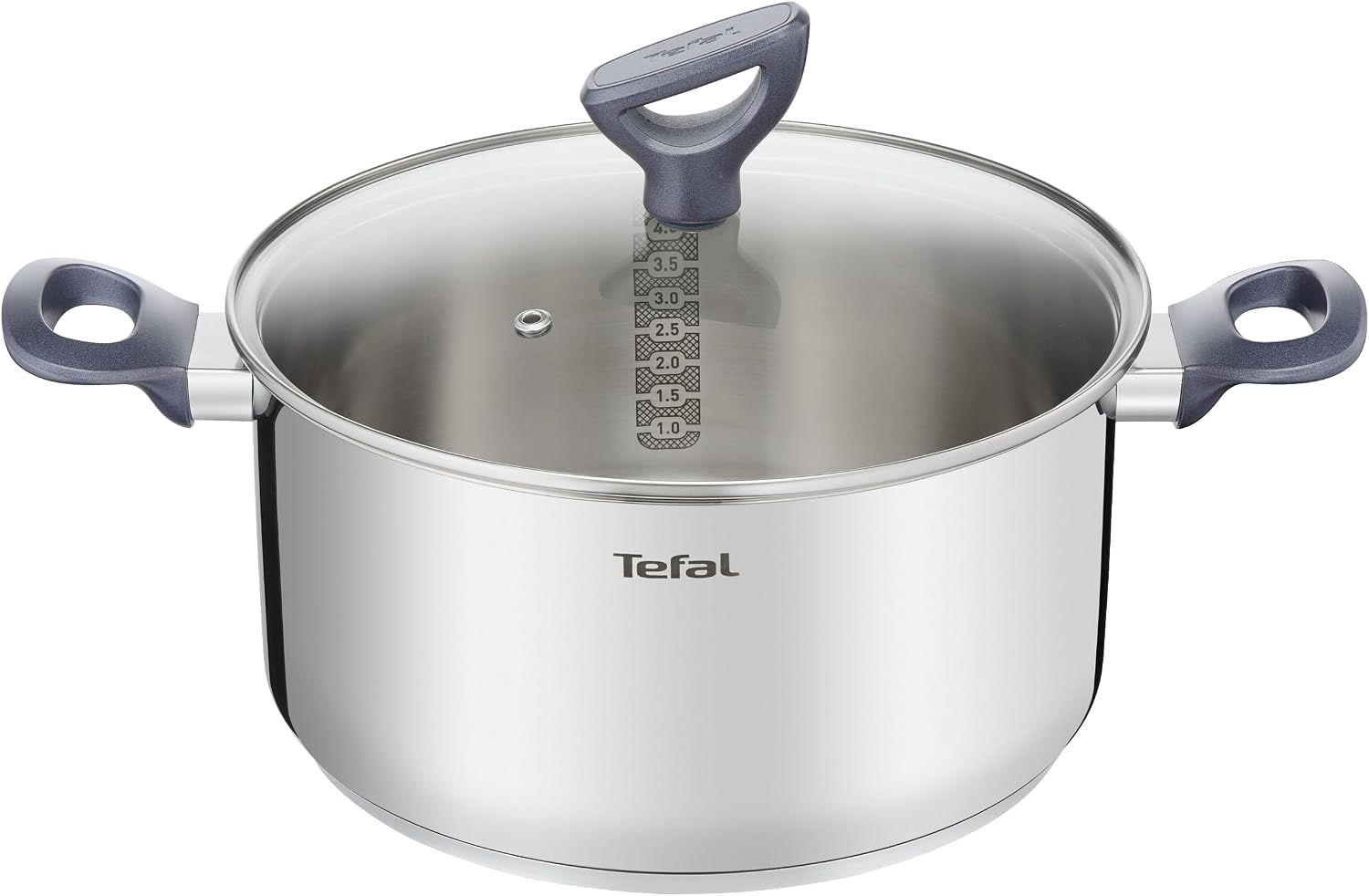
The Tefal's angled lid knob can rest flat on a worktop or slot over a side handle so condensation drains back into the pot. Its glass lid includes a vent, the interior has a litre scale, and the stainless body delivered a practical everyday result.
Construction is mid-range: the wall is not especially rigid and the screwed handles may loosen. The small synthetic side handles take fewer fingers than the larger rivals. They stayed cool in normal work, but steam reached them at the highest setting. Usable capacity was recorded at 2.5 litres.


