Mini projectors have grown up: the 2026 generation turns living-room walls — and campsite sheets — into proper cinema screens, just in time for the World Cup. A full laboratory and field test of the current crop produces two clear recommendations and a map of the trade-offs.
The Short Version
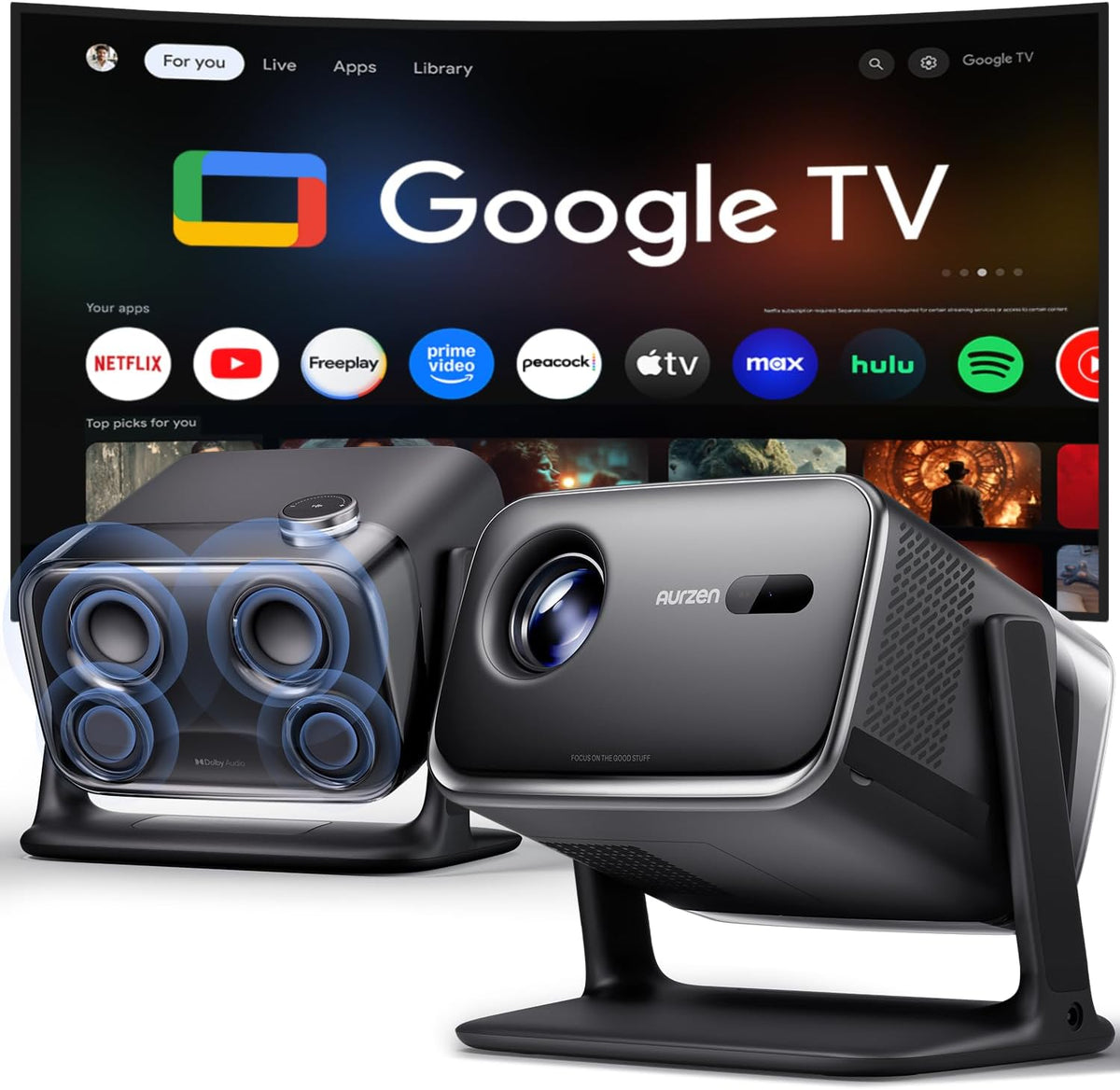
The Aurzen Boom Mini tops the 2026 field, while its stablemate, the Aurzen Eazze D1G, takes the price-performance crown. Brightness, colour accuracy and contrast come from standardised laboratory measurements; operation, setup and battery life were assessed in everyday use at home and on the move.
The Winner: Aurzen Boom Mini
The Aurzen Boom Mini is the mini projector to buy in 2026 if a socket is nearby. Check the price on Amazon UK · Search Amazon US
The Boom Mini pairs easy operation with a bright Full-HD picture and astonishingly rich sound for its size. Its weaknesses are honest ones: brightness is not perfectly uniform across the image, and there is no battery — it needs a wall socket. As a stationary mini projector it is the most complete package of 2026. Its picture is Full-HD rather than 4K, which at this size and brightness is the sensible trade-off. The real surprise is the sound: unusually full for a box this small, enough to carry a film or a match without a separate speaker. And with no battery it is strictly a plug-in device — a fixed-spot projector, not one for the garden.
Price Tip: Aurzen Eazze D1G
The Eazze D1G is the budget pick. Check the price on Amazon UK · Search Amazon US
The Eazze D1G delivers a sharp Full-HD picture, easy setup and operation, a portrait mode for TikTok and Reels, and a huge accessory set including a carry bag. HDR is absent, the sound is on the quiet side and navigation shows some input lag, but nothing here feels like a budget compromise. It runs Google TV, so the mainstream streaming apps are built in, and the generous bundle even includes a carry bag. Be realistic about the light, though: like most projectors at this price it only looks its best in a properly dark room, and the quiet speaker is worth partnering with a small Bluetooth speaker.
What Counts as a Mini Projector?
Two hard limits define the class: price and weight. Anything into four figures starts competing with full-size projectors, and anything over 2.5 kilograms stops being comfortably portable. The weight rule is not arbitrary: past that point a projector is no longer something you casually move between rooms, and heavier models tend to carry the expensive lens hardware that pushes them into home-cinema territory anyway. Within those limits, two families emerge: stationary minis, permanently tethered to a socket but usually better equipped — the Boom Mini is the prime example — and mobile minis with batteries or power-bank operation, of which the tiny Thomson Vega is the most portable in the field.
Light Sources and Display Tech
DLP projection dominates smart projectors with over 90 per cent market share, but LCD fights back at the budget end — and has real advantages: the Epson Pop uses three LCD units and produces the most beautiful picture of any mini projector tested. On light sources, laser models deliver strong colours across the full image — the Xgimi Mogo 4, Nebula Capsule 3 and BenQ GV50 even manage it on battery power — while LED models cost less but often show slightly fluctuating brightness; the JMGO PicoPlay+ proves LED can still come with top equipment.
Throw Distance
Nearly all minis are standard-throw designs needing at least two metres of distance for a genuinely large picture. The exception is ultra-short-throw: the Thomson Sirius mini laser TV projects big pictures from the TV bench itself.
Battery Picks and Brightness Reality
Several battery models earn recommendations, but physics applies: most projectors dim noticeably in battery mode, and most minis only show their best picture in a darkened room. Brightness claims deserve scepticism generally — the laboratory measurements behind this test cut through the marketing lumens, and the gap between models that survive residual daylight and those that demand blackout is the single most useful thing to know before buying. As a rough guide to the lumens you actually need: 100 to 200 lumens is enough in a genuinely dark, windowless room; 200 to 400 lumens copes at night or in a well-darkened room; 400 to 600 lumens handles a little passive light; and you want 600 to 800 lumens or more once any room lighting is on. Fall short of those figures and the picture simply washes out — which is why the Aurzen pair, like most minis, look their best after dark.
Which Connections Matter
HDMI remains the safe bank for consoles and streaming sticks, USB-C increasingly doubles for power and video on the mobile models, and every smart model in the field streams directly over Wi-Fi — though two ecosystems demand accounts before the fun starts: Google TV models enforce a login, and one otherwise brilliant projector ships without Netflix entirely. Checking the app list before buying spares an evening of workarounds.
Do You Need a Screen?
No — a smooth white wall does the job for casual use, and that flexibility is half the charm of the class. A proper screen lifts contrast and colour, but for World Cup evenings in the garden, a taut sheet has launched a thousand viewings.
The Bottom Line
The Aurzen Boom Mini is the mini projector to buy in 2026 if a socket is nearby; the Eazze D1G covers tight budgets with grace; the Thomson Vega and the laser-with-battery trio serve true portability; and the Epson Pop proves three LCDs can beat the DLP crowd on pure picture beauty.
Research sources
Sources recorded for this page are linked below. Reported third-party testing belongs to the original publisher; it is not testing performed by Truthful Reviews.