Compared with the safety arsenal of a modern car, a motorcyclist's mandated protection is humblingly modest — which makes the helmet, the one piece that is legally required, worth choosing carefully. Seven affordable helmets, all under around £200, were compared on equipment, handling and riding behaviour, and one clear recommendation emerged.
The Short Version
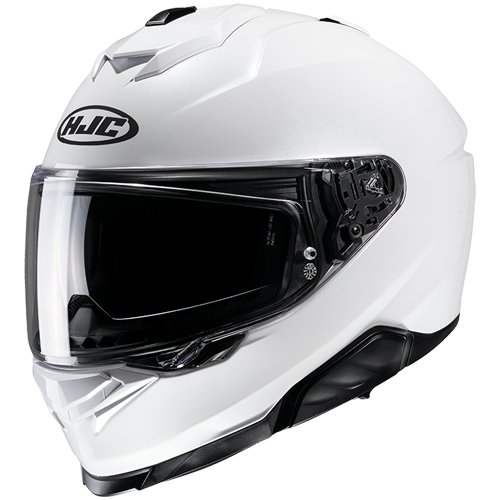
The HJC i71 is the best helmet for most riders: superbly equipped, with vents, visor and sun shield that operate easily even in gloves. The Airoh Spark 2 and the bargain Scorpion Exo-391 are the strongest alternatives.
Why the Type Matters
Recommendable designs are closed full-face helmets or flip-up helmets whose chin section lifts at a button's press; open jet helmets without a chin bar carry comparatively high risks of facial injury. Beyond type, fit is individual in ways no specification captures: a helmet optimised for a tucked sporting posture behaves differently in the wind from one designed for an upright seat, and the airflow behind every windscreen and cockpit is its own micro-climate. The only honest advice is a test ride — most dealers offer one — of at least half an hour at varying speeds, which is roughly what it takes to learn whether a helmet presses, booms or irritates in daily use. The test's clearest finding supports this: helmets carrying identical certification seals can differ enormously in comfort and operability.
Best Overall: HJC i71
The i71 earned the best overall result across equipment, handling and riding behaviour. Check the price on Amazon UK The padding fits comfortably and the chin strap sits well; the micro-ratchet buckle opens two ways — pulling the small red strap or pressing the other end of the clasp — which makes gloved operation genuinely easy. Both vent sliders, at crown and chin, are shaped to be found and moved without looking, which is far from universal in this field. Search Amazon US
The standout is the huge field of view: the eye roams freely with barely a sense of the shell's edges, where other models demand small head movements for the same sightline. The visor locks positively when closed and carries a Pinlock anti-fog insert; its three intermediate positions are on the coarse side, with a rather large first gap, and the opening tab sits well left of centre — a middle position would let the right hand work it at traffic lights with the clutch pulled. The sun shield slides on a securely grippable lever, reaches pleasingly low, holds intermediate positions reliably and is cut to clear the breath deflector. A generously padded chin curtain keeps insects and some under-shell noise out, side and rear recesses accept HJC's Sena-developed communication systems (50B and 21B), and on the move the helmet sits calm in the airstream with well-muffled wind noise. A sturdy bag and a thorough printed manual complete the package. The one wish: a finer visor ratchet.
Alternative: Airoh Spark 2
The Spark 2 pairs good equipment and handling with strong all-round results. Its great strength is its similarly large field of view, with almost everything in sight without head movements, plus a Pinlock insert against fogging and pull loops on the cheek pads. Check the price on Amazon UK The minus points are small but real — it is on the heavy side, the visor offers few detent positions, the sun shield carries a thick distracting rim, and with vents open it runs somewhat loud. Search Amazon US
Budget Pick: Scorpion Exo-391
The Exo-391's headline is its price, and the spartan equipment shows it: no Pinlock insert, no sun shield, and a visor tab that is hard to grip. Check the price on Amazon UK Against that stand a rather large field of view, decent ventilation, unusually fine visor detents — and safety features rare at this price, above all the pull loops for emergency cheek-pad removal. Search Amazon US
The Rest of the Field
The remaining candidates illustrate the spread certification cannot capture. Among them, the 100 Core is decently equipped for the money, with a Pinlock insert and a drop-down sun visor. One offers finely adjustable visor positions but a small field of view and no manual; another pairs effective vents and good sound damping with coarse visor detents and no chin curtain; a third brings MIPS rotational protection and good airflow but mounts its chin strap so far back it presses, combines it with a Double-D fastener that gloves cannot operate, and hides its vents behind flat, tiny sliders.
Why Budget Helmets Deserve the Attention
The premise here deserves a word. The sub-£200 class is where most riders actually shop, and the safety baseline here is identical to the premium shelves: the same ECE 22.06 procedures, the same sewn-in certification, the same pass-or-fail physics. What money buys above this class is largely refinement — lighter shells, quieter aerodynamics, plusher linings — not a different grade of crash protection. That reframes the buying decision usefully: within the certified field, the differentiators are exactly the ones this test measured — field of view, control ergonomics, noise, ventilation effectiveness and the small safety extras like emergency loops — and on those measures the spread between same-priced helmets proved dramatic.
Statistics Behind the Helmet Duty
Helmets have been compulsory for German motorcyclists since 1976, and the case has not weakened: the federal statistics office recorded around 28,000 accidents involving registered motorcycles in 2024, with more than 500 deaths. Behind those numbers stands an uncountable cohort whose helmets turned fatal physics into survivable injuries — and the strict testing regimes exist precisely to keep that cohort growing.
What the Certification Means
Since 2021 the current standard is ECE R 22.06, whose procedures measure impact damping, roll-off behaviour, material stiffness, field-of-view size, rotational characteristics, chin-strap strength and function, plus optical and mechanical visor tests. Helmets under the older ECE 22.05 (valid since 2002) may still be worn — but a helmet deserves replacement every ten years regardless, and immediately after any fall onto hard ground, even from a saddle or mirror, since damage is not always visible. The certification label must be sewn firmly to the chin strap (an E plus a country digit); every helmet in this test carries it. Travelling abroad can add obligations — France, for instance, prescribes four reflective stickers of defined size on all sides, which French manufacturer Shark duly includes.
Emergency Quick Release: The Loops That Matter
Pulling a helmet off a crashed rider can have grave consequences: head and cervical spine are often injured, and every manipulation risks paralysis. Quick-release systems answer this with two red loops marked "Pull" or "Emergency" at the bottom of the cheek and neck pads — one firm tug removes the pads, creating room for helping hands to widen the shell and ease the helmet off with utmost care. As long as a casualty is responsive the helmet stays on; with unconsciousness, blocked breathing or vomiting, this becomes life-saving, ideally with a second helper steadying the head. Frankly, every helmet should carry these loops.
MIPS, Briefly
The Multi-directional Impact Protection System places a thin, smooth plastic layer between outer shell and inner lining, letting the shell slide up to 15 millimetres against the padding during an angled impact. In an oblique impact the shell can slide up to 15 millimetres on this layer before rotation transfers to the skull — crucial moments, since sudden rotational deformation is precisely what injures the brain, and some impact energy dissipates in the slide. The principle deserves wider adoption than it has.
Living With a Helmet
Heat happens: a summer traffic jam teaches every rider how warm a shell becomes, and even mild weather deposits sweat, sebum and skin into the padding. Linings detach from their press studs in moments, separating into three or four pieces that wash with mild detergent or shampoo, rinse warm and dry overnight. On waterproofing, the honest position is that no standard drench test predicts real weather: wind direction, speed and duration create scenarios no overhead sprinkler reproduces — a shower test soon after purchase, with exchange as the remedy, is the practical answer. On fasteners, the micro-ratchet has rightly conquered the market: glove-friendly, finely adjustable once the strap length is set, best in versions that open from either side of the lever. Double-D rings retain devoted admirers and a safety reputation, but defeat gloved hands entirely and suit beginners poorly. Spectacle wearers face their own lottery — thin temples and shallow lenses fit the tight channel between head and padding best, and only trying it settles it.
The Visor
The visor earns more attention than its plain appearance suggests: it shields against wind, weather and flying debris on every metre, and its handling decides daily satisfaction. A reinforced opening tab should be easy to find and unobstructed by the chin vent; central tabs beat lateral ones because the right hand can then work the visor at a standstill with the clutch held. A positive lock in the closed position pays off at speed, fine detent steps pay off everywhere — especially a first crack for face ventilation — and any current helmet swaps a scratched visor in seconds via sprung sliders in the hinge. Whatever the model: insist on Pinlock compatibility.
Communication Systems and Future-Proofing
Integrated comms readiness quietly separates modern helmets from merely certified ones. The winner's dedicated side and rear recesses for its co-developed Sena systems mean no stick-on pods, no cable improvisation and no aerodynamic penalty — worth weighing for anyone who tours in company or navigates by voice. Riders planning to retrofit a third-party intercom should check recess dimensions and speaker pockets before buying any helmet, because foam carving voids more warranties than it improves acoustics.
Fit: The Half-Hour Rule in Practice
Because fit decides everything the laboratory cannot, the test ride deserves method rather than vibes. Wear the helmet at least thirty minutes across varying speeds: pressure points announce themselves between minutes ten and twenty, never in the shop mirror; wind noise reveals its character only above town speeds and changes with every screen and fairing; and the controls — visor tab, vent sliders, sun-shield lever — should be operated repeatedly with the gloves actually worn on tour, since a slider that needs bare fingertips is a slider that stays shut all summer. Check the cheek pads press firmly without aching, that the helmet cannot rotate forward over the eyes when pushed from behind, and that the chin strap sits against the throat without chafing. A helmet that passes this half hour will likely serve comfortably for its whole ten-year life; one that fails it will be hated by August.
Sizing Between Brands
Head shapes vary as much as heads, and manufacturers cut their shells differently: the same nominal size can sit oval in one brand and round in another, which is why the in-person fitting beats every size chart. Anyone between sizes should prefer the snugger shell with thinner cheek pads over the looser one — padding compacts noticeably over the first thousand kilometres, and a helmet that starts loose ends up rattling.
The Bottom Line
The HJC i71 is the rare budget helmet with no meaningful weakness: superb view, glove-friendly controls everywhere, quiet in the wind and comms-ready, wanting only a finer visor ratchet. The Airoh Spark 2 matches the view at the cost of weight and noise; the Scorpion Exo-391 delivers the safety essentials, including emergency loops, at a price that forgives its bare equipment. Whichever appeals: ride before buying — half an hour in real wind reveals what no certificate can.