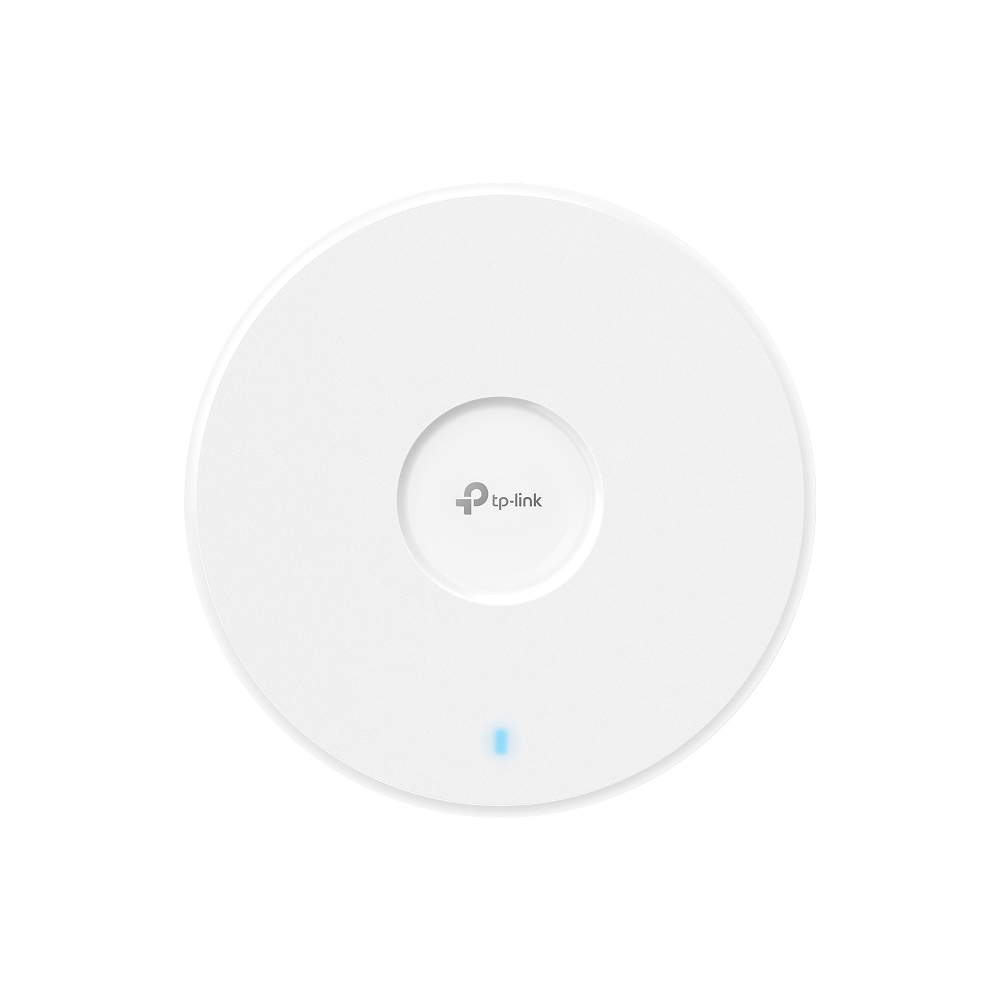
A wireless access point adds configurable Wi-Fi to an existing wired network rather than replacing its router. It can broadcast several networks with different encryption, radio bands, schedules and bandwidth limits, making it useful when a single domestic router cannot provide the coverage or control a home office or small workplace needs. This guide covers 12 Power over Ethernet access points, spanning Wi-Fi 5, Wi-Fi 6, Wi-Fi 6E and Wi-Fi 7.
What follows is recorded testing, translated. Nobody at Truthful Reviews has installed or used any of these access points.
What matters when choosing an access point
These are more specialised than ordinary home-network products. Most expose their full settings through a controller: software on a local computer, a hardware gateway or a manufacturer's cloud service. The controller can make multiple access points and sites easier to manage, but its interface may include controls for switches, gateways and cameras as well as Wi-Fi. Standalone mode is usually simpler and often more limited.
Every model here can create several SSIDs. Depending on the device, each can have its own radio bands, encryption, timetable, bandwidth cap, captive-portal landing page and guest-network isolation. A dual-band unit uses 2.4 GHz and 5 GHz; a tri-band model adds 6 GHz, where compatible clients can use wider channels and higher short-range throughput. Wi-Fi 7 can also offer Multi-Link Operation, or MLO, joining more than one band for a compatible client.
The wired port matters just as much as the wireless headline. A 1GbE socket can cap a fast nearby Wi-Fi connection at roughly 950 Mbps, whereas 2.5GbE gives quicker radios more room. All 12 tested models accept power through their Ethernet connection. PoE and PoE+ compatibility therefore forms part of the network design; the Zyxel NWA50AX was the only model supplied with a separate power adaptor.
How they were assessed
The access points were installed on a test stand and evaluated in an ordinary network without a VLAN infrastructure, keeping the existing router in place. Set-up began in the maker's mobile app where possible. Cloud, software-controller and standalone operation were compared, along with multiple SSIDs, guest isolation, bandwidth controls, captive portals, documentation and client management.
Maximum channel widths and suitable channels were selected for throughput runs over several routes. Power draw was measured with a PoE tester at idle and during 60 seconds of full downstream load on 5 GHz. These figures describe that recorded environment, not a promise for every building or client.
The recommendations
Best for most networks — TP-Link Omada EAP723
The TP-Link Omada EAP723 combines straightforward app set-up, broad controls and strong Wi-Fi 7 performance. It is a 2×2 dual-band design rather than a 6 GHz model, but its 5 GHz radio uses a 160 MHz channel and the 2.5GbE PoE+ port avoids the wired bottleneck seen on some rivals. Recorded throughput reached 1,800 Mbps on 5 GHz and 460 Mbps on 2.4 GHz.
Omada's cloud controller has detailed online help and remote management. An SSID can be scheduled, bandwidth-limited, isolated as a guest network or placed behind a captive portal; MAC lists and direct client blocking are also present. MLO can be enabled for Wi-Fi 7 clients even without a 6 GHz radio. Standalone operation remains possible, though its browser menu and documentation are in English and explain the finer settings less clearly.
Power draw was just under 10 W at idle and a little over 14 W under load. Wall and ceiling mounting hardware was included, while power can come from PoE+ or an optional adaptor. The absence of 6 GHz is the meaningful compromise, but the tested balance of installation, management and speed made this the overall winner.
Search Amazon UK · Search Amazon US
Full tri-band Wi-Fi 7 — Zyxel NWA130BE
The Zyxel NWA130BE is the recommendation for clients that can use all three bands. Its 2×2 radios cover 2.4, 5 and 6 GHz, with 160 MHz on 5 GHz and 320 MHz on 6 GHz. Downstream measurements ranged from 330 to 490 Mbps on 2.4 GHz, 900 to 1,950 Mbps on 5 GHz and 1,280 to 2,320 Mbps on 6 GHz. A second 2.5GbE socket can pass the wired network to another device.
Set-up through the Nebula app used a QR code, followed by an automated firmware update. The app made it particularly easy to switch SSIDs and their radio assignments, while the browser controller carried the captive-portal, guest-NAT and finer client-rule options. MLO also worked, despite being labelled beta. The trade-off is power: 11.7 W at idle and 15.4 W under load, and some advanced browser settings are less clearly arranged than in the app.
Search Amazon UK · Search Amazon US
For detailed local control — Ubiquiti U6+
The compact Ubiquiti U6+ is a Wi-Fi 6 dual-band access point with unusually detailed radio and client information. Its 160 MHz 5 GHz radio reached 910 Mbps downstream and 950 Mbps upstream; the 1GbE PoE port was the limiting link at close range. It was also the most economical recommendation in power use, drawing a little over 4 W at idle and no more than 7 W under load.
Its caveat is management. Standalone app mode could not create another SSID, a separated guest network, a schedule or a bandwidth limit, so the fuller test used UniFi Network Server on a local computer. The access point retains its settings when that computer is off, but configuration, live client lists and remote app control need the server running. With it active, the breadth and presentation of controls are excellent and suit a network that may later add more Ubiquiti hardware.
Search Amazon UK · Search Amazon US
With a separate power adaptor — Zyxel NWA50AX
The Zyxel NWA50AX is the practical recommendation where PoE hardware is not yet in place because it alone included a separate mains adaptor while retaining a PoE connection. This 2×2 Wi-Fi 6 model measured 510 to 720 Mbps on 5 GHz and 350 to 430 Mbps on 2.4 GHz. Consumption stayed below 5 W at idle and reached 9.5 W under load.
Nebula app set-up is guided and includes QR-code sharing of newly created Wi-Fi credentials. Guest SSIDs can be separated from the local network by NAT, and per-SSID client rules are present, although the relevant control is tucked away. The principal omission is a captive portal. Its lower radio bandwidth makes it slower than the leading Wi-Fi 7 models, but its included power option and rounded cloud controls distinguish it.
Search Amazon UK · Search Amazon US
Also tested
TP-Link Omada EAP653 — this Wi-Fi 6 relation of the winner offers similar controls and a 160 MHz 5 GHz radio, but its 1GbE port held measured throughput to about 950 Mbps while power draw was 6.6 W at idle and just under 10 W under load. Search Amazon UK · Search Amazon US
HPE Instant On AP32 — this cloud-only Wi-Fi 6E model can run only two of its three bands together, and although 2.4 GHz produced 320–390 Mbps and 5 GHz 400–740 Mbps, 6 GHz managed only 700–800 Mbps downstream and 350 Mbps upstream despite a 2,402 Mbps link rate. Search Amazon UK · Search Amazon US
Ubiquiti U7 Pro Max — this Wi-Fi 7 tri-band unit reached 350–400 Mbps on 2.4 GHz, 960–1,690 Mbps on 5 GHz and 2,235 Mbps on 6 GHz, but its 2.4 GHz radio initially became unusable after set-up and recovered only after the PoE-interoperability option and SSIDs were reset, after which the fault could not be reproduced. Search Amazon UK · Search Amazon US
Ubiquiti AC Mesh — the outdoor-capable IPX4 model includes a PoE injector and used under 4 W idle and 6 W loaded, but its older Wi-Fi 5/4 radios managed only 130 Mbps down and 190 Mbps up on 2.4 GHz, versus 540 Mbps at short range on 5 GHz. Search Amazon UK · Search Amazon US
Netgear WAX210 — a compact, local-management-only Wi-Fi 6 model that measured 350–830 Mbps on 5 GHz and 250–440 Mbps on 2.4 GHz at 3.7–6.7 W, but its bandwidth limits failed in every tested SSID and it has neither captive portal nor mesh function. Search Amazon UK · Search Amazon US
Netgear WAX610 — this Wi-Fi 6 model reached 870 Mbps on 5 GHz and roughly 400 Mbps on 2.4 GHz while drawing 7.5–11 W; its Insight app set-up failed but browser set-up worked, and bandwidth limits worked once guest NAT was paired with client isolation. Search Amazon UK · Search Amazon US
Netgear WAX610Y — the larger IP55 outdoor version of the WAX610 is PoE+-only and measured 840 Mbps on 5 GHz and 380 Mbps on 2.4 GHz, with consumption of 8.2 W at idle and 11.8 W under load. Search Amazon UK · Search Amazon US
Netgear WBE710 — the quickest 2×2 tri-band result came from this Wi-Fi 7 model, exceeding 2,300 Mbps nearby and reaching 1,700 Mbps on the second 6 GHz route, while 5 GHz produced 1,650/870 Mbps, 2.4 GHz 430/360 Mbps and power draw 10–12.4 W. Search Amazon UK · Search Amazon US
Verdict
The TP-Link Omada EAP723 is the best all-round choice: its app makes initial set-up approachable, the controller goes deep enough for a small professional network, and measured 5 GHz throughput makes proper use of its 2.5GbE connection. Choose the Zyxel NWA130BE when 6 GHz and tri-band MLO matter, the Ubiquiti U6+ for exceptionally detailed locally hosted management, or the Zyxel NWA50AX when an included mains adaptor simplifies the first installation.
If the aim is seamless whole-home coverage rather than wired access points, see our mesh Wi-Fi systems guide; for extending an existing router with less cabling, see our Wi-Fi repeater guide.