

Battle Rounds
Scores compare the available published review ratings across 1 rated category. Missing ratings do not count as a win, loss or draw. These scores are not an editorial recommendation.
Overall
Design
Not comparableFeatures
Not comparableValue
Not comparableSamsung Galaxy S25 Ultra
Strengths
- Ultra-bright display with 2,600 cd/m² peak brightness
- Exceptional performance with Snapdragon 8 Elite processor
- Excellent battery life (24h 21min in testing)
- Versatile photo and video capabilities with four rear cameras
- Upgraded 50MP ultra-wide camera (vs 12MP on S24 Ultra)
- Lighter weight than predecessor (218g vs 232g)
- Thinner profile at 8.2mm
- Titanium frame for durability and lightness
- Ultra-fine display bezels (92.88% screen-to-body ratio)
- Gorilla Armor 2 with excellent anti-glare properties
- IP68 water and dust resistance
- Seven years of guaranteed software updates
- Integrated S Pen stylus
- Wi-Fi 7 and Bluetooth 5.4 support
- Very reactive ultrasonic fingerprint sensor
- Natural colour mode with excellent Delta E (1.55)
Weaknesses
- Charging speed limited to 45W (57 minutes for full charge)
- Wireless charging only 15W
- S Pen no longer includes Bluetooth functionality
- No microSD card slot
- No 3.5mm headphone jack
- Still a large, imposing device despite refinements
- Fingerprint-prone glass back
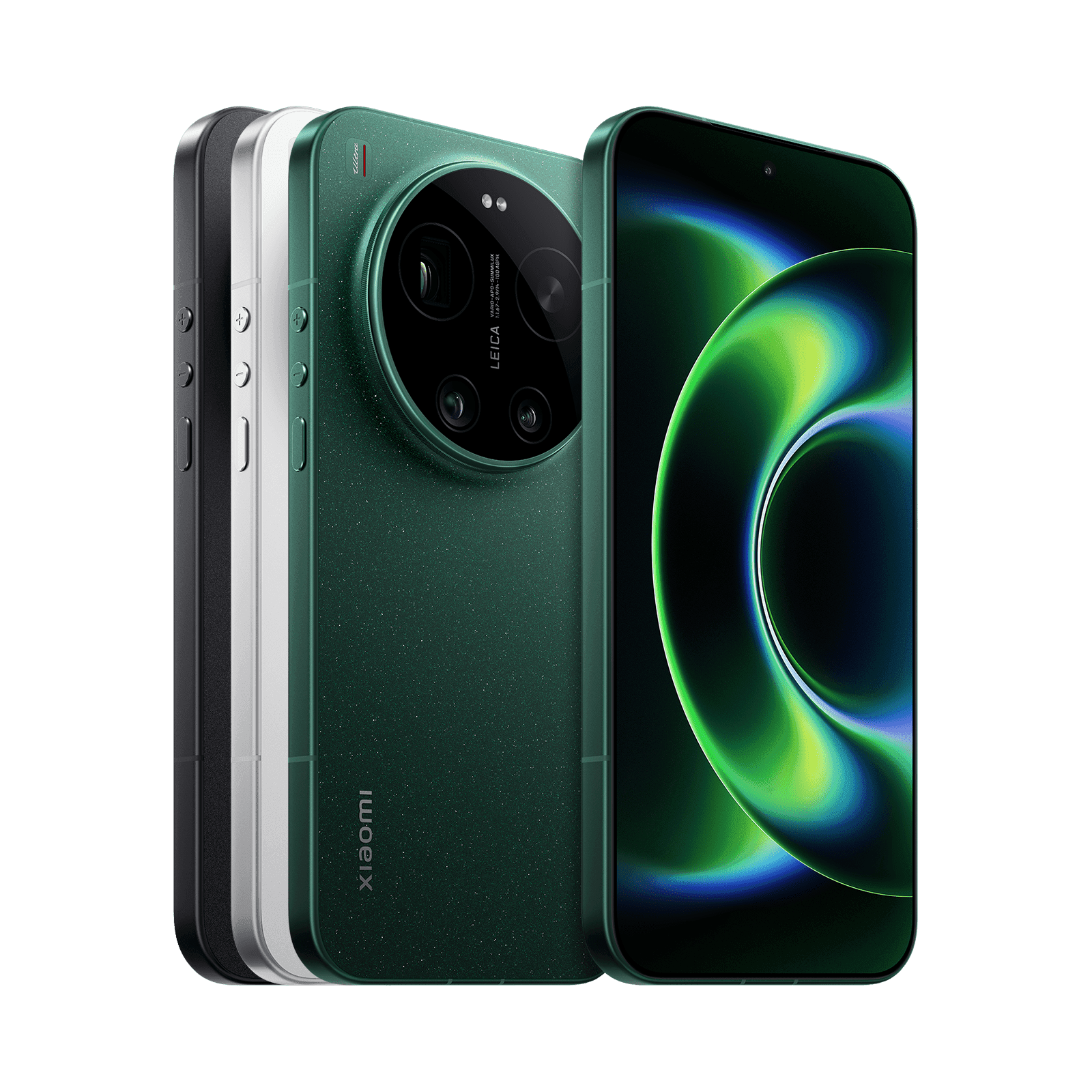
Xiaomi 17 Ultra
Strengths
- Excellent camera versatility with standout telephoto reach
- Useful Pro Photography Pack and Qi2-ready case
- Outstanding display brightness
- Strong battery life and very fast charging
- Distinctive Leica-led imaging character
Weaknesses
- Large and heavy even by flagship standards
- HyperOS still includes too much clutter
- Sustained gaming thermals trail the best rivals
- Very expensive despite the accessory bundle
Technical Specifications
| Specification | Samsung Galaxy S25 Ultra | Xiaomi 17 Ultra |
|---|---|---|
| Display Size | 6.9 inches | — |
| Display Type | Super AMOLED LTPO | — |
| Resolution | 3120 x 1440 pixels | — |
| Pixel Density | 498 ppi | — |
| Refresh Rate | 1-120 Hz adaptive | — |
| Peak Brightness | 2600 cd/m² | — |
| Measured Brightness | 2348 cd/m² | — |
| Screen Protection | Gorilla Armor 2 | — |
| Processor | Snapdragon 8 Elite for Galaxy | — |
| CPU Speed | 4.47 GHz | — |
| GPU | Adreno 830 | — |
| RAM | 12 GB | 16GB |
| Storage Options | 256 GB / 512 GB / 1 TB | — |
| Dimensions | 162.8 x 77.6 x 8.2 mm | — |
| Weight | 218 grams | — |
| Build Material | Titanium frame | — |
| Back Protection | Gorilla Glass Victus 2 | — |
| Water Resistance | IP68 | — |
| Battery Capacity | 5000 mAh | — |
| Battery Type | Lithium-ion | — |
| Battery Life (viSer test) | 24h 21min | — |
| Charging Speed | 45 W | — |
| Full Charge Time | 57 minutes | — |
| Wireless Charging | 15 W | — |
| Main Camera | 200 MP, f/1.7, 24mm | — |
| Ultra-wide Camera | 50 MP, f/1.9, 13mm | — |
| Telephoto Camera 1 | 10 MP, f/2.4, 67mm (3x) | — |
| Telephoto Camera 2 | 50 MP, f/3.4, 115mm (5x) | — |
| Front Camera | 12 MP, f/2.2 | — |
| Video Recording | 8K @ 30fps | — |
| Operating System | Android 15 (One UI 7) | — |
| Software Updates | 7 years guaranteed | — |
| Connectivity | Wi-Fi 7, Bluetooth 5.4, 5G | — |
| Fingerprint Sensor | Ultrasonic under-display | — |
| S Pen | Included (no Bluetooth) | — |
| Dual SIM | Yes (eSIM supported) | — |
| Repairability Index | 8.5 /10 | — |
| Operating system | — | Android 16 |
| Chipset | — | Qualcomm Snapdragon 8 Elite Gen 5 |
| Storage options | — | 512GB, 1TB |
| Display size | — | 6.9-inch |
Our Expert Analysis
Samsung's Galaxy S25 Ultra and Xiaomi's 17 Ultra are two of the most complete Android phones you can buy, and on the spec sheet they look almost like twins. Look closer, though, and they pull in different directions: the Galaxy is the versatile, do-everything flagship with an S Pen and the widest zoom range, while the Xiaomi is a camera-first phone built around a large main sensor, a huge battery and rapid charging. This comparison draws only on the complete published reviews of each phone; Truthful Reviews has not independently tested either handset.
Design and Build
The two are nearly identical in the hand. The Galaxy S25 Ultra measures 162.8 mm tall, 77.6 mm wide and 8.2 mm thick at 218 g, while the Xiaomi 17 Ultra is 162.9 mm tall, 77.6 mm wide and 8.3 mm thick at 218.4 g. Both carry an IP68 rating for dust and water resistance. Samsung's card is its integrated S Pen and Samsung DeX desktop mode, which push it toward productivity, though the S Pen has lost its Bluetooth remote features this generation and the flat frame's sharp edges can dig into the palm. Xiaomi wraps its phone in Shield Glass 3.0. If you write, sketch or want a phone that doubles as a light desktop, the Galaxy is unmatched here.
Display
Both use a 6.9-inch AMOLED panel at 120 Hz, but they optimise for different things. The Galaxy is the sharper of the two, running at a Quad HD+ 3120 x 1440 resolution for 498 ppi. The Xiaomi answers with brightness: its screen is rated among the brightest on the market, which pays off in harsh sunlight. So the choice is sharpness versus outright luminance — the Galaxy for pixel density, the Xiaomi for daylight visibility.
Performance
Both run Qualcomm's Snapdragon 8 Elite, but the Xiaomi 17 Ultra uses the newer Snapdragon 8 Elite Gen 5 paired with 16 GB of RAM, against the Galaxy's Snapdragon 8 Elite and 12 GB. The Galaxy offers 256 GB, 512 GB and 1 TB storage tiers; the Xiaomi comes in 512 GB and 1 TB. In everyday use both are effortlessly fast, and Samsung's One UI 7 is fluid and well thought out, if deliberately cautious rather than cutting-edge. The Xiaomi's newer silicon edges ahead on paper, but it warms slightly under sustained gaming and slips to the back of the pack in the most demanding ray-tracing tests, so its lead is narrower in practice than the generation gap suggests.
Cameras
This is where the two phones make their clearest pitch. The Galaxy S25 Ultra fields a versatile four-camera array: a 200 MP main sensor, a 50 MP ultra-wide, a 50 MP periscope for 5x optical zoom and a 10 MP telephoto for 3x, plus a 12 MP front camera and 8K video. Its zoom reach and video flexibility remain a genuine strength. The Xiaomi 17 Ultra takes the photographer's route: its 50 MP main camera sits behind a large Type 1-inch sensor at an equivalent 23 mm (f/1.7), joined by a 200 MP periscope telephoto at an equivalent 100 mm and a 50 MP ultra-wide at an equivalent 14 mm, with a 50 MP selfie camera and an optional pro photography kit. In short, the Galaxy wins on zoom versatility and video, while the Xiaomi leans on a bigger main sensor for image quality — it is squarely aimed at being the camera phone to beat.
Battery and Charging
The Xiaomi takes this category decisively. It packs a 6000 mAh battery against the Galaxy's 5000 mAh, and its endurance is rated as excellent. Charging is even more lopsided: the Xiaomi accepts 90 W wired and 50 W wireless charging, while the Galaxy tops out at 45 W wired — a rate reviewers now consider behind the competition — and 15 W wireless. If long battery life and fast top-ups are priorities, the Xiaomi has a clear, measurable lead.
Software and Extras
The Galaxy S25 Ultra runs Android 15 under One UI 7, with Galaxy AI and Gemini features woven throughout, plus Samsung's long track record of extended software support — a real advantage for anyone keeping a phone for years. The Xiaomi 17 Ultra runs the newer Android 16 under HyperOS 3, which is capable but a little cluttered. Beyond software, the Galaxy's S Pen, DeX and 8K recording form an ecosystem the Xiaomi does not try to match.
Which Should You Buy?
Choose the Samsung Galaxy S25 Ultra if you want the most versatile flagship: the integrated S Pen, DeX, the widest zoom range with dual telephoto lenses, 8K video, a sharper 1440p display and long software support — accepting only 45 W charging, a 5000 mAh battery that rivals now beat and a design that plays it safe. Choose the Xiaomi 17 Ultra if the camera and stamina lead: a large 1-inch main sensor, a 200 MP periscope, the brightest screen of the pair, a bigger 6000 mAh battery and far faster 90 W charging — accepting a busier interface and a chip that flags under the most extreme graphics loads. Neither is simply the better phone: the Galaxy is the all-round productivity powerhouse, and the Xiaomi is the battery-and-camera specialist.
Disclosure: As an Amazon Associate I earn from qualifying purchases. Truthful Reviews may receive a commission when you buy through eligible Amazon UK or Amazon US links, at no extra cost to you. Affiliate partnerships never determine our verdicts or recommendations.
Share Your Experience
Loading comments...