

Battle Rounds
Scores compare the available published review ratings across 1 rated category. Missing ratings do not count as a win, loss or draw. These scores are not an editorial recommendation.
Overall
Design
Not comparableFeatures
Not comparableValue
Not comparableSamsung Galaxy S26 Ultra
Strengths
- Privacy Display is a genuinely useful new hardware feature
- Fast Snapdragon performance and strong overall responsiveness
- Noticeably better ergonomics for an Ultra phone
- Solid battery life with improved 60W charging
- Long software support and mature feature set
Weaknesses
- No native Qi2 magnet system
- Privacy mode heavily reduces image quality when active
- Camera improvements are meaningful but not dramatic
- Still very expensive
Apple iPhone Air
Strengths
- Superb design
- Remarkably thin and light
- Fast A19 Pro performance
- Excellent, well-calibrated screen
Weaknesses
- Expensive
- Poor battery life and slow charging
- Weak single-camera system
- Mono speaker and USB 2 port
Technical Specifications
| Specification | Samsung Galaxy S26 Ultra | Apple iPhone Air |
|---|---|---|
| Operating system | Android 16 | iOS 26 |
| Chipset | Qualcomm Snapdragon 8 Elite Gen 5 | — |
| RAM options | 12GB, 16GB | — |
| Storage options | 256GB, 512GB, 1TB | — |
| Display size | 6.9-inch | — |
| Processor (SoC) | — | Apple A19 Pro |
| RAM | — | 8 GB |
| Storage | — | 256 GB, 512 GB, 1 TB |
| Display | — | 6.5-inch Super Retina XDR, 1-120Hz ProMotion |
| Thickness / weight | — | 5.6 mm / 165 g |
| Rear camera | — | Single 48MP (26mm wide) |
| Battery | — | 3,149 mAh |
Our Expert Analysis
The Samsung Galaxy S26 Ultra and the Apple iPhone Air represent two opposite ideas of what a top phone should be. The Galaxy is the do-everything flagship, packing in as much capability as possible; the iPhone Air is a design statement built around one goal — being astonishingly thin. Add the iOS-versus-Android question and a £330 price gap, and this becomes a choice of philosophy as much as hardware. Here is how they compare, drawn from independent expert reviews of each, with current UK prices.
At a glance
The Samsung Galaxy S26 Ultra (around £1,129.00) is the maximalist option: a big, bright screen, an S Pen, a four-camera system with long zoom and a large, fast-charging battery. The iPhone Air (around £799.00) is the minimalist one: the thinnest, lightest iPhone ever, with a fast chip and a lovely screen, but a single camera and modest battery life. If you want the most capable phone, the Galaxy is it; if you want the sleekest object and can live with its compromises, the Air is unique.
Check the Galaxy S26 Ultra price on Amazon · Check the iPhone Air price on Amazon
Operating system
Decide this first. The Galaxy S26 Ultra runs Android with Samsung's One UI, which is customisable and cross-platform; the iPhone Air runs iOS, which is simple and tightly integrated with other Apple devices. Whichever ecosystem you already use should weigh heavily, because it shapes everyday life with the phone more than any single spec.
Design and build
This is where their philosophies collide. The iPhone Air is all about thinness: at just 5.6 mm and around 165 g it is the slimmest, lightest iPhone made, and it feels remarkable in the hand. The Galaxy S26 Ultra is a much bigger, more substantial phone — 163.6 x 78.1 x 7.9 mm and 214 g — but it uses that space for a larger screen and an integrated S Pen stylus. Neither is a wrong answer: the Air wins for sheer portability and wow factor, the Galaxy for the biggest canvas and the stylus.
Screen
Both use excellent OLED-type panels at up to 120 Hz. The Galaxy's is larger at 6.9 inches, runs at QHD+ resolution and hits a bright 2600 nits at its peak, and it adds a clever hardware privacy filter to stop onlookers reading your screen. The iPhone Air's 6.5-inch display is smaller but superb and very bright too. If you want maximum screen and the privacy trick, the Galaxy leads; if you want a big screen in a far thinner body, the Air is extraordinary.
Performance
Both are genuinely fast flagships. The Galaxy S26 Ultra runs the Snapdragon 8 Elite Gen 5 with up to 16 GB of RAM, while the iPhone Air uses Apple's powerful A19 Pro chip. In everyday use both feel instant; the Galaxy has more memory for heavy multitasking, while the Air's thin body means it cannot dissipate heat quite as well under long, sustained loads. For most tasks you will not find either wanting.
Cameras
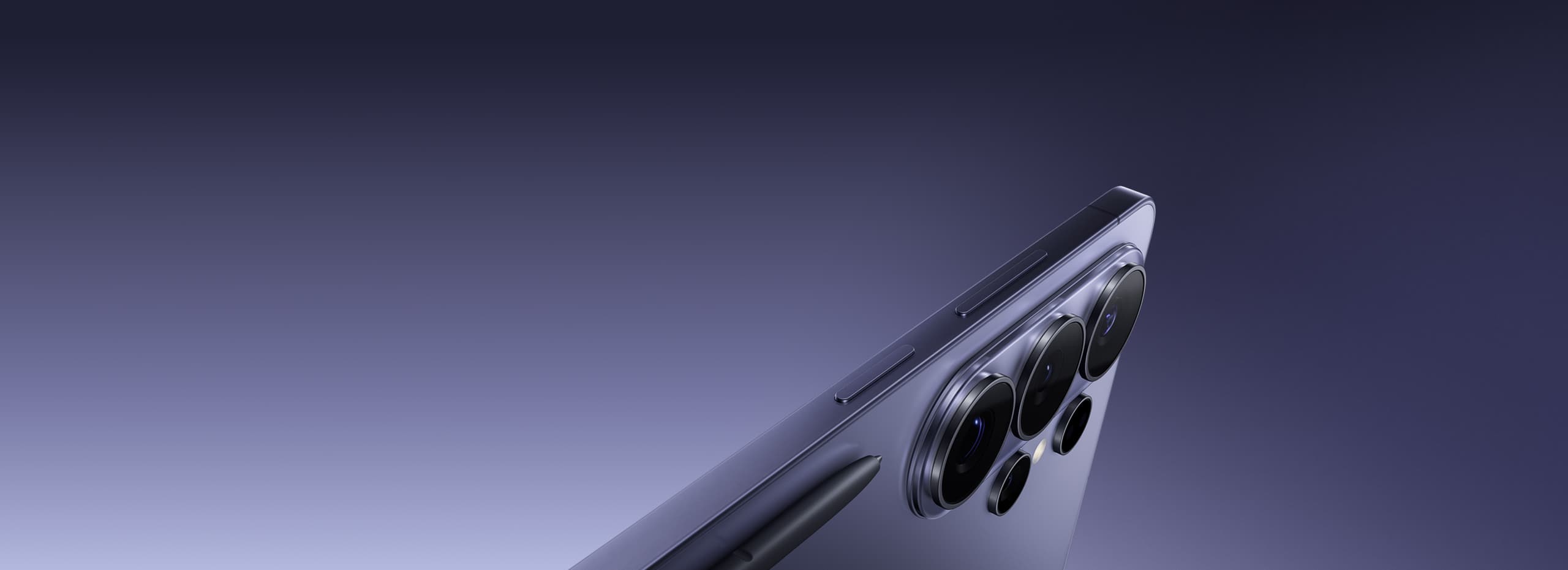
This is the Galaxy's biggest advantage by far. It carries four rear cameras — a 200-megapixel main, a 50-megapixel ultra-wide, a 50-megapixel 5x telephoto and a 10-megapixel 3x telephoto — covering everything from wide landscapes to long-range zoom, plus a 12-megapixel front camera. The iPhone Air, by contrast, has a single rear camera with no ultra-wide and no telephoto, so there is no optical zoom at all. It takes good photos in the right conditions, but for versatility the Galaxy is in a completely different league.
Battery and charging
The Galaxy wins decisively here too. It packs a 5000 mAh battery with 60 W charging, so it lasts well and refuels quickly. The iPhone Air's thin body leaves room for only a small battery, and reviewers flagged its stamina as the phone's real weak point. If all-day endurance and fast top-ups matter to you, the Galaxy is far more reassuring; the Air will more often need a mid-day charge.
Features and value
The Galaxy justifies its higher price with hardware: the S Pen, the extra cameras, the bigger battery and screen, and storage that runs from 256 GB up to 512 GB and beyond. The iPhone Air spends its budget differently, on titanium-grade thinness and a premium feel, plus the A19 Pro chip and iOS. Both are desirable, but they are desirable for opposite reasons — capability versus design.
Price and verdict
At the time of writing the Galaxy S26 Ultra is around £1,129.00 and the iPhone Air around £799.00, a £330 gap that mirrors the difference in ambition.
Buy the Galaxy S26 Ultra if you want the most capable phone you can get: the biggest screen, the S Pen, the versatile four-camera system with long zoom, and the large, fast-charging battery. It is the phone for people who want to do everything.
Buy the iPhone Air if the idea of the thinnest, lightest, most elegant iPhone excites you more than a spec sheet, and you can accept a single camera and shorter battery life to get it. It is a beautiful, distinctive object. In short: the Galaxy is the phone you buy to do the most, the Air the one you buy to carry the least — decide which matters more, after you have chosen your operating system.
Disclosure: As an Amazon Associate I earn from qualifying purchases. Truthful Reviews may receive a commission when you buy through eligible Amazon UK or Amazon US links, at no extra cost to you. Affiliate partnerships never determine our verdicts or recommendations.
Share Your Experience
Loading comments...