HomeArticlesBest Over-Ear Headphones 2026: 54 Models Tested
Buying Guide

Best Over-Ear Headphones 2026: 54 Models Tested

We compare 54 tested over-ear Bluetooth headphones. The JBL Tour One M3 wins with reference sound and marathon battery life, the Bose QuietComfort Ultra rules noise cancelling, and the EarFun Tune Pro delivers 183 hours for under 80 euros.

12 June 2026
10 min read
Best Over-Ear Headphones 2026: 54 Models Tested

Over-ear headphones score with powerful sound, high wearing comfort and effective noise suppression. Models with active noise cancelling (ANC) in particular blank out distracting surroundings, which makes them ideal for travel, open-plan offices and concentrated work, while the ergonomic build and softly padded earcups stay comfortable through long listening sessions — and the large cups already damp ambient noise passively. This comparison, drawn from a test field of 54 benchmarked Bluetooth headphones, spans cheap entry models to premium sets with exceptional sound; good recommendations start at around 60 euros.

Because over-ears enclose the ears completely rather than pressing on them like on-ear designs, fatigue sets in later despite the bulkier, heavier build — fewer pressure points, more music.

The Short Version

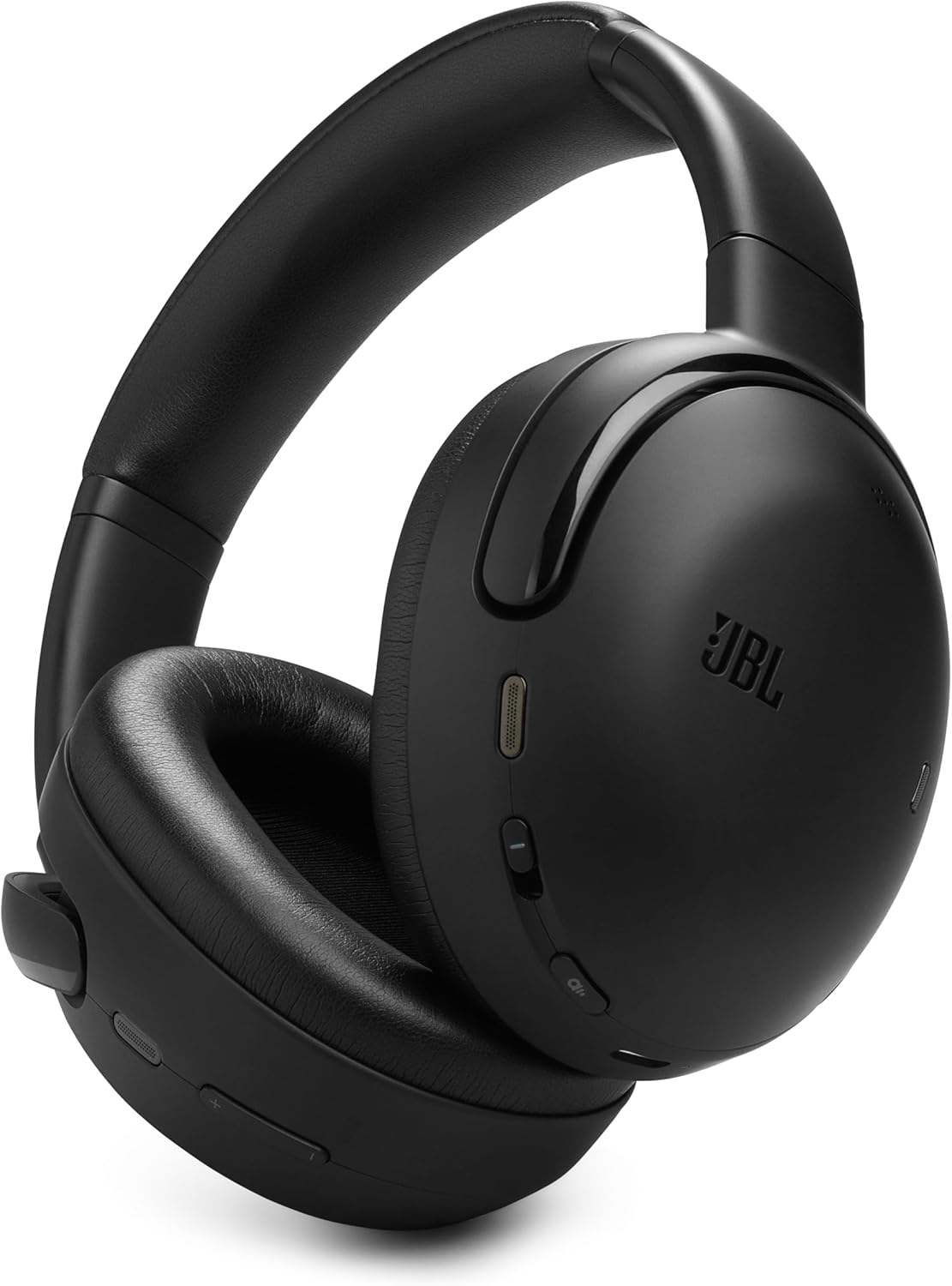
  • Best overall — JBL Tour One M3. Excellent, neutrally tuned sound for every genre, a superb fit, an app hearing test for personalisation and huge stamina (nearly 49 hours with ANC, 79:49 without). Only very deep rumble sneaks past the noise cancelling. Around 269 euros.
  • Budget pick — EarFun Tune Pro. Very good sound and record-breaking endurance — 102 hours with ANC, an absurd 183 hours without — for as little as 54 euros. The ANC has weaknesses with high-pitched noise and no travel case is included.
  • Best noise cancelling — Bose QuietComfort Ultra Headphones (2nd Gen). The reference for silence: the only perfect ANC grade in the field, filtering both deep engine drone and high whistle flawlessly, plus lovely neutral sound. Plasticky for the price, from about 339 euros.
  • Budget alternative — JBL Live 770NC. Strong, EQ-tameable sound, high comfort, good ANC and 61:43 hours of measured runtime for around 80 euros.
  • Under 250 euros — Sennheiser Momentum 4 Wireless. Top-class sound, very efficient ANC and over 53 hours of battery even with cancelling active, from about 189 euros. It does not fold.
  • Good and cheap — Philips TAH8000E. Solid sound, regulable full-spectrum ANC and 107:49 hours without cancelling for roughly 104 euros.
  • Also superb — Sony WH-1000XM6. Beautifully balanced sound, a ten-band equaliser, folding hinges and 58-plus hours regardless of ANC — let down slightly by its grip pressure and deep-frequency cancelling, at a stiff 360 euros.

The Winner: JBL Tour One M3

The Tour One M3 is a very good over-ear with excellent sound and strong Bluetooth range. The audio leaves practically nothing to wish for: even the factory bass tuning is pleasantly neutral on first listen, highs and mids are rendered very well on a large, open stage, and voices of every register sound clear and natural — the headphones suit every musical genre. An app hearing test personalises the tuning perfectly, and the outstanding ambient mode reproduces voices so naturally that calls through the integrated microphone genuinely profit.

The fit of the high-quality, foldable build is superb — nothing presses even after long wear, though the padding material could feel a touch nicer. The ANC filters high-pitched noise and whooshing fans well but shows weaknesses at very low frequencies such as the hum of aircraft engines. Battery life is splendid: after a charging time of just 1:46 hours, the Tour One M3 runs nearly 49 hours non-stop with ANC and 79:49 hours without; a quarter-hour top-up buys 8:23 hours with cancelling and a great 15:09 without. With the best equipment grade in the field (1.0), this is the most complete package in the test.

Budget Pick: EarFun Tune Pro

The Tune Pro is a cheap, foldable over-ear with a very good overall verdict (1.5). The 287-gram plastic build is accurately finished, wears very comfortably and folds without complaint; equipment includes a dedicated noise-cancelling button, USB audio over the Type-C port and a 3.5 mm jack. The sound impresses: superbly tuned with very good bass and dynamics, no equaliser needed — against the top class it lacks some naturalness and the stage feels somewhat narrow, but for this price class that is entirely in order.

Four ANC modes cover transparency, wind reduction, comfortable and deep cancelling. The suppression is good, with weaknesses filtering higher-frequency tones such as whistles, and it does not remove hiss completely. The battery figures are outstanding to the point of comedy: 102 hours with ANC after a 2:55-hour charge, 183 hours without, and a fifteen-minute top-up yields 12.5 hours with cancelling or 20:57 without. At 54 to 80 euros, the value verdict of 1.0 explains itself — just budget for a case, as none is included.

Best Noise Cancelling: Bose QuietComfort Ultra Headphones (2nd Gen)

The second generation of the QuietComfort Ultra convinces with lovely, very neutrally tuned sound — balanced bass, unadulterated mids, cleanly polished highs — and an app equaliser for anyone who finds that too tame. Only the sonic stage is somewhat narrow, costing a few details. The headline, though, is the cancelling: the best grade in the field, filtering both the deep drone and the high whine of an aircraft engine flawlessly in testing. For frequent flyers, this is the device.

The equipment list is complete: foldable, a high-quality case included, Bluetooth 5.4 with fantastic range and multipoint, and playback over USB-C or classic jack. It sits very pleasantly and is thoroughly well made, though for this price less plastic and more metal would have been fitting, and the control concept — buttons plus a touch strip, with one overloaded multifunction key — would profit from a dedicated ANC button. Battery life is respectable rather than remarkable: around 61.5 hours without ANC, about 39 with. From roughly 339 euros.

Budget Alternative: JBL Live 770NC

The Live 770NC delivers very good sound — once the pronounced factory bass resonance is tamed in the app equaliser, the audio turns powerful, clean and convincing for the class. The app earns its keep: a good EQ, dynamic loudness adaptation for quiet listening, and the Personi-Fi hearing test that lifts frequencies an individual ear misses. Build quality is good and the earcups adjust well, sitting comfortably even on larger ears.

The ANC offers two transparency modes but cannot be switched off completely, and while the filtering works well overall, it leaves some midrange through and tends to sound slightly hollow and artificial. Bluetooth range is very good, the battery charges fully in 2.5 hours, and the measured 61:43 hours of runtime is a very good figure. At around 80 euros, an emphatic recommendation.

Under 250 Euros: Sennheiser Momentum 4 Wireless

The Momentum 4 Wireless is an excellent noise-cancelling headphone: very lovely sound with clear highs and rich bass, very efficient ANC, and very high wearing comfort — only the design and the rather generic plastic are a little boring. The battery is extreme: a fat 53 hours even with cancelling active, and when it does run dry, the 1.2-metre cable keeps the music playing. A wear sensor and Bluetooth multipoint round out the equipment. The one structural quirk: the earcups rotate but do not fold, which enlarges the footprint in the supplied hardcase. At about 189 euros, it makes very little wrong and earns a first-class purchase recommendation.

Good and Cheap: Philips TAH8000E

The TAH8000E delivers a convincing total result at 104 euros. The 258-gram build feels solid, the cups sit pleasantly firm, and the soft synthetic padding suits spectacle wearers. Sound offers a proper foundation — powerful bass, balanced mids, clean highs, good spatiality — adjustable through the rather simple app equaliser. The ANC works reliably across all frequency ranges and is adjustable, though one's own voice can sound slightly muffled in transparency mode. Endurance impresses: 71:11 hours with ANC, 107:49 without, and a fifteen-minute charge already buys 15:37 hours with cancelling — the best quick-charge figure in the comparison. Two flaws: no audio over the USB-C cable, and the best sound requires the app EQ.

Also Superb: Sony WH-1000XM6

The WH-1000XM6 succeeds as a very fine over-ear. It sits comfortably and securely — the broader headband helps, though the grip pressure could be a touch lower — and at 253 grams it is the lightest device in the comparison, folding once again (unlike its predecessor) into a compact, beautifully made case with a practical snap fastener. Battery life exceeds 58 hours in testing with or without ANC, and Bluetooth 5.4 reaches very far; with a flat battery, the classic jack still plays, while USB-C only charges.

The sound convinces across all genres with a superbly balanced signature and precise bass — a little more spaciousness would have sealed the top grade — and a ten-band equaliser allows very detailed tailoring, alongside app extras like an ear-shape analysis. The ANC is solid but improvable: loud, deep tones such as jet-engine drone still penetrate. The controls split sensibly between a touch surface (swipe for volume and tracks, tap for pause) and clearly distinguishable physical buttons. The catch is the price: at around 360 euros with a "expensive" value verdict, it asks Bose money with slightly lesser cancelling.

How Much Do Good Over-Ears Cost?

The selection is enormous. Brand models start around 50 euros, and the wearing comfort of cheap models is usually fine — top sound quality is the part that costs. For pleasant audio, solid equipment and long battery life, expect to pay around 80 euros. ANC raises prices, especially where it genuinely works: high-quality over-ears with cancelling exist under 200 euros, while top models with premium features start around 250 euros. Strong models without ANC begin at roughly 100 euros.

What to Look For When Buying

Wearing comfort

Over-ears live or die by their padded cups: stable without slipping, no excessive pressure, no heat build-up. Because head shapes differ enormously, the most expensive model is not automatically the most comfortable — the decisive factor is adjustability, and the test confirms: the more adjustment options, the better the fit. With a good fit, weight becomes secondary.

Sound quality

The most important criterion, and inevitably partly subjective: a balanced signature without overbearing bass makes the best foundation, and top models add an app to reshape the sound. Objective measurement covers interference noise and loudness.

Noise cancelling

ANC microphones record the surroundings and counter them with antiphase sound. For conversations or announcements with the headphones on, look for talk-through or ambient modes; adjustable ANC strength lets some world back in deliberately. Even very good ANC changes the sound slightly and never blocks everything.

Mobility

Since batteries in most Bluetooth headphones cannot be swapped (or only as a service), endurance should be generous from day one — at least 25 hours, with the field's top models exceeding 40, and roughly 20 hours as a realistic constant-ANC expectation. A charging time under two hours is ideal.

Bluetooth

Bluetooth 5 is the baseline (older versions drain more power), NFC eases pairing, multipoint connects two sources, and the aptX codec promises higher quality at lower latency when both ends support it — though its real-world value is debated and many makers stick to SBC or AAC. Indoor range varies: up to 25 metres with line of sight, around 10 through walls.

Accessories

A cable turns the Bluetooth set into a normal wired headphone — ideally with a space-saving angled plug, and beware models whose cable mode only works with a charged battery. A travel case (hardcase or fabric pouch) and a good microphone for calls complete the kit.

How Active Noise Cancellation Works

ANC suits anyone wanting relaxed, low-volume listening in loud places. Microphones capture ambient noise and the headphones generate antiphase sound waves that weaken or, at best, cancel it — during playback too, at the cost of slightly altered sound. Quality differs sharply between models: good damping exists from the 150-euro middle class, and anyone prioritising it should insist on at least a "good" ANC grade. Construction matters less than it used to — many modern in-ears now shield superbly as well. If your quiet listening happens at home instead, a different solution competes for the same money: our guide to the best soundbars covers the loudspeaker route.

The Types of Bluetooth Headphone

Over-ears enclose the ears completely, postponing fatigue and delivering full sound from the sealed cups — though spectacle wearers may find them imperfect. On-ears share the build but rest on the ears, gaining compactness and losing long-session comfort. In-ears press into the ear canal and suit sport best, especially true-wireless types without any cable; neckband designs sit less freely but run longer and resist loss.

How the Headphones Were Graded

The overall verdict combines sound quality (40 per cent), noise cancelling (20), mobility (15), comfort (15) and equipment (10). Sound is judged streaming maximum-quality music over Bluetooth from a smartphone, assessing clarity, naturalness, bass character and voice rendering against reference headphones. Cancelling is evaluated against loud aircraft noise from a loudspeaker — with passive damping graded where ANC is absent. Comfort covers fit, feel and build quality; mobility weighs measured battery life (with and without ANC) and charging time.

The Bottom Line

Fifty-four headphones sort into an unusually friendly market: excellence has become affordable. The JBL Tour One M3 wins on completeness — reference sound, marathon battery, sensible price — while the Bose QuietComfort Ultra remains the silence specialist for frequent flyers and the Sony WH-1000XM6 the premium all-rounder for those who value its app ecosystem and folding portability. The genuine story, though, is at the bottom of the price list: the EarFun Tune Pro and JBL Live 770NC deliver four-figure-feeling performance for double-digit prices, and the Philips TAH8000E splits the difference. Buy by your actual scenario — flights demand Bose-grade ANC, commutes reward quick-charge figures, home listening privileges sound above all — and let the battery measurements, not the marketing, set your expectations.

Share Your Experience

Please sign in to leave a comment

Sign In

Loading comments...