A dedicated pizza oven does what a kitchen oven cannot: it reaches the temperatures a true Neapolitan base needs, cooking a pizza in a couple of minutes rather than the leathery ten a domestic oven manages. The catch is that the specification sheet is a poor guide to which one actually bakes well.
What the testing looked at
Beyond taste, the assessment covered how stably the ovens stand, how long their cables are, and whether the build inspires confidence. For the electric models, power consumption was also measured after ten minutes of running — the detail that matters most if you bake often.
That framing matters because, as the results below show, the ovens with the biggest numbers were not the ones that produced the best pizza.
The picks
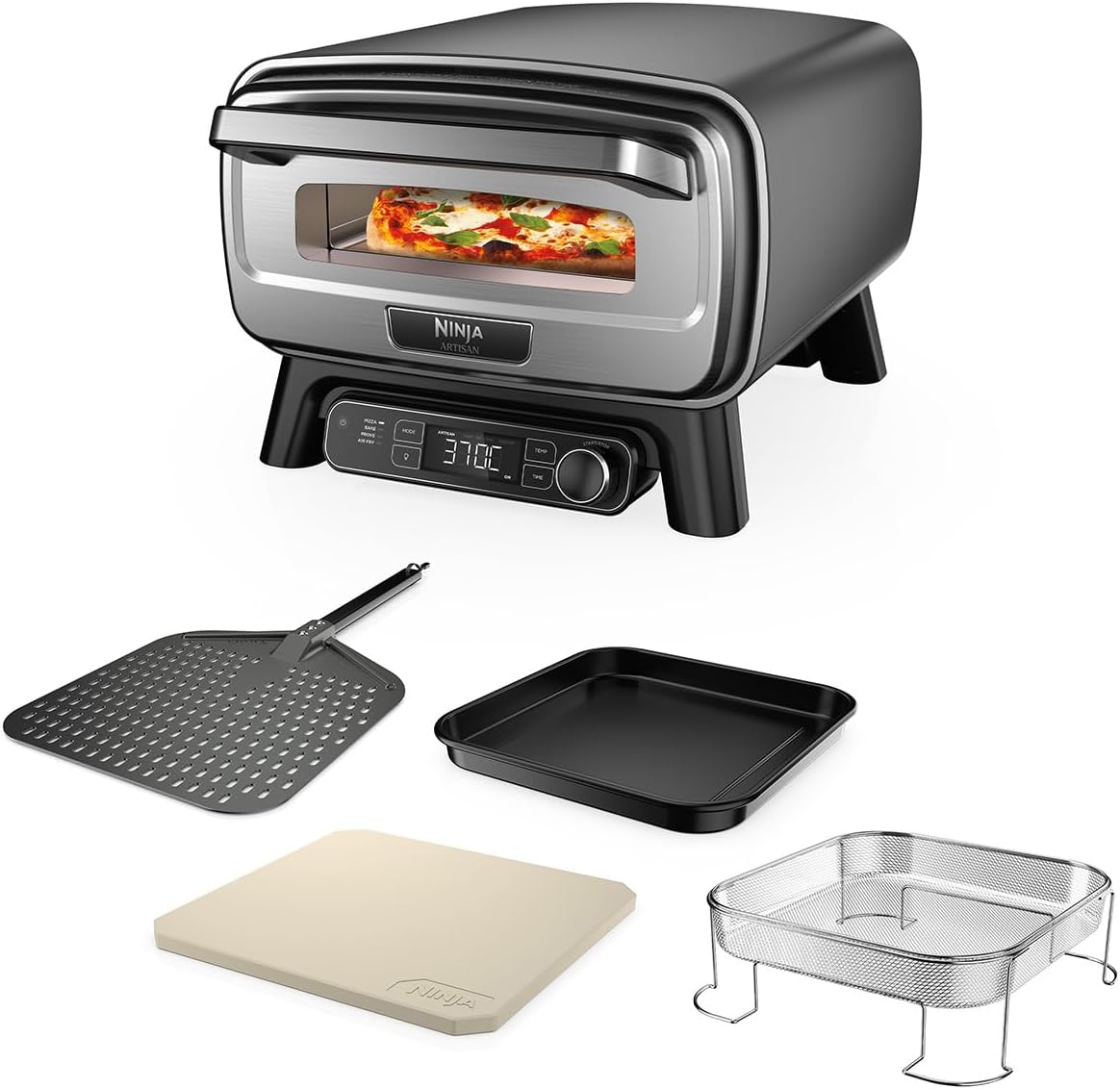
Best overall — Ninja Artisan. The test winner, and comfortably so. With 1,760 W, a 30 cm pizza stone and five programmes running from "thin" to "pan", it covers what an ambitious pizza cook needs. There is a viewing window with a light, a sturdy outdoor housing, and generous accessories — peel, tray, frying basket and a thoroughly filled recipe book. Operation is genuinely intuitive: buttons and a rotary knob, and that is the whole story, with the display announcing the result with a cheerful "GET FOOD". It is ready after only 17 minutes of heating, which is what keeps spontaneous pizza possible. In practice it convinced across the board: a margherita was perfect after just under three minutes — airy rim, crisp base, even browning — and with a little finesse the result gets more Italian still. A tuna pizza came out juicy and authentic too. Build quality reads as solid, with non-slip feet, stable construction and a comprehensible manual, and it gives the impression of surviving a good many pizza parties. Cleaning is quick: the stone and accessories are not dishwasher-safe, but hand-washing is no trouble. UK listings carry it as the MO201UK, the counterpart of the MO201EU tested.
Best value — Ariete Pizza in 4' Minuti. Small, bright red and almost UFO-like on the worktop, it stands out immediately. With 1,200 W, five heat settings and a timer it looks simple, and it delivers solid rather than exceptional results. Be realistic about the name: in testing the margherita needed around ten minutes to become crisp and edible. The tuna pizza cooked faster but unevenly — one side too dark, the other still soft. The flavour was respectable without being a high point. Operation is uncomplicated.
Heat without harmony — Ooni Koda 2. On paper it should walk it: 500 °C maximum and a 50 cm stone. In practice the source's verdict is blunt, and worth hearing before you spend. The gas model comes without a pizza peel — a must-have that costs extra. The frustration started at ignition: the piezo igniter did not work and matches were needed. The manual is sparse and inclined to point at expensive accessories. After 15 minutes of heating the oven was certainly hot, but it heated unevenly, and unless you turn the pizza constantly you risk burnt and half-cooked patches at the same time. On taste it reached only mid-field: edible, but not airy. Cleaning and handling are fine. The summary was "strong on paper, weak in detail" — so treat the headline temperature as a specification rather than a promise.
The patio gas option — Tefal Pizza Pronto. Clearly not a worktop appliance but a genuine terrace oven, developed in cooperation with Jamie Oliver, using a rotating cordierite stone to bring serious heat into play. A gas hose and a large peel are included. Two honest notes: assembly demands some patience, and wind can blow the flame out. The promised "90 second pizza" was confirmed in testing to be wishful thinking.
Also tested — WMF Pizzaiolo Pro and Caso PizzaChef 430°. The WMF is the massive gas option, reaching up to 500 °C with a 40 cm cordierite stone and, after 15 minutes of heating, turning out pizzas in just under two minutes; it bakes reliably and evenly thanks to a clever rotating stone. The Caso is the cautionary one: on paper it reads professional — 2,200 W, up to 430 °C, eight automatic programmes — but preheating alone took a full 40 minutes rather than the ten claimed, and the promised ready signal never arrived.