Anyone who wants good coffee regularly has to pick a preparation method first. Pods and capsules are convenient but generate mountains of waste and offer little variety. A portafilter espresso machine delivers superb results but demands time and attention. For most people's actual mornings, the answer is the bean-to-cup machine: freshly ground beans, one button press, finished espresso — and anyone who loves cappuccino or latte macchiato can hardly avoid these machines anyway.
One honest caveat before the rankings: even the best cheap bean-to-cup machine does not reach the level of a proper espresso machine. Only the higher-quality models deliver truly convincing results, with more adjustment for grind, brewing temperature and coffee strength — and noticeably more flavour extracted from the beans. And the beans themselves influence the result at least as much as the machine, which is why coffee developed specifically for automatic machines exists.
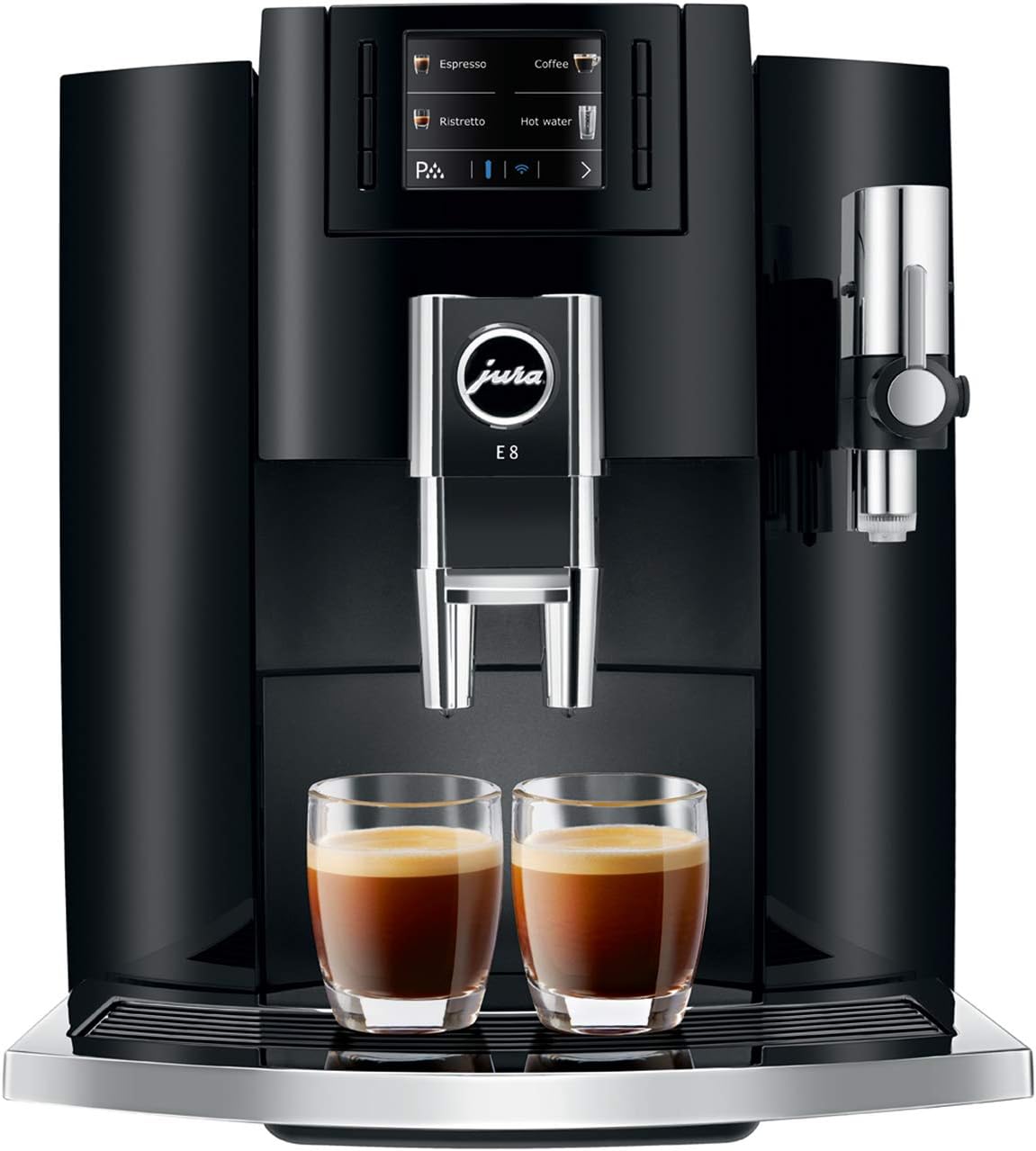
This comparison covers 54 bean-to-cup coffee machines across every price class, tested generously. The headline finding up front: every one of these machines manages a decent espresso. The interesting questions are which extras you really need — and what they are worth to you. The winner is the Jura E8 ED, which pairs intuitive operation and easy cleaning with the most important quality of all: the coffee tastes outstanding.
The Short Version
- Best overall — Jura E8 ED. The fourth edition of Jura's classic adds a syrup function, a coffee timer and a whisper-quiet grinder to what was already the best price-to-performance ratio in the Swiss maker's range. Espresso and milk drinks succeed at a consistently high level; the only real gap is that it cannot make two milk drinks at once.
- Premium alternative — Nivona Nivo 8'101. The former test winner: first-class drinks, a stainless-steel cone grinder, a rotary-dial-and-TFT operating concept, app control and barista-grade milk foam. Its only weakness is the substantial purchase price.
- Touchscreen upper class — Philips Café Aromis EP8757/20. Philips's first upper-class machine: a 4.3-inch touchscreen, over 50 hot and cold specialities, the doubled-capacity LatteGo Pro milk system, cold brew — and an espresso that pushes towards portafilter quality, from a notably quiet grinder.
- Luxury pick — Jura J8 Twin. Two grinders, two bean hoppers, a syrup attachment, 31 specialities and app control for those who want to experiment with different beans. Espresso runs a touch cool; everything else is first class.
- Budget pick — DeLonghi Magnifica Start ECAM222.60.BG. The successor to the market-conquering Magnifica S: full-bodied coffee, barista-worthy milk foam, 13 grind settings and simple cleaning at an entry-level price. Lots of plastic, but nothing that matters in the cup.
Finding the Right Class of Machine
Much has changed since the first bean-to-cup machines arrived, and the choice is now almost unmanageably large — what fits one user perfectly is completely wrong for another. Simple entry-level machines start around 300 euros; the middle segment begins at roughly 500 euros; and the scale is open at the top, where high-end machines comfortably exceed 2,000 euros.
The price classes differ in scope of functions, fineness of adjustment and handling. Expensive machines also use higher-grade materials and add showpiece features: a second grinder, a larger touchscreen, fully digital control.
Mid-range machines: no luxury, but extensive functions
Related Articles
Premium features of the kind found on Jura's Z-series rarely appear in the middle segment, but manufacturers work hard to fit comfortable operating concepts, finer adjustments and cleverer milk systems into this class. Grind, water volume and coffee quantity are typically adjustable, and these machines deliver excellent coffee quality. Go cheaper and you must expect a lot of plastic — and entry-level grinders often struggle with the finer grind settings that matter most for good espresso. For single households, couples, flat-shares, families and smaller offices, a good mid-range machine is usually the sweet spot.
High-end machines: everything, and a bit more of it
A luxury machine allows the most detailed adjustments — water temperature, milk-foam temperature and consistency — plus automatic grinders, sophisticated cleaning programmes and technical flourishes that are fun as well as functional. The higher classes use noticeably more aluminium, stainless steel and chrome, which improves both the look and the lifespan. The class difference shows on the display, too: small machines manage with frugal screens or none, while the upper class brings large colour touchscreens with elaborate software behind them.
The Components That Decide Your Coffee
Related Articles
Display and operation
The fundamental question: can you operate the machine without first studying the manual? Ideally even a beginner finds the desired functions quickly. Many modern machines carry a display or touchscreen, increasingly sensible as the number of settings grows — though models like the Krups Evidence prove that good coffee needs no display at all. More and more manufacturers add smartphone apps, and Jura's, Melitta's, Siemens's and DeLonghi's are genuinely practical; but as long as you still have to place the cup under the spout yourself, app control is not the deciding purchase argument.
Grinder and bean hopper
A good grinder is as decisive for coffee quality in a bean-to-cup machine as in a portafilter setup. For even extraction it should grind as homogeneously as possible. Two designs dominate: stainless-steel cone grinders and ceramic disc grinders. Material and construction matter less than the number of usable grind settings and the operating noise — and experience shows noise is primarily a question of housing insulation, not grinder material. For longevity, stainless steel has the edge, and it is increasingly appearing in higher-priced machines too.
The bean hopper plays a passive role, and manufacturers' boasts about capacity miss the point: in a brimming hopper the beans lose aroma even behind tinted, aroma-sealed lids. Fill in only as many beans as you will actually use — at home, far fewer than in an office kitchen.
Brew group
From the grinder the grounds drop into the brew group, the heart of the machine, which unites tamper and brewing chamber: the powder is compacted into a puck, hot water is forced through, and the spent puck is ejected into the grounds container. Machines split into two camps: removable brew groups and fixed ones. Most manufacturers make them removable; only Jura, WMF and Krups rely entirely on their automated cleaning programmes. Those programmes work very respectably — but a removable brew group is preferable, because it gives you full control over cleanliness when stray coffee powder inevitably finds its way into the machine's interior.
Milk system
The variants range from the simple steam wand of the entry class, which demands practice but gives you the most control over temperature and texture, through the cappuccinatore — milk foam at a button press, with a hose hung into any milk container — to fully integrated systems like DeLonghi's LatteCrema, whose dedicated milk carafe clicks onto the machine. Mid-range systems generally deliver fine-pored, homogeneous foam that cheap machines cannot always manage; the premium systems from Jura and Nivona add genuine barista quality on top.
Water tank and filter
As with the bean hopper, bigger is not better: the water should be fresh, not days old. But the machine needs water for milk foam and the regular rinsing cycles too, so heavy drinkers and shared machines need adequate capacity. Many machines accept a water filter that reduces limescale — sensible, but the filter needs replacing roughly every three months, and the machine still needs regular descaling regardless.
Grounds container and drip tray
These two components mainly affect the verdict when they are too small. Spent pucks and rinse water need room — and because the machine rinses automatically and often, an undersized drip tray fills annoyingly fast.
Features worth having
Beyond the basics, several comfort features recur across the field: height- and width-adjustable spouts for different vessels, cup warmers, illuminated spouts or tanks, a two-cup function, one-touch drinks without cup-shuffling, double grinders or twin bean hoppers for different roasts, syrup functions for flavoured milk foam, cold-coffee and cold-foam options, and travel-mug modes for taller beakers.
Cleaning, Care and Running Costs
Regular cleaning preserves coffee quality and extends the machine's life — very much in your interest at these prices. Beyond the obvious parts (bean hopper, water tank, drip tray), the interior matters most: the grinder wants a weekly clean, while brew group and milk system deserve daily rinsing for hygiene and longevity. Descaling is the other pillar of care — every one to two months depending on local water hardness, following the manual or the on-screen prompts.
Use cleaners designed for bean-to-cup machines: they protect the components while cleaning effectively. Avoid home remedies like vinegar or citric acid, which are often too aggressive and attack sensitive parts. Manufacturers naturally recommend their own branded products, but independent alternatives clean just as well, cost noticeably less and leave the warranty untouched.
Running costs split into consumption (beans, milk), operation (electricity, water) and care (cleaning and descaling agents, maintenance, spare parts). Most of it goes on cleaning, and that money is well invested — care is cheaper than repair or replacement. Consumption follows your habits: five cappuccinos a day cost more than an espresso every other day, and with beans the investment in quality pays off directly in the cup.
The Winner: Jura E8 ED
The Jura E8 is an eternal classic, on the market since 2015; the E8 ED is the fourth version, and although the changes are subtler than in earlier updates, the result convinces across the board.
The machine still scores with an excellent heating system and an intuitive display. Jura has improved the grinder again and made it whisper-quiet — 64.5 decibels, a touch quieter even than its predecessor. The new syrup function and 27 drink variations widen the repertoire further, and coffee and espresso taste first-class, with intense flavour profiles standing out particularly positively in testing.
The Coffee Timer is a genuinely useful addition: programme the previous evening exactly when your coffee should run into the cup in the morning. The Sweet Foam function delivers sweet milk foam at a button press — with or without syrup, the professional fine-foam nozzle produces perfectly creamy results. Design and build are as high-quality and durable as Jura buyers expect.
Cleaning and care
Cleaning is easy: drip tray and grounds container are dishwasher-safe, the water tank comes off with one movement, and automatic cleaning and descaling programmes plus a water-hardness setting handle the rest. The milk-system concept earns an extra point — a quick rinse programme and a thorough one, with Jura supplying cleaning tablets and a small container that sits on the drip tray and helps with cleaning, descaling and rinsing the brew group alike. For routine care, the original Jura tablets and descaler are not obligatory: independent alternatives clean just as well, cost markedly less and do not affect the warranty.
The verdict in context
Even though this version's updates are subtler than previous E8 generations, the investment pays off. The E8 ED offers the best price-to-performance ratio among Jura's machines and a superb overall package — the ideal everyday companion. Its one notable limitation: no two milk drinks at the same time.
Premium Alternative: Nivona Nivo 8'101
The former test winner skilfully bridges the gap to the true — everyday-remote — luxury class, and remains the best machine from the Nuremberg maker. Expect first-class drinks and strong results in milk foam, grinder and cleaning, with operation that comes wonderfully easily to hand via rotary dial and TFT colour display, or comfortably via app.
Frankly, the Nivo 8'101 offers no line of attack. The electronic grinder, the innovative cappuccinatore milk system with its hose, the clever bean sensor monitoring the hopper level, the practical two-cup function, the flexibly adjustable coffee quantity, the aroma technology and the futuristic live programming of every drink are only some of its strengths. Every coffee arrives ideally tempered and remarkably fast, as does the milk foam, which can be prepared in several consistencies — and foam and coffee adjust independently, so the total volume of a cappuccino lands exactly where you want it. At around 1,100 euros it has its price, but delivers absolute quality outside, inside, in the functions and in the cups.
Touchscreen Upper Class: Philips Café Aromis EP8757/20
With the Café Aromis, Philips ventures into the upper class for the first time — and delivers a surprisingly convincing machine. It breaks with the existing Philips programme: a 4.3-inch touchscreen instead of sensor buttons, over 50 hot and cold specialities instead of 20, and the new LatteGo Pro milk system for hot and cold milk foam. Seven intensity levels, cold brew, eight user profiles and optional HomeID app control round out the package.
SilentBrew technology makes brewing around 40 per cent quieter than earlier Philips machines, with Quiet Mark certification; the LatteGo Pro system handles plant milks and is entirely dishwasher-safe; an eco mode cuts water and energy use without affecting quality. In the cup, the espresso stands out: strong, round, without bitterness, pushing clearly towards portafilter quality thanks to the BrewExtract technology. The milk container now holds double the volume — one fill covers two cappuccinos — and the foam is creamy and fluffy, though the machine will not dispense two milk drinks simultaneously and the milk quantities run slightly imprecise. At around 890 euros, a successful combination of modern technology and an operating concept that succeeds at the first attempt.
Luxury Pick: Jura J8 Twin
The J8 Twin brings genuine luxury into the recommendations: two grinders, two fixed bean hoppers, a syrup attachment, a large display and countless settings covering aroma, strength, brewing temperature and duration, pre-brewing and quantity — plus app control. Built for the demanding enthusiast who wants to work with different beans, it also cuts a fine figure in the office with its 31 specialities and extra-shot function.
The grinder offers six settings — which sounds modest but proved enough to tease every nuance from the beans — and after grinding, the burrs briefly pull apart to eject residual fragments, a sensible feature previously seen only on new DeLonghi machines. Coffee and espresso are full-bodied, soft and rich in aromas; only the espresso temperature could be a touch higher, while long coffee lands properly hot. The one-touch milk system with its extra spout delivers cappuccino and latte at a button press, and the foam is, as expected from Jura, bubble-free, wonderfully fluffy-creamy and first-class. Sweet Foam blends syrup directly into the milk so it distributes evenly rather than settling at the bottom. Cleaning requires nothing of you — the machine reports when something needs attention. At around 1,600 euros, the Twin earns its recommendation if you will actually use the double grinder; otherwise the standard J8 suffices.
Budget Pick: DeLonghi Magnifica Start ECAM222.60.BG
DeLonghi conquered the entry-level market with the Magnifica S; its successor gives nothing away. The Magnifica Start delivers excellent, full-bodied coffee and espresso, and milk foam worthy of a barista — available either with a steam wand or with the integrated milk-foam system, depending on the version you choose.
The machine proves that a perfect cup of espresso needs no technical gimmicks. The compact body carries touch buttons, the conical grinder offers 13 precisely usable grind settings, and temperature and strength adjust easily; a two-cup function covers coffee for two. The removable water tank and easily accessible bean hopper make cleaning simple. There is a lot of plastic — the honest price of the segment — but for anyone seeking a cheap quality machine with self-explanatory handling and good drinks, the Magnifica Start is the definitive tip.
Also Tested: The Rest of the 54-Machine Field
Nivona Cube 4
The smallest bean-to-cup machine on the market, nearly cube-shaped, in cream or black, and portable with its optional carry bag. Its Click Cup system is a small revolution in hygiene: the grounds fall not into an internal chamber but into a removable cup fixed to the outside, which you transfer to a holder on the other side, lock with a tamping lever and brew — no coffee powder ever enters the machine's interior, preventing mould and radically simplifying cleaning. The steel cone grinder works at 71 decibels across five settings, temperature adjusts in three steps, and the Aroma Balance System offers three flow profiles. The aromas are gratifyingly multi-layered — but there is no milk function at all, and at just under 500 euros it is dear for a pure black-coffee specialist. For maximum hygiene and minimum footprint, a fascinating alternative.
Jura C3
A compact pure-coffee machine for those who deliberately skip milk drinks. Four buttons operate it intuitively, the P.A.G. grinder offers seven settings, strength and temperature adjust in three steps each, and the pulse extraction process produces a dense, velvety crema. Around 650 euros buys Jura-typical build in a format for any kitchen, with optional app control. The brew group is fixed, so you rely on the automatic cleaning programmes. For black-coffee purists, a clear recommendation; milk-foam drinkers should look to the E8 ED or the cheaper Magnifica Start.
Philips 2300 LatteGo EP2330/10
An entry-class machine with astonishing build quality (albeit plastic) and one of the quietest grinders in the test — a ceramic disc unit at just 63 decibels with twelve finely graded settings, exceptional in this class. The hoseless two-part LatteGo system cleans easily, and a long press of the cappuccino button increases the foam for a proper latte macchiato. In the cup: a characterful espresso with chocolate and an unexpected marzipan note, ideally tempered at 60 degrees with a velvety crema. Front-access components and a removable brew group keep cleaning simple. The price-to-performance ratio challenges far dearer machines.
Nivona Nivo 9'101
What technical peak performance means in this category — theoretically it even beats the recommended 8'101, and only its weaker price-to-performance ratio keeps it off the podium. The 7-inch touchscreen makes operation child's play, Chilled Brew prepares coffee at low temperature for delicious variety, the steel cone grinder whispers at 66.9 decibels, and the milk foam reaches a quality that overshadows some Jura machines. Easyclean+ and the Extreme Mode descaling show equal rigour in maintenance.
DeLonghi Eletta Explore
The variety champion: 40 drink varieties, cold milk foam and genuine cold brew. The steel cone grinder performs at DeLonghi's typically high level, a jug function covers filter-style coffee, and temperature, aroma and quantity adjust flexibly. Four user profiles suit families and flat-shares, the touch display, sensor buttons and app with over 100 recipes are easy to master, and the pull-out shelf with extra-high spout fills travel mugs. Taste and foam quality convince; only the grinder works a little too loudly.
Philips 3300 LatteGo
A handsome mid-ranger that genuinely pressures the upper class on milk foam and coffee. The ceramic disc grinder with twelve settings is surprisingly super-quiet, the modern display and app are simple, and espresso lands with multi-layered aroma. A cold-brew function hides behind the facade, the hoseless LatteGo system makes creamy foam, and cleaning is easy. At just over 500 euros, a really good choice.
Krups Intuition Experience+
An innovative all-rounder, often discounted in electronics stores, that handles hot and cold drinks in a way not seen before. Operation is as simple as a smartphone, drinks come out superheated and well-made at a pleasant noise level, and pre-infusion explains the espresso quality. The milk foam is ultra-soft and creamy without holes or bubbles — though some milk-drink presets dispense too much or too little foam, demanding experimentation. A clever upper-mid-range all-rounder.
DeLonghi Rivelia
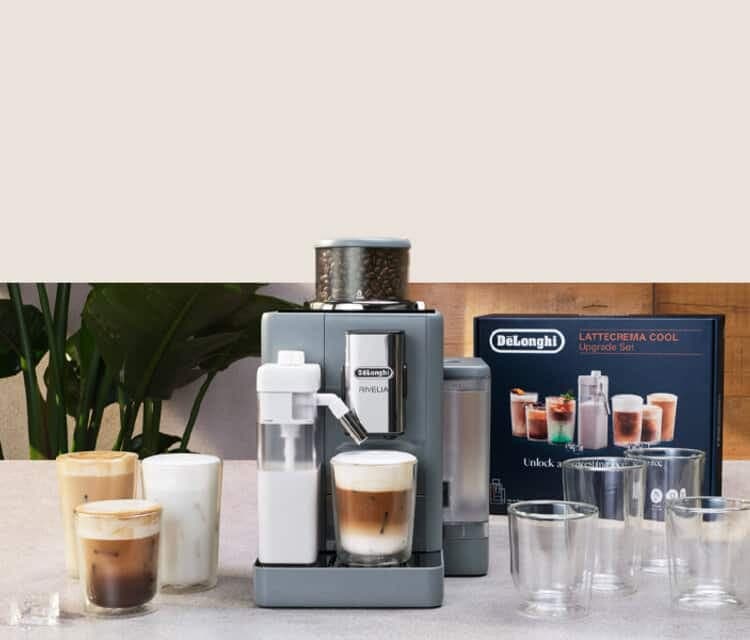
A smart, well-finished compact machine whose party trick is the swappable bean hopper: the Bean Switch System changes bean varieties without tediously emptying the container. Homogeneous grinding, good espresso and coffee, creamy-fluffy foam, intuitive operation, easy cleaning, four user profiles and a two-cup function — upper-mid-range price, any-kitchen format.
Gaggia Academia
Milk-foam fans, attention: the Italian flagship carries not one but two milk systems, with the professional steam lance and the integrated frother both on the stainless-steel front. Operation by touchscreen or rotary switch is extremely user-friendly, and the machine is among the most adaptable tested. The espresso comes astonishingly close to a portafilter — an excellent showing for lovers of strong Italian coffee, at a price that feels well invested.
DeLonghi PrimaDonna Soul
The newest PrimaDonna closes the gap to DeLonghi's everyday-remote Maestosa luxury class: a stepless electronic grinder, a modern display, deep Coffee Link app integration and the innovative Bean Adapt Technology, which tunes all brewing parameters to the roast of the beans in use. Espresso arrives with a faceted body, a handsome crema, ideal temperature and remarkable speed; the milk foam comes in three consistencies. Luxury made everyday-capable.
Siemens EQ.900
A fully electronic machine that looks super-classy and earns its upper-class billing with simple operation, high quality across all specialities and a wealth of settings — including brewing-speed control and pre-brewing. Countless drinks from ristretto to café crème, two-cup and double-shot functions, app connectivity, quiet operation. The integrated milk frother is a dream: better than every other Siemens model and ahead of some Jura and Saeco machines.
Saeco Xelsis Suprema
A test-victory candidate that plays smart technology through to the end on its huge touchscreen: 22 customisable varieties; flexible adjustment of temperature, aroma, strength, coffee and foam quantities, and even the mixing ratio and pouring order of coffee and milk. The twelve-step ceramic disc grinder showed no weaknesses, and up to eight user profiles suit families or offices. Whether that justifies around 1,300 euros is a fair question; the enthusiasm in testing was real.
DeLonghi Dinamica ECAM 350.55.B
A compact machine whose 13.5-centimetre spout clearance fills even tall latte glasses. Default settings already produce a decent cappuccino — only the foam quantity runs slightly low, quickly corrected in the menu — and the variable milk system adjusts temperature and consistency from fine and pourable to firm. The steel grinder is not award-winningly quiet but entirely reasonable given 13 grind settings, and unlike some rivals it handles the finest setting without complaint. With the ideal 25-millilitre water volume settable and the optimal 25-second extraction observed, it brews coffee of a quality far from guaranteed in this category. The price-to-performance ratio makes it an ideal choice.
Jura Z10 (EB)
The successor to the already impressive Z10 raises the stakes: the first machine of its kind to prepare hot coffee, cold coffee and genuine chocolate foam — a small revolution. Coffee Timer, caffeine control and seven instead of five grind settings show the direction of travel, the J.O.E. app works superbly, and the price-to-performance ratio remains competitive among premium Juras. The one criticism: the cryptic marketing vocabulary, even thicker than before. Translation service: Cold Extraction Process means cold coffee; Light Brew, lukewarm; P.R.G.2+ is automatic grind adjustment; P.E.P. optimises extraction time; what 3D brewing technology means remains Jura's secret. What matters: espresso, ristretto, latte or mocaccino, aroma and taste are first-class, and the very fine, creamy foam plus the Coffee Timer make it a perfect daily machine.
Jura S8 SB
The second edition of the S8 adds a syrup cartridge for the milk system. The separated spouts remain an acquired taste — coffee from the central spout, milk drinks from the side one, so a cappuccino means moving the cup — but you can choose between warm milk and foam, and the updated nozzle makes foam that looks painted. The new grinder pulls apart after grinding to clear bean residue completely. Wi-Fi app control, three brewing temperatures and ten strength settings produce full-bodied drinks at optimal temperatures (60–65 degrees for espresso drinks, 70 for coffee), and a supplied container aids cleaning. At around 1,550 euros the value is less splendid — the excellent predecessor costs around 400 euros less.
KitchenAid KF8
A modern, user-friendly upper-class machine with a removable bean hopper, a dedicated plant-milk foam programme and six user profiles in a compact, well-made body. The large colour touchscreen offers over 40 preset recipes from espresso to cortado, plus extra-shot, strength, temperature and milk settings. Taste is good if not Jura- or DeLonghi-grade, the foam could be fluffier, and cleaning convinces with automatic rinsing and varied programmes. At nearly 1,500 euros without app control it is expensive — but quiet and versatile for a family.
Krups Evidence ECOdesign
The first machine partly built from recycled materials — though Krups fudges slightly: the advertised 62 per cent recycled plastic refers only to the plastic share, itself 31 per cent of the machine. Still worthwhile: plastic-free reduced packaging, a two-year guarantee plus a 15-year durability guarantee, and typical Krups quality underneath, including the five-step steel grinder. Strength, volume and temperature adjust in three steps, a cappuccinatore handles the milk, and the taste profile comes out pleasingly dense and chocolatey.
Melitta Latticia OT
A high-quality compact machine perfect for single households: extensive functions despite the small body, an automatic milk system, and full-bodied, punchy espresso and coffee with correct brewing temperature and foam texture. The 1.5-litre tank and 250-gram hopper suit the format. Coffee quantity adjusts via a stepless dial — imprecise but personal. At under 500 euros, a genuine bargain.
DeLonghi Dinamica Plus
A thoroughly successful update of the classic Dinamica: one-touch symbols make operation even more intuitive, and the app covers all important settings. The machine brews a lively espresso that mixes fine freshness into the roast's typical dessert notes, while the LatteCrema system (familiar from the Perfecta Evo) selects consistency via the dial on the milk carafe — the middle setting makes creamy cappuccino. Limited novelty, but an uncomplicated machine for fans of button-press espresso and milk drinks.
Gaggia Magenta Milk
Leave the manual in the box: the cleverly built control panel and optimally programmed menu delighted in testing — the angled display reads well from any position, and every setting explains itself. Volumes adjust from 30 to 150 millilitres, strength in five steps, temperature in three (approach the highest intensities gradually). Espresso and foam are typically Italian: the Capp-in-Cup system makes a firmer foam than most rivals, forming the characteristic cappuccino hood. The loud grinder costs a point; the coherent total package wins it back.
Jura J8
Fancy a latte macchiato with sweet syrup? The J8's syrup cartridge mixes the flavour directly into the milk foam so it distributes evenly rather than settling. Beyond the headline feature, it is Jura-typically high-quality and functionally thought through, with excellent coffee and foam, uncomplicated touch or app operation and very thorough cleaning despite the fixed brew group. If you can live without syrup, the confusingly similarly named S8 is a slightly cheaper, equally strong alternative.
DeLonghi Perfecta Evo
The right mid-ranger for milk-drink fans, thanks to the LatteCrema carafe system: even at the highest of three consistency settings, a fine-pored creamy foam flows into the cup. The system makes only one milk drink at a time; espresso and coffee get a two-cup function, and a jug mode runs six brews in series — though that coffee comes out rather thin, so single or double draws give more aroma. Operation, cleaning and the removal of all containers including the brew group happen entirely from the front, fitting the Evo into narrower kitchen slots.
Saeco GranAroma
A somewhat chunky attempt to establish Saeco in the sub-700-euro middle class — and judging by the results, it may succeed. The milk side delighted: the cappuccinatore's creaminess and silkiness are outstanding. The twelve-step ceramic disc grinder is high-quality but very loud, the espresso could use clearer aroma accents, and the temperature has headroom for those who like it properly hot. Still a successful machine, operated child-easily via touch buttons and a colourful TFT display.
Jura Giga 10
The Giga 6's successor, too good not to mention: the same formidable features, outstanding coffee, the double electronic grinder, ingenious milk results — plus a new three-part touchscreen, an extra-shot for every drink and a cold-water bypass for barista specialities including a cold espresso whose taste delighted. Ideal for offices, shops and professional use. If this monster of a machine appeals, it will not disappoint.
Philips 3200 LatteGo
Simplicity as a programme: high-quality plastic, a surprising twelve-step ceramic disc grinder for the class, and button operation with light scales instead of a touchscreen, covering five presets from espresso to americano. Results are good, small weaknesses in espresso or foam entirely forgivable, and the two-part, hoseless LatteGo system cleans trivially. The one drawback: it goes about its work very loudly, grinding and frothing alike.
Jura S8
An almost modest price tag for a Jura, set against a large feature set, versatile settings and excellent coffee and foam. The 4.3-inch touchscreen and the cleverly programmed app both work, though on-device control is less intuitive than DeLonghi's. The split spouts take getting used to — coffee centre, milk drinks at the side. The firm, fine-pored foam will delight latte macchiato fans, and the espresso lands with an aroma as multi-layered as rarely reaches the cup.
Nivona NICR 520 CafeRomantica
A successful entry-level machine: simple colour-display operation, a super-quiet 67-decibel grinder and — despite the mini format — a two-cup function. Espresso and coffee arrive full, strong and nuanced; the cappuccinatore makes its foam automatically without individual settings, yet it flows out pleasingly silky and creamy. At around 500 euros, worth a look.
Jura Z8
Ask people to name the best bean-to-cup brand and Jura springs to mind — not without reason. The Z8 produced the best black coffee ever drunk from an automatic machine in this test, with foam, operation and build quality in perfect harmony. It could easily be crowned test winner — but at this price, perfectionism is the expectation, and the fixed brew group stands out as the flaw, however good the cleaning programme.
Philips 5400 LatteGo
Searching for whisper-quiet? The 5400 draws no attention grinding or frothing — earlier Philips models generated complaints about the racket, and the manufacturer has clearly listened. The colourful-symbols panel borrows successfully from Siemens, the price is fair, and twelve ceramic grind settings yield good espresso. Long coffee disappoints until you reduce the volume setting, and better foam exists — enough for a latte. Ideal for anyone wanting a simple operating concept.
Philips SensorTouch EP2220/10
For a while this looked like becoming the budget champion: preparation and in-cup results are very good — just not quite as emphatic as the competition's. Fewer settings, a little louder, but modern looks and intuitive, clear operation. For singles and small households, a recommendation.
Miele CM 7550
Miele stands for functionality, reliability and longevity, and the CM 7550 is no exception: a reduced, classy body, clear controls, uncomplicated handling, extensive settings and hygiene functions that make care very easy. The hefty machine brews an aromatic, strong espresso and cuts a fine figure with milk foam; favourite parameters store in a personal profile. Its price-to-performance ratio cannot match the PrimaDonna Soul — but nothing goes wrong with a CM 7550 if you are willing to dig deeper.
Melitta Caffeo Barista TS Smart
The luxury machine that leaves Melitta's slightly stuffy filter-coffee image behind: a smart black body, a clear TFT colour display, touch-and-slide operation and an exceptionally well-made app that outclasses the on-device menus — powder quantity, temperature, volume, shots and bean-hopper choice all adjust effortlessly. Twenty-one preprogrammed drinks, eight user profiles, good coffee without turning it into a science.
Krups Intuition Preference+ EA875E
A machine full of surprises: modern touchscreen operation, terrific cappuccinatore foam, a five-step steel cone grinder (a few more settings would be welcome) and a generous 2.3-litre tank, with eleven preset drinks, two user profiles and a two-cup function. The flaw: volumes are fixed per drink — espresso dispenses 40 millilitres, effectively a double. Extraction is otherwise good, with a nut-and-almond aroma in testing; set strength to the maximum third step for the best results. Around 650 euros buys a recommendable mid-ranger.
Krups Evidence
Simplicity again, with small compromises its target group will forgive: good espresso, foam that pleases latte macchiato fans, a three-step steel cone grinder, 15 varieties and direct strength and temperature controls without submenus. The 40-millilitre minimum espresso is regrettable — the ideal is 25 to 30 — and the brew group is fixed, though the cleaning and descaling programmes are well thought out. The brew group itself is metal; much else is plastic.
WMF Perfection 880L
Neither thrilling nor disappointing: fast heat-up, pleasant noise levels, a touchscreen so clear that no prior knowledge is needed, convincing coffee and milk foam with strong, multi-layered aroma, and easy cleaning. Nothing is wrong with this machine — but with no unique selling point and a price around 1,800 euros, it finishes well back.
Jura ENA 8
High-quality average: a modern look for the single kitchen, many settings, an automatic milk system with successful foam — but somewhat loud, without user profiles, with not-quite-unambiguous controls and no Wi-Fi module. The best part is the coffee itself: espresso and coffee with real punch, a painted-looking crema, and with good beans a finely chocolatey aroma with cocoa nuances. At around 900 euros, worth considering.
Miele CM5500
A small machine in rose gold, ideal for the single kitchen at 700 to 750 euros, with a high-quality steel grinder, two user profiles and a jug function under its tall spout. Minimalism rules — in operation, cleaning and the 1.3-litre tank — but milk, foam, temperature and grind all adjust, noise is acceptable and coffee and foam are very good. The presets perform superbly in the cup; only the 30-millilitre minimum espresso is too much, and there is no way to trick around it.
Melitta Caffeo Solo
One of the few remaining machines without any milk system — a compact bargain for fans of black coffee and espresso. The espresso is not sensational but very good, the reduced cleaning programme does its job properly, and the clear, minimal scope makes it perfect for singles and small households.
Siemens EQ.3
Deservedly popular: exceptional design for the middle class and thoroughly solid performance. The centrally placed steam lance — a semi-automatic system that dips directly into the cup — makes very good foam for one drink at a time, which is why the EQ.3 suits smaller households; espresso, by contrast, draws doubles without complaint. Water volume, grind, strength and frothing duration all adjust individually, rewarding a little experimentation with a very good espresso, and the two-part lance cleans far more easily than carafe-and-hose systems. Not the fastest machine, but for up to three enthusiastic drinkers an absolutely worthwhile purchase.
Siemens EQ.700 Integral
Fresh wind in the Siemens range: behind the angular stainless-steel front, the aroma profile and strength adjust individually, and — unusually — even the pouring order of milk and coffee can be set, with pauses timed in between, lifting cappuccino and latte macchiato preparation to a new level. The ceramic grinder stays quiet in old Siemens manner. A progressive middle model between EQ.6 and EQ.9 with several genuine novelties.
How the Machines Were Tested
Looks and feature lists can be judged from pictures and descriptions; handling and coffee quality only reveal themselves in use. Every machine therefore went through an extensive practical test — not under laboratory conditions but everyday-realistically: preparing espresso, coffee and milk foam and noting what pleased and what grated, including how loud the grinder really is and how easily cleaning goes.
To keep machines and cups comparable, all tests used beans developed specifically for bean-to-cup machines, and where possible identical settings: the finest available grind, 25 millilitres of water, maximum strength, targeting roughly 25 seconds of extraction — the recipe that generally yields the best results. Cleaning programmes were tested too, along with how far each machine can be dismantled for manual cleaning. The goal throughout: establishing how sensible each machine is, and which user it suits.
Frequently Asked Questions
Which bean-to-cup machine is the best?
The favourite is the Jura E8 ED — the fourth update of the E8 — for its many sensible refinements and excellent results. The alternatives above cover premium ambition, touchscreen modernity, double-grinder luxury and the entry-level budget.
Can you buy a bean-to-cup machine second-hand?
Theoretically yes; practically, the advice is no. These machines need careful cleaning and descaling, and not every owner is as diligent as you would hope. The consequences — mould, bacteria, defects, material damage — make a new purchase the cheaper path, with hygiene in your own hands from day one.
How long should a machine last?
It depends chiefly on how gently you treat it. Proper cleaning is mandatory, and replacing the odd component belongs to the deal. Barring a lemon, ten years should be no problem — twenty is entirely possible.
Can a bean-to-cup machine make filter coffee?
Sadly true: even the best automatic machine is no master of filter coffee. For the genuine article, reach for a hand filter, Chemex, French press or a filter machine with built-in grinder. The workaround: draw several espressi and top them up with hot water — technically a café americano, but it comes close. For genuinely cold coffee creations, several machines here now offer cold brew and cold milk foam; pair them with proper clear ice from our guide to the best ice cube makers.
What can a high-end machine do?
High-end machines impress with top-class functions — the DeLonghi Eletta Explore's cold-brew feature, for example. What most share is electronic app control: adjusting the grind from the smartphone rather than at the machine.
What does a good machine cost?
"Good" follows your own priorities, but all the important comforts arrive from around 600 euros: high-quality build, even and finely adjustable grinding, and innovative functions up to and including an app.
The Bottom Line
After 54 machines, the field sorts itself more clearly than the bewildering shop shelves suggest. The Jura E8 ED wins because it concentrates the money where the mouth is: outstanding espresso, whisper-quiet grinding, genuinely easy cleaning and just enough innovation — syrup foam, coffee timer — to feel current without gimmickry. The Nivona Nivo 8'101 remains the attack-proof premium alternative, the Philips Café Aromis brings touchscreen modernity and near-portafilter espresso for under 900 euros, the Jura J8 Twin serves bean-experimenting enthusiasts, and the DeLonghi Magnifica Start proves that excellent coffee on a budget is no contradiction. Below the podium, the lesson of the also-tested field is consistent: every machine here makes decent espresso, so buy by the features you will actually use — milk system type, grinder noise, cleaning effort, user profiles — rather than by the longest spec sheet. And whatever you choose, spend properly on beans and clean the machine as if the warranty depended on it. The cup will repay both.